Bauernhaus — History & Facts
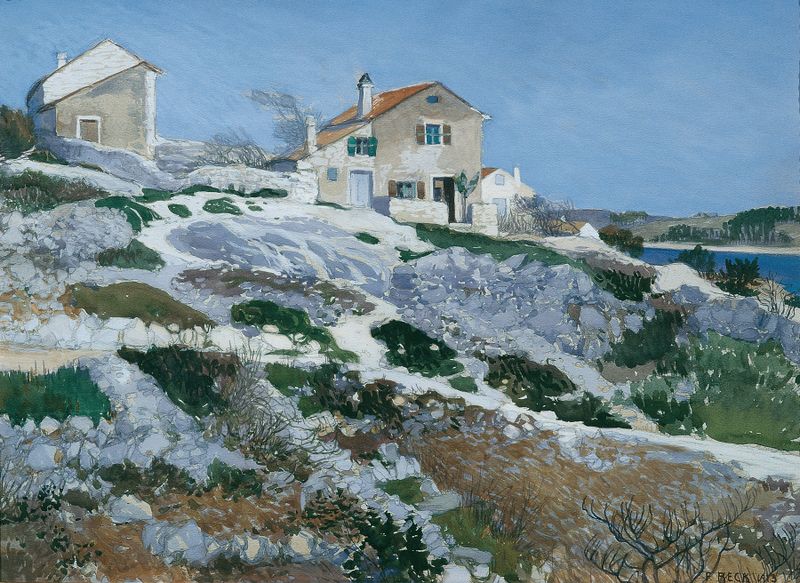
Can paint confess what words never could? In Bauernhaus, an echo of ecstasy resonates through its vivid scenes of rural life and domesticity, a celebration of simplicity infused with deeper meaning. Look to the left, where a quaint farmhouse stands robust against a backdrop of undulating hills. The deliberate strokes create texture in the thatched roof, while soft pastels and earthy tones breathe life into the landscape. Notice how the warm light filters through the trees, casting delicate shadows that dance across the ground, inviting the viewer to step into this bucolic haven.
The balance between light and dark reflects not just the physical space but the emotional weight of the memories held within those walls. As you explore further, subtle contrasts emerge. The joyful expression of a child playing in the foreground juxtaposes the stoic presence of an elderly figure peering from a window, hinting at generational differences and the passage of time. This duality serves as a reminder of the fleeting nature of happiness, caught between the innocence of youth and the contemplation of age.
The meticulous details speak to a reverence for rural life, evoking feelings of nostalgia and connection to one's roots. Friedrich Beck painted Bauernhaus in 1914, during a time of great turmoil in Europe. The impending World War sowed uncertainty, yet in this rural scene, the artist found solace and a sense of continuity. Beck’s work embodies a longing for peace and a simpler existence, echoing the sentiments of many artists seeking refuge in the pastoral amidst the chaos of modern life.