Ossero auf Lussin — History & Facts
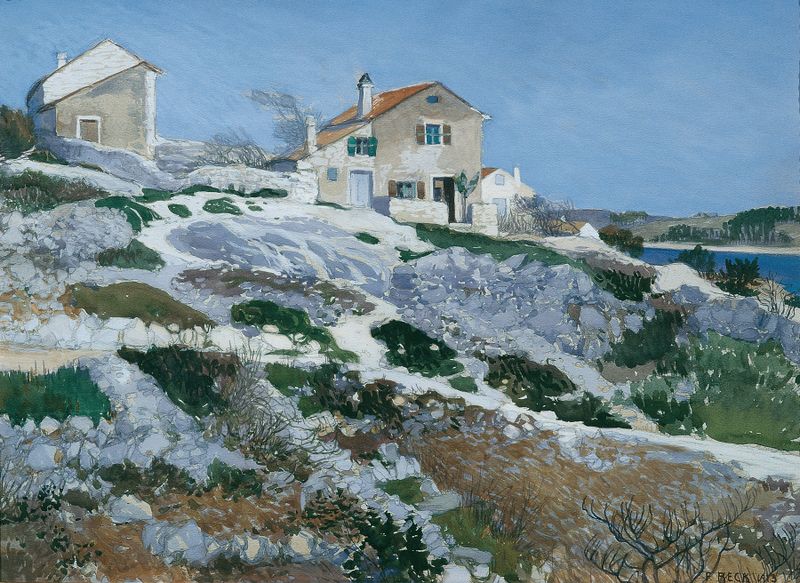
This delicate interplay between fragility and strength resides in the captivating work of art before you. How can a single moment encapsulate such profound beauty while hinting at an underlying vulnerability? Look to the foreground, where soft hues of blue and green dance harmoniously across the canvas. Notice how the gentle brushwork creates a textured landscape, inviting you to explore the layers of color that intertwine and flow.
The muted palette evokes an atmosphere of serenity, drawing the eye to the shimmering water that reflects the tranquility of the scene. In the distance, the silhouettes of trees stand tall, yet their outlines possess an ephemeral quality, as if they might dissolve into the air at any moment. There lies a poignant tension in the blending of colors and forms—an invitation to contemplate the fleeting nature of life itself. The horizon, where land meets sky, hints at the infinite, offering a reminder of both the beauty and fragility of existence.
Small details, such as the ripples on the water's surface, signify movement while suggesting the passing of time, reinforcing the delicate balance between permanence and transience. Created in 1913, this piece emerged during a period of great experimentation in the art world. Friedrich Beck painted it in Lussin, a tranquil location that inspired reflective outdoor scenes, as artists sought to capture the essence of natural beauty. At this time, modernism was reshaping artistic expression, and Beck's work demonstrates an acute awareness of the emotional depth conveyed through subtle brushstrokes and color choices.