
Bauernhof in der Bretagne — History & Facts
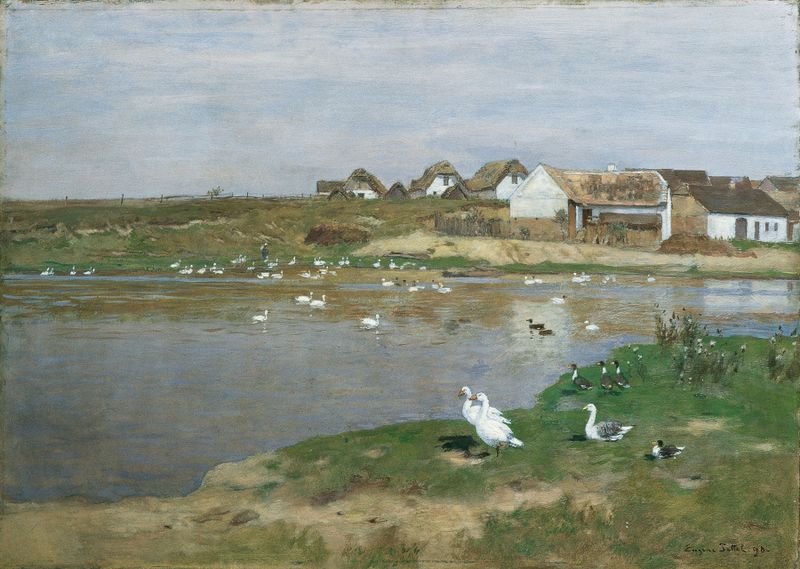
The stillness of the farmhouse envelops the distant fields, whispering secrets of those who have come and gone. Time appears suspended, as nature gently cradles the remnants of a life once vibrant, now cloaked in a shroud of loss. Look to the left at the weathered wooden beams, their rough texture telling stories of years spent in labor. Notice how the sunlight cascades across the thatched roof, casting soft shadows that dance against the earth.
The muted palette, a blend of ochres and greens, evokes a sense of nostalgia, while the subtle brushstrokes capture the fleeting moments of daily life, frozen in time. Each element is a testament to quiet endurance, inviting the viewer to linger within its tranquil embrace. Delve deeper into the composition and you’ll find poignant contrasts: the robust farmhouse stands firm against the backdrop of a sprawling field, yet its solitude suggests abandonment. The distance between the structures speaks volumes about the passage of time, hinting at memories lost to the winds of change.
In this serene tableau, the artist captures not just the essence of rural life but also a lingering ache, an unspoken grief for what has faded away. In 1897, the artist was in the midst of exploring the landscapes of Brittany, reflecting a broader movement in European art towards realism and intimate portrayals of rural existence. Jettel’s work was deeply influenced by his own experiences, having spent years traversing various locales in search of authenticity. His paintings during this period revealed a strong connection to the land, often highlighting both its beauty and its inherent melancholy, as he grappled with the inexorable passage of time.
More Artworks by Eugen Jettel
Browse all →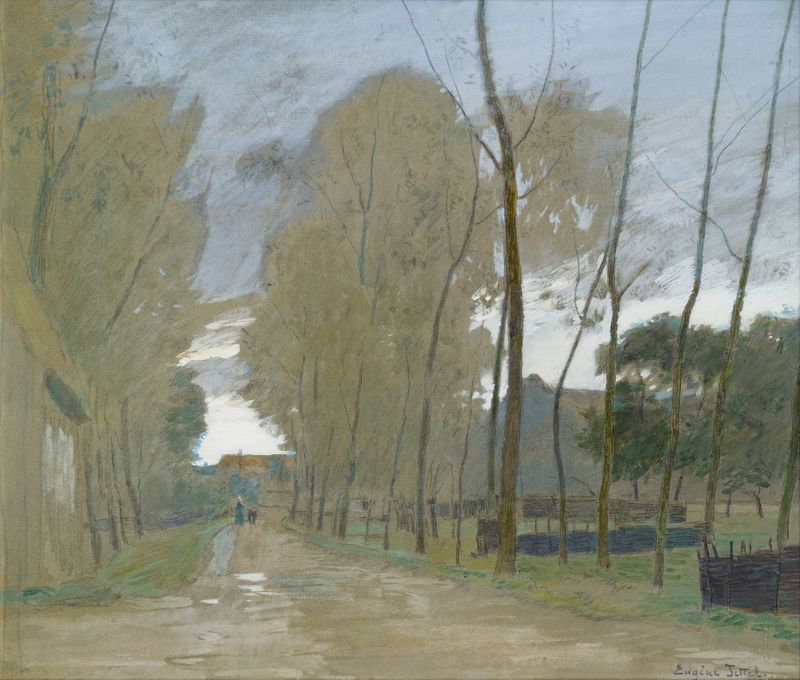
Motiv aus der Bretagne
Eugen Jettel
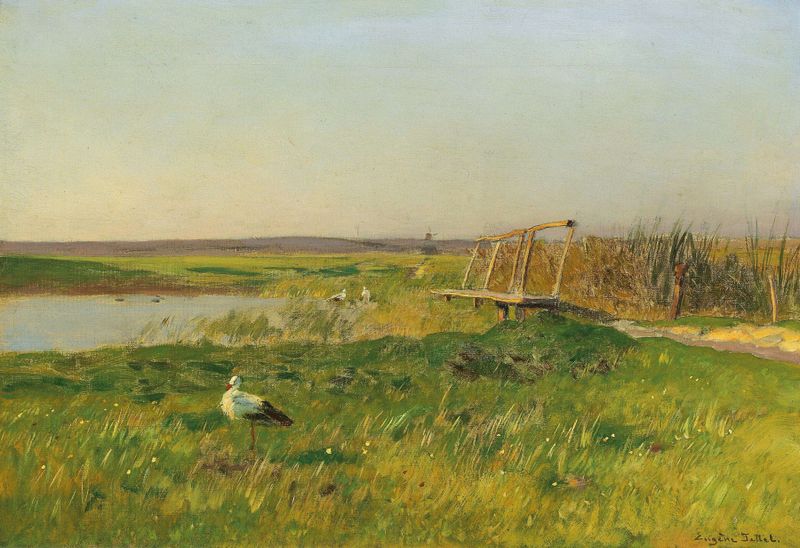
Frühlingslandschaft mit Störchen an einem Weiher
Eugen Jettel

Rinder auf Sommerwiese
Eugen Jettel
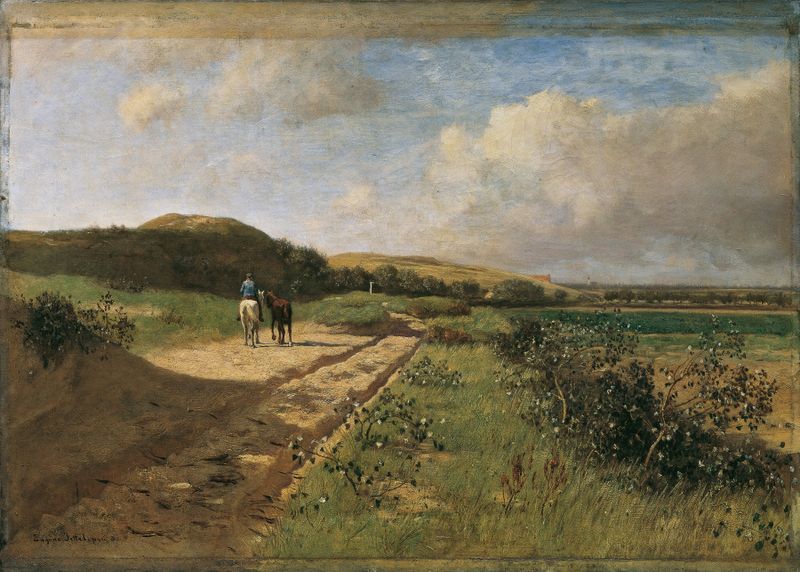
Dünen bei Katwijk
Eugen Jettel
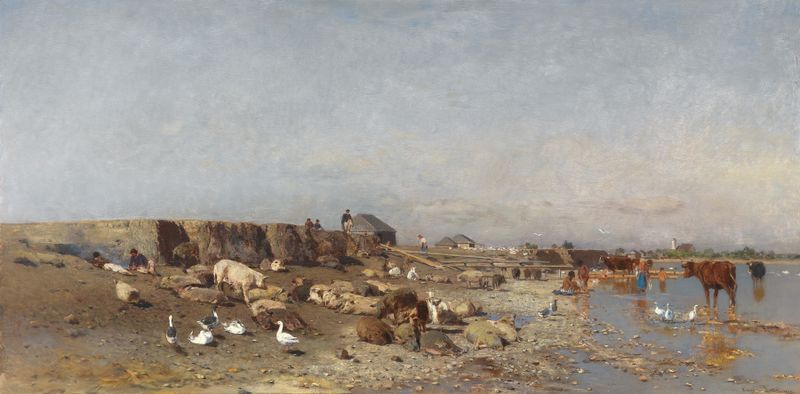
Motiv aus Szered an der Waag
Eugen Jettel
Der Gänseteich in Kotting-Neusiedl
Eugen Jettel

Flusslandschaft Mit Boot
Eugen Jettel

Flusslandschaft mit Kühen
Eugen Jettel

Dorfpartie Strohhütten aus Staatz
Eugen Jettel

Abendlandschaft
Eugen Jettel





