
Bazaar entrance — History & Facts
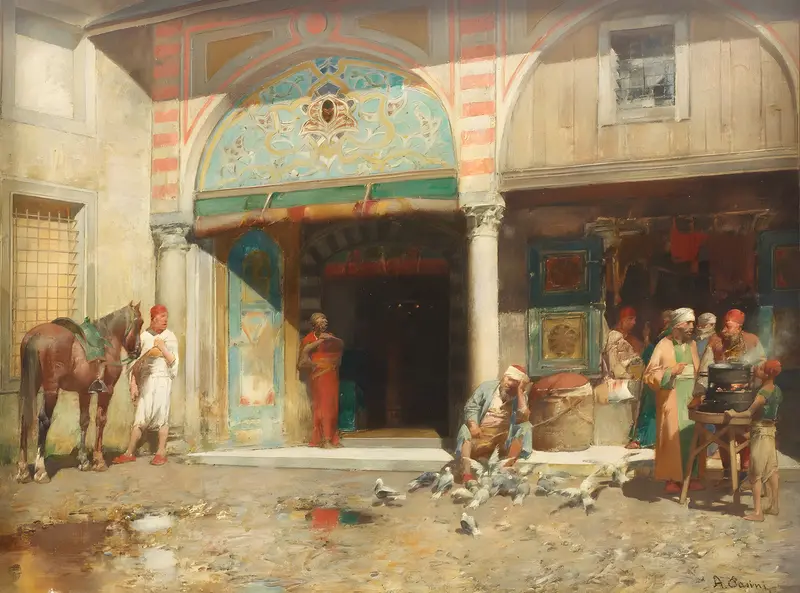
Sunlight slices across old stone and glazed tile, drawing your eye straight to the archway where shadow and color collide. The entrance to the bazaar is a threshold not just of architecture but of possibility: a place where the world narrows and then opens, where the street’s quiet gives way to the promise of noise, commerce, and human drama just beyond the darkness. Two figures and a horse pause at this boundary, their postures relaxed but attentive, as if weighing whether to enter or linger in the sun a moment longer.
The blue tiles, chipped and worn, catch the light with a coolness that contrasts the warm, almost theatrical red within the arch, suggesting the energy and unpredictability of what lies inside. Painted in 1874 by Alberto Pasini, this scene belongs to the world of 19th-century Orientalism, when European artists—often traveling or working from sketches and memories—sought to capture the textures and rhythms of North African and Middle Eastern life. Such works were rarely neutral: they were made for Western patrons hungry for images of distant, “exotic” places, and they reveal as much about European fantasies as about the realities they depict. The careful rendering of architectural detail and costume here speaks to Pasini’s reputation for accuracy, yet the painting’s real power comes from its mood—the hush before entering the unknown, the way light and shadow create both a barrier and an invitation.
History has kept few traces of this particular Bazaar entrance, but the painting still asks us to linger at the threshold, imagining the stories that begin just out of sight.
More Artworks by Alberto Pasini

Mercato in Oriente
Alberto Pasini
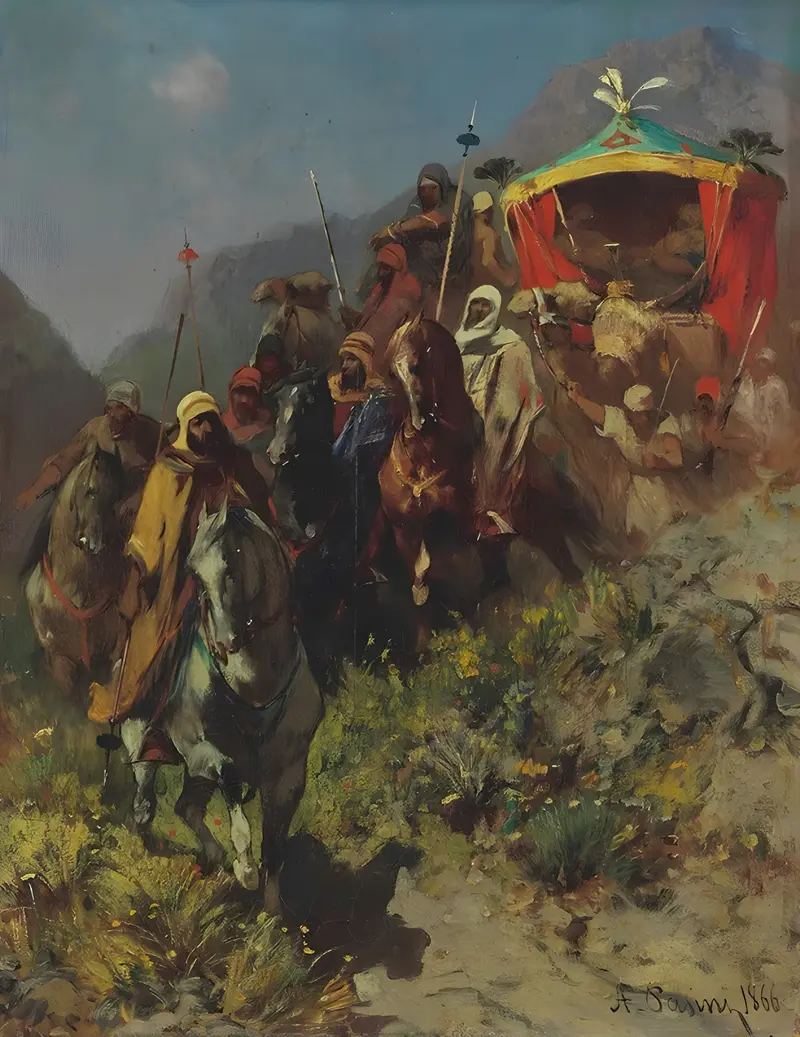
A Caravan on a Mountain Pass
Alberto Pasini

The blacksmith’s shop
Alberto Pasini
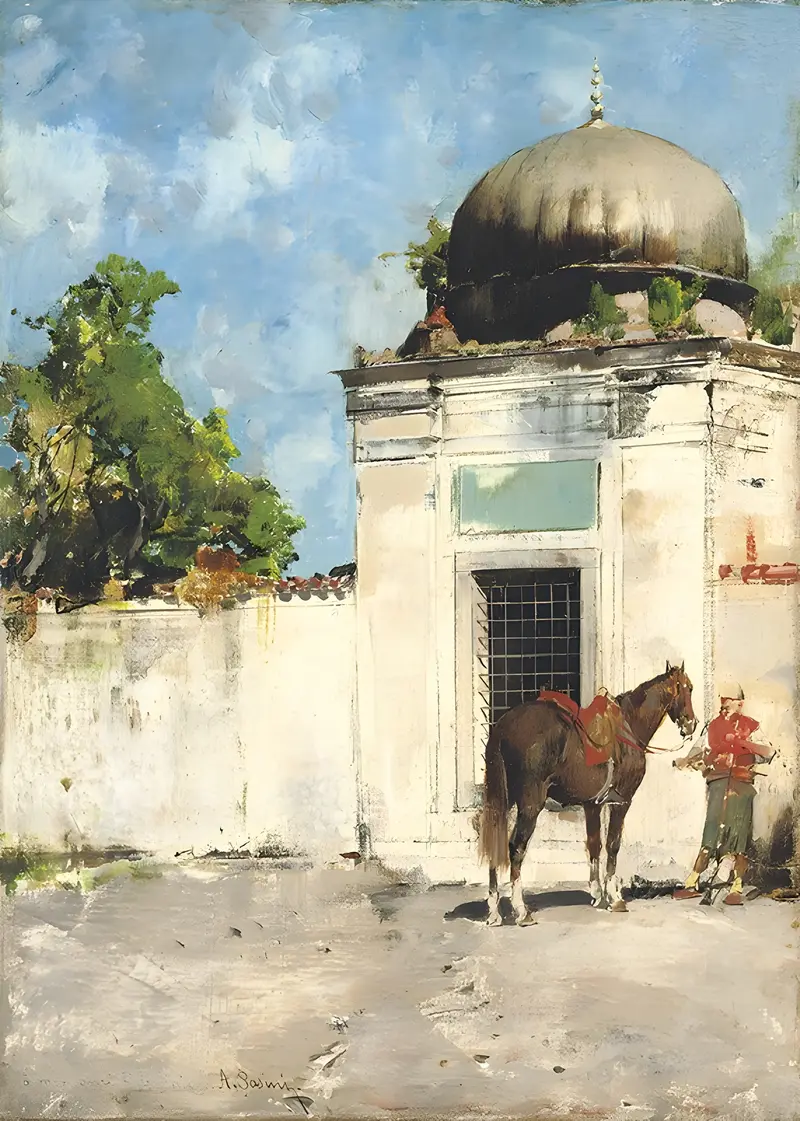
The Sentinel
Alberto Pasini
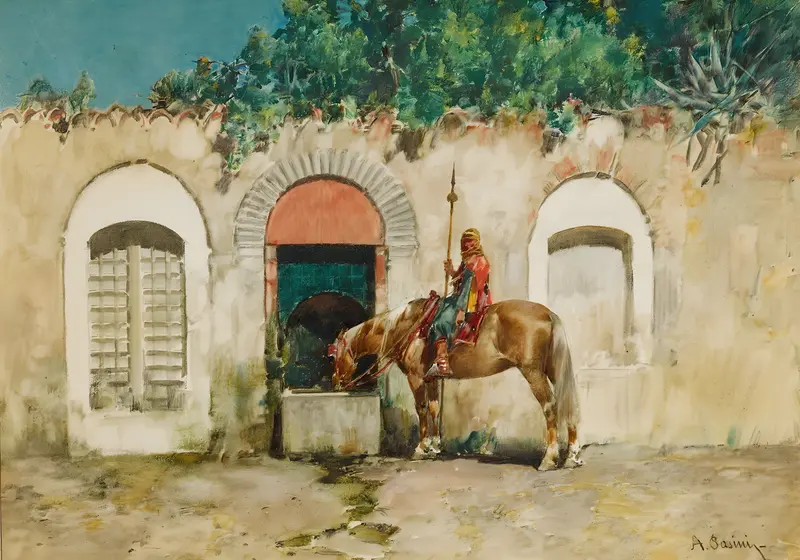
Horseman At A Fountain
Alberto Pasini
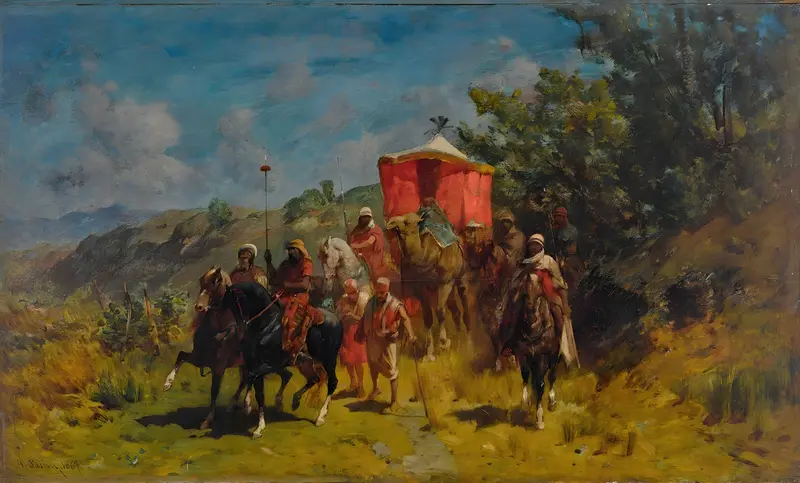
An Arab Caravan
Alberto Pasini
Mercato
Alberto Pasini
Arab merchants at a market by the city walls
Alberto Pasini
Outside the mosque
Alberto Pasini
Outside the Mosque
Alberto Pasini





