
Art movement · 19th century · France and Britain
Orientalism Art and Paintings
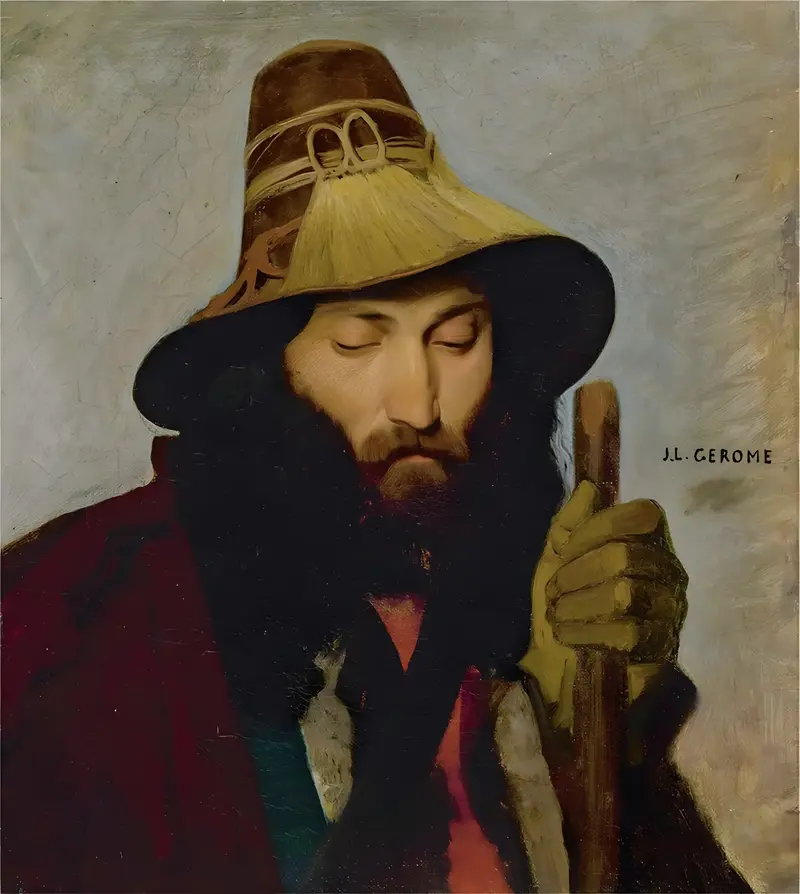
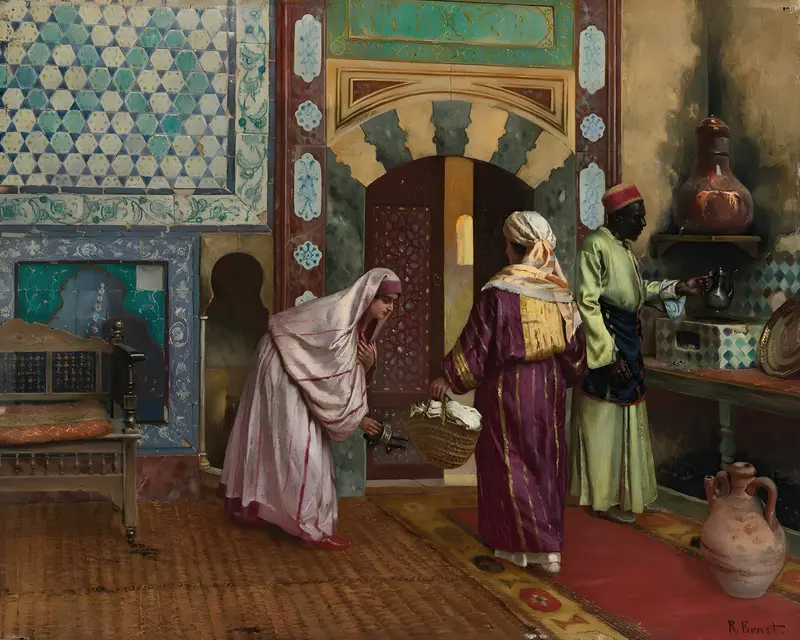
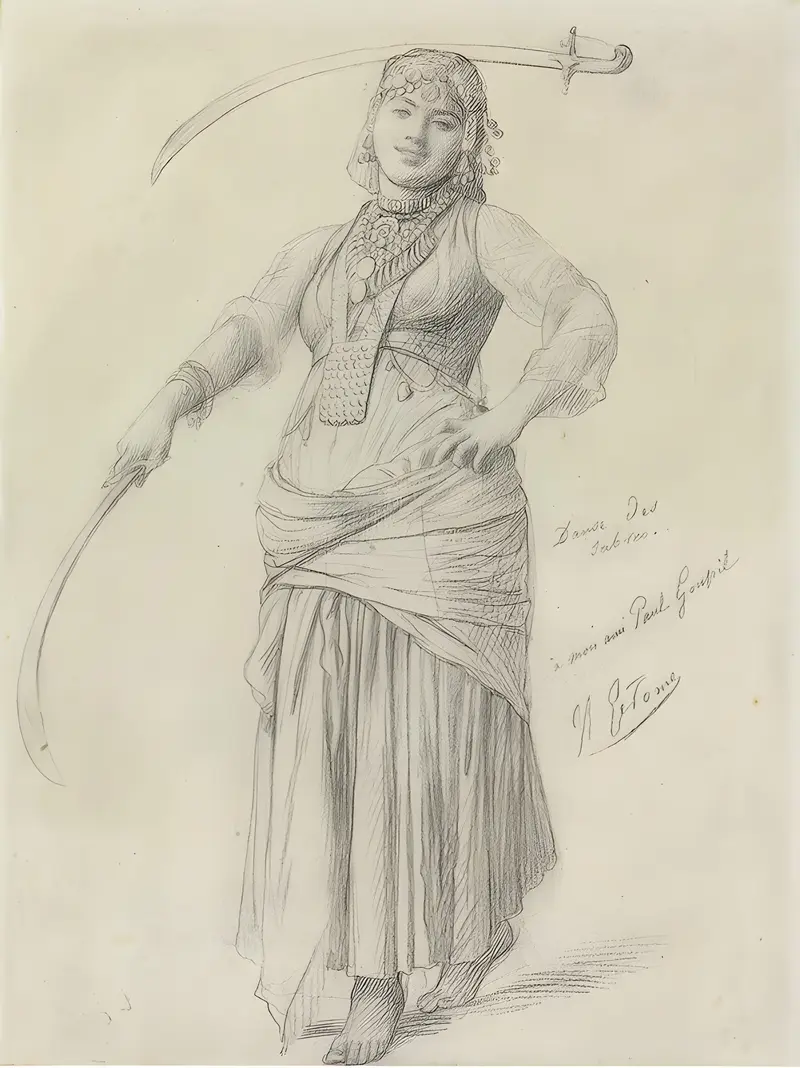
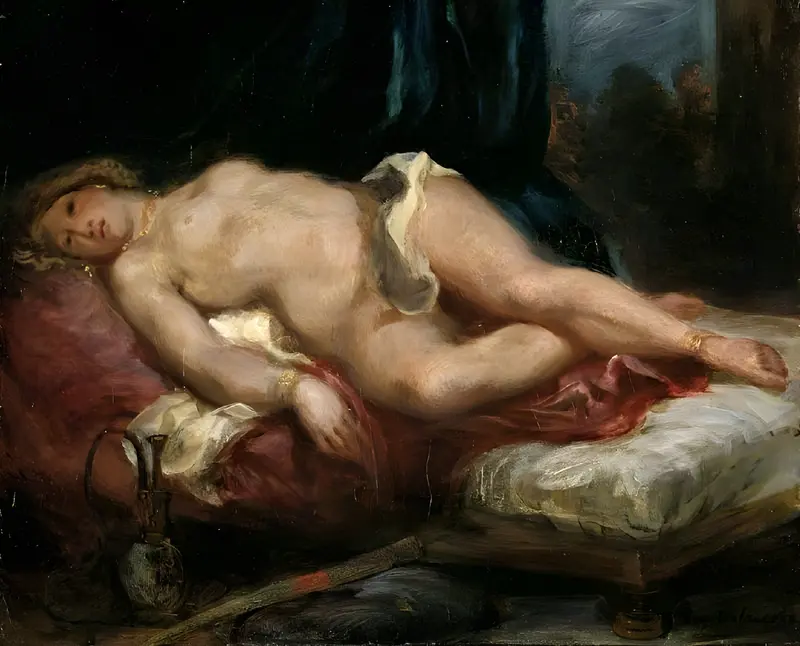
Orientalism is a style of European painting that began in France and Britain around 1800 and pictured North Africa and the Middle East, often in intense, authentic-looking detail but shaped by imagination and Western stereotypes. Napoleon's conquest of Egypt helped start it, and it lasted through the 19th century. Its painters include Jean-Léon Gérôme, Eugène Delacroix, John Frederick Lewis, Eugène Fromentin and Mariano Fortuny.
The name is debated. The National Gallery in London calls it a contentious term, and since Edward Said's book Orientalism (1978) many writers have read these pictures in the light of European colonial power. Gérôme's Bonaparte Before the Sphinx shows the mix: the meeting of the French general and the ancient monument is staged, but every stone and shadow looks real.
Browse 667 Orientalism paintings and artworks below, all public domain and free to download.
Selected and written by Pavel MazuelasUpdated November 5, 2026
Part of Art Movements and Painting StylesRelated: Romanticism, Academic Art, Islamic Art
All Orientalism paintings and artworks
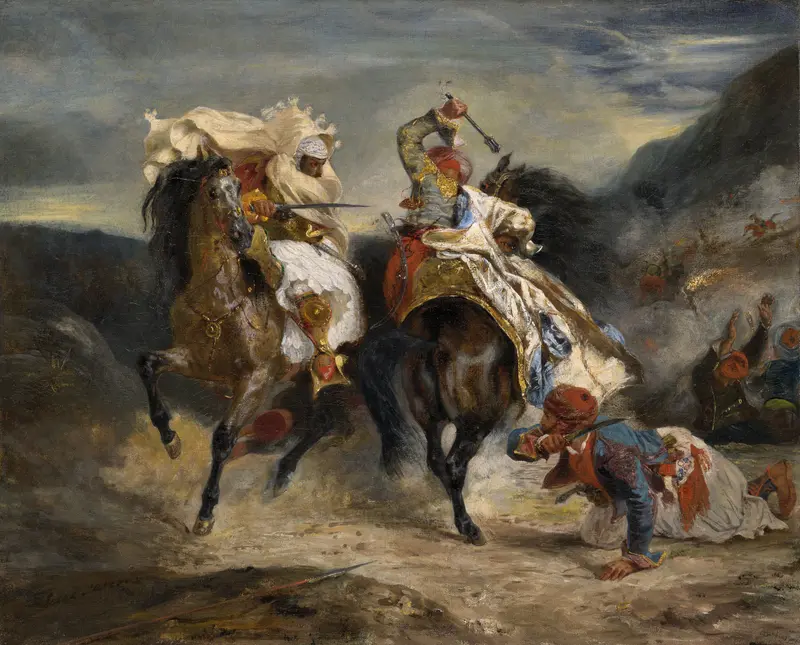
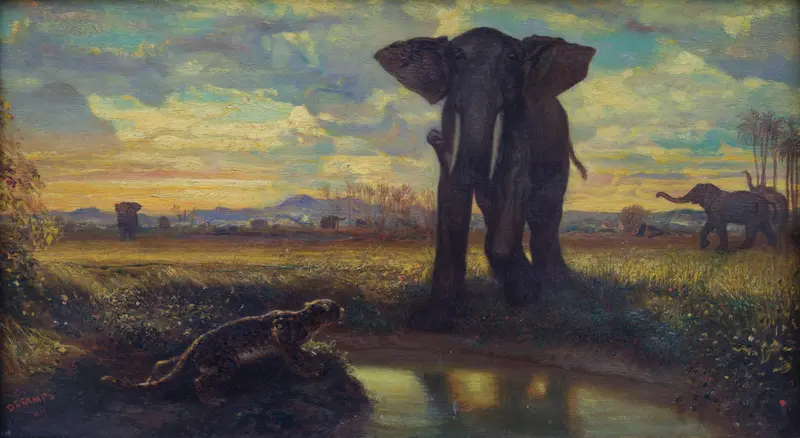
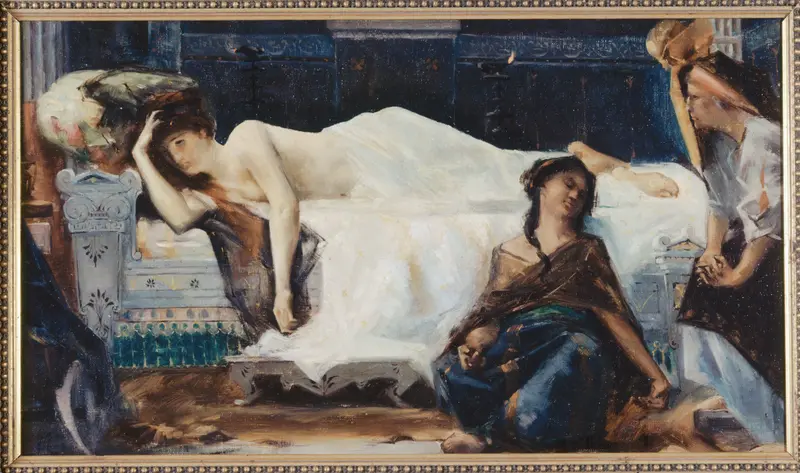
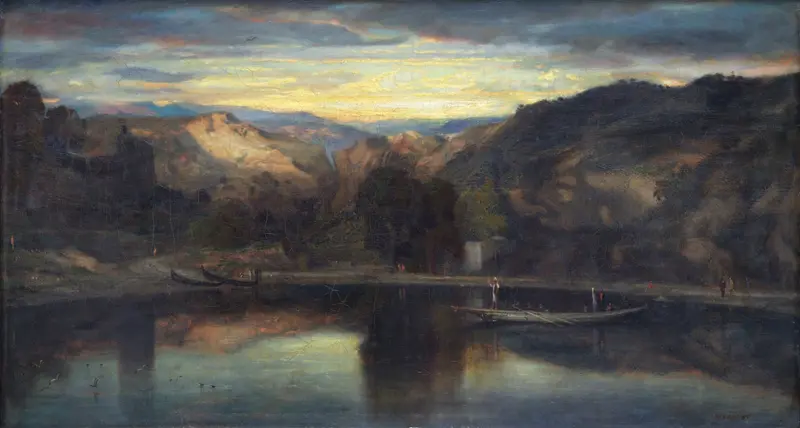
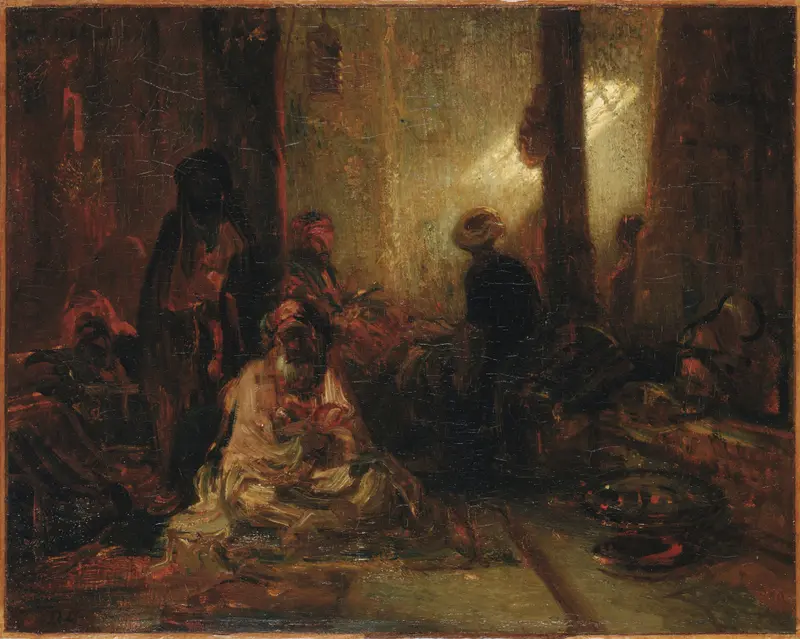
Scenes of daily life, portraits, history paintings, landscapes and animals. All public domain, free to download.

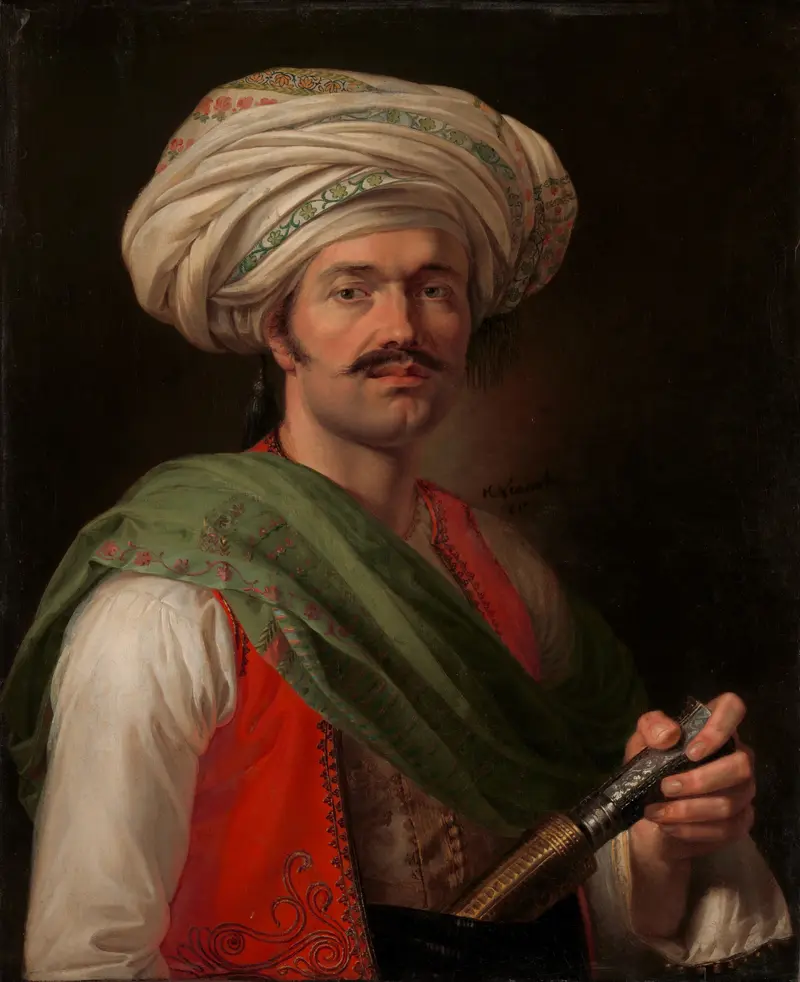
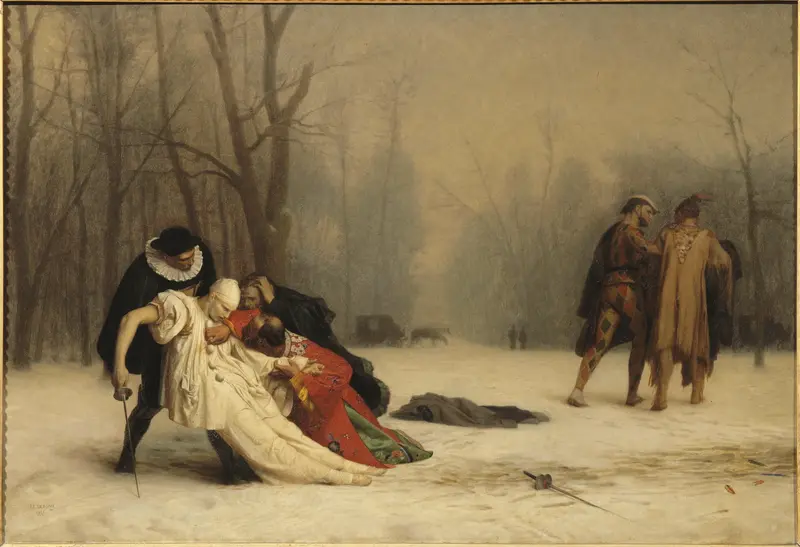

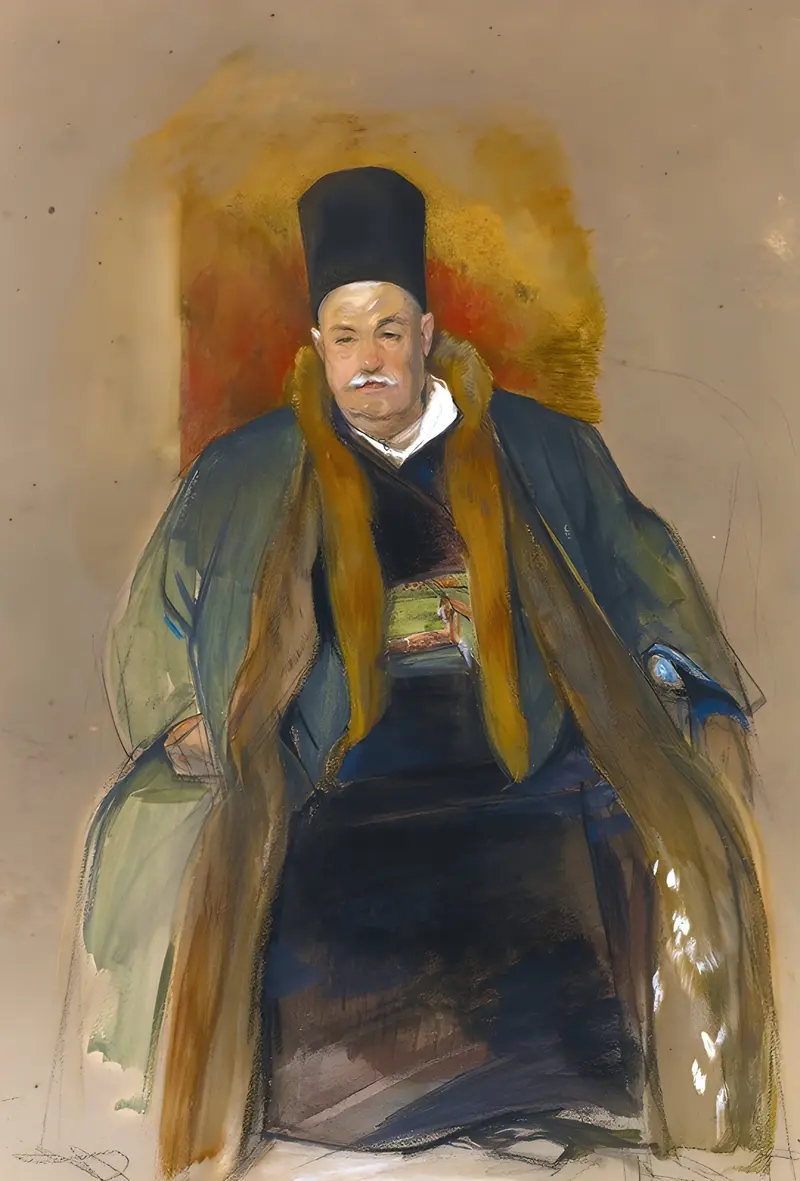
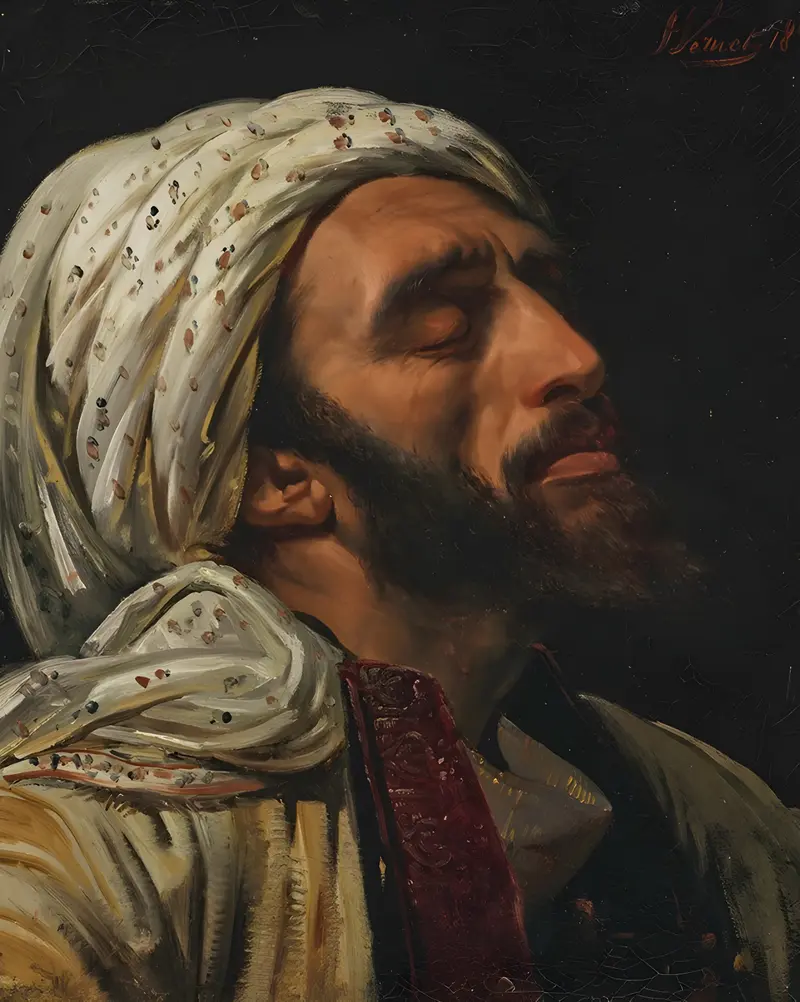
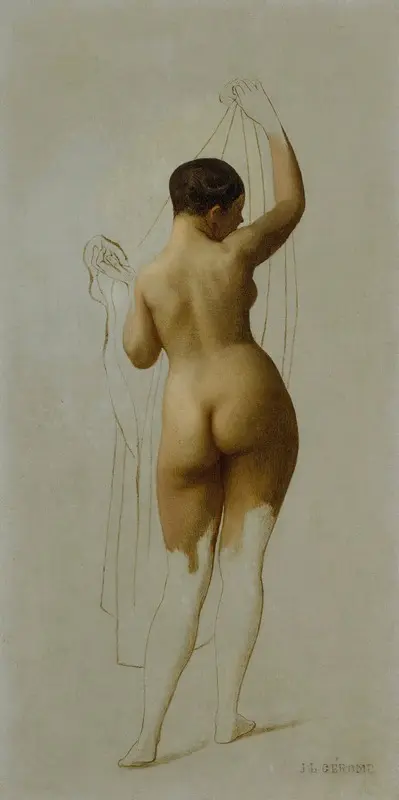

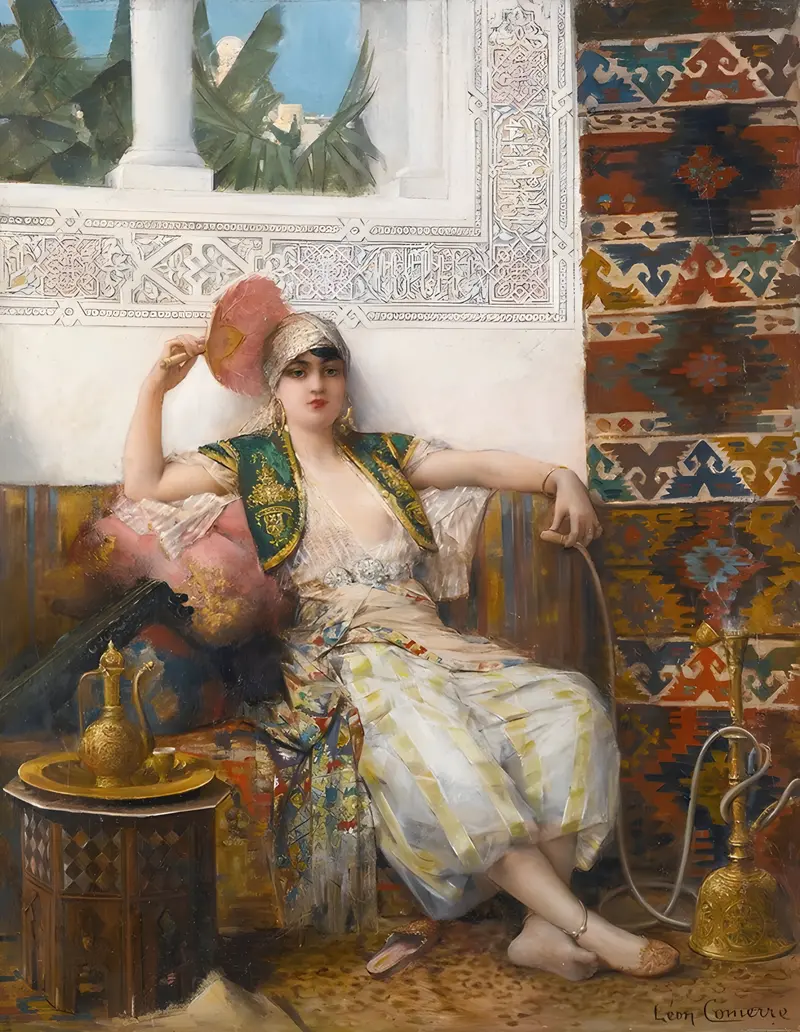
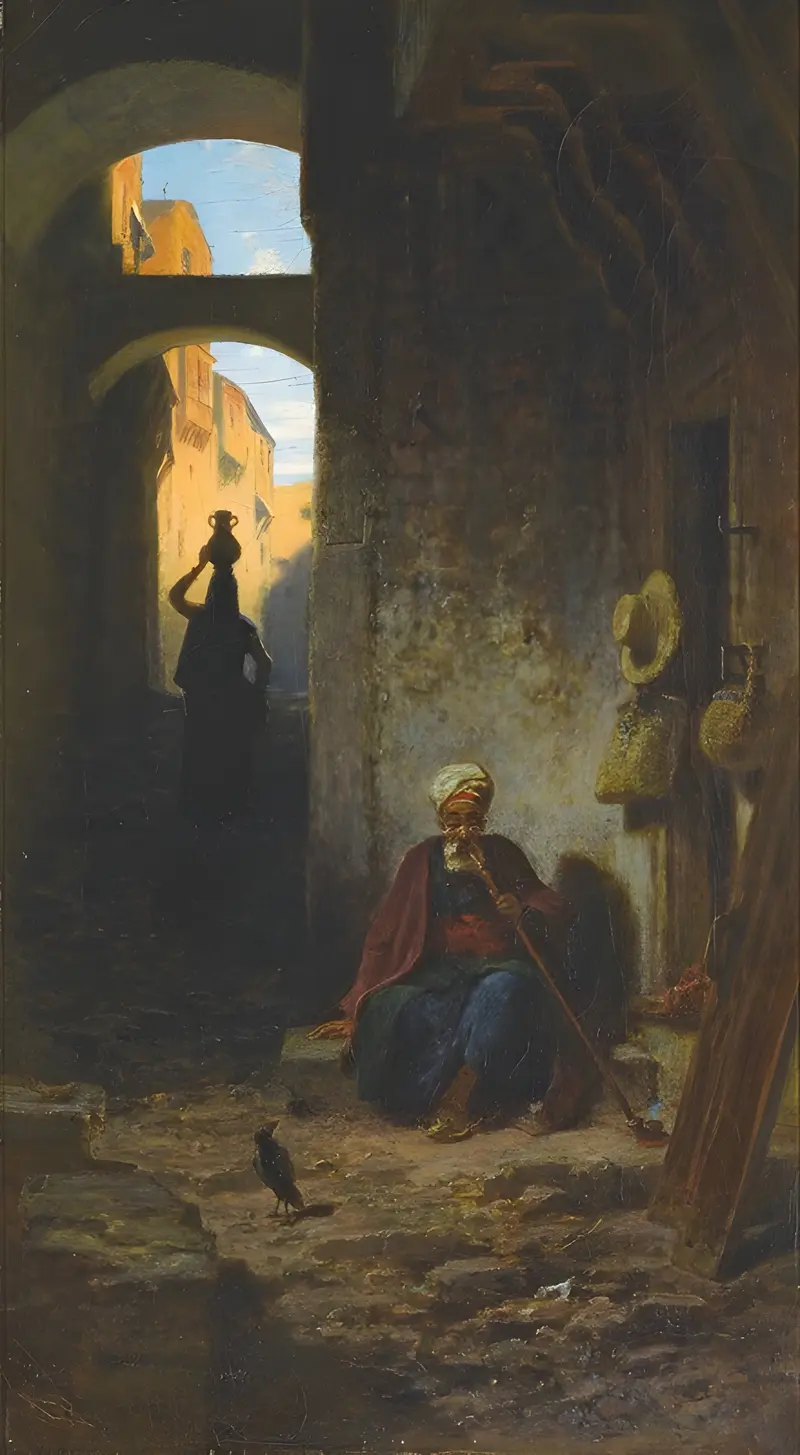
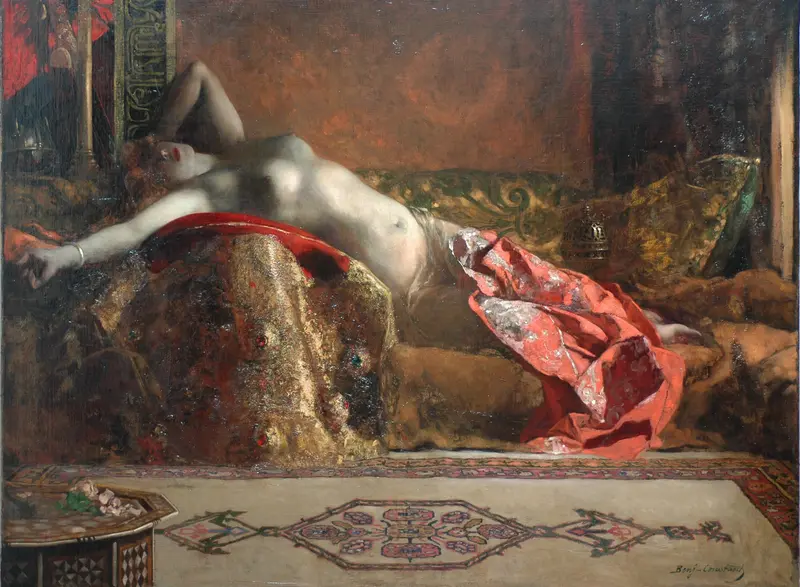
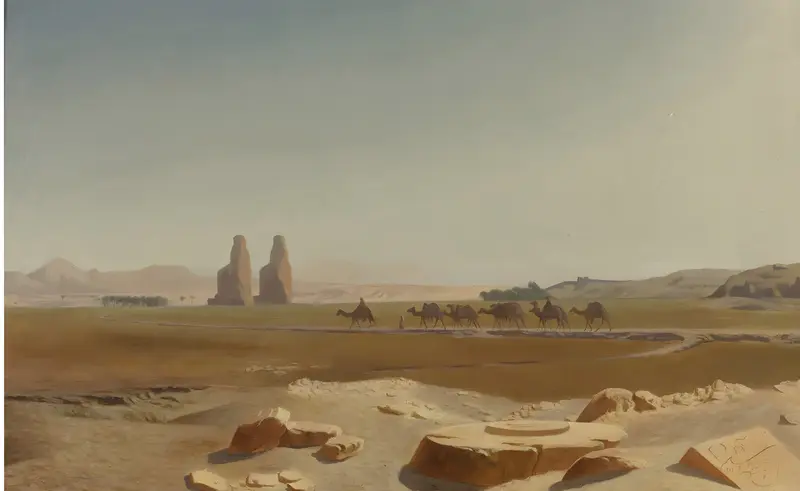
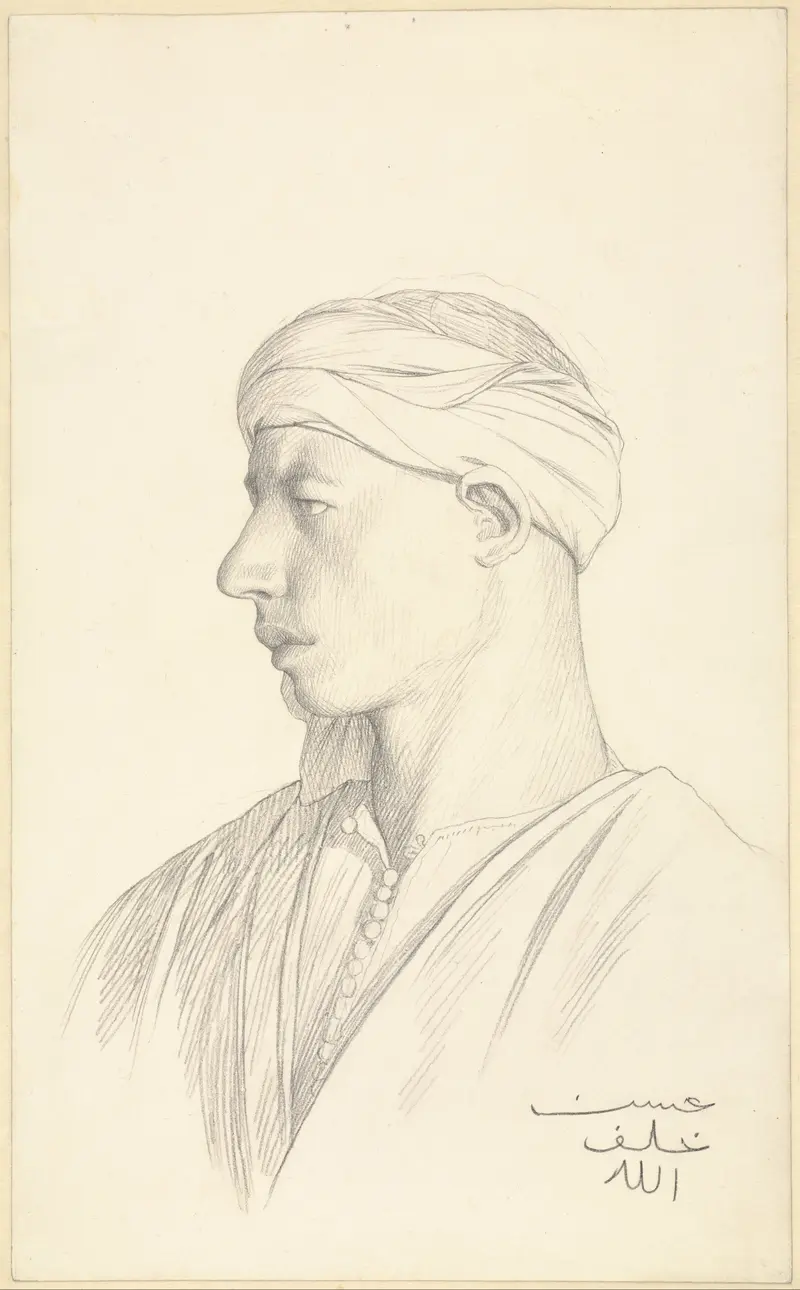

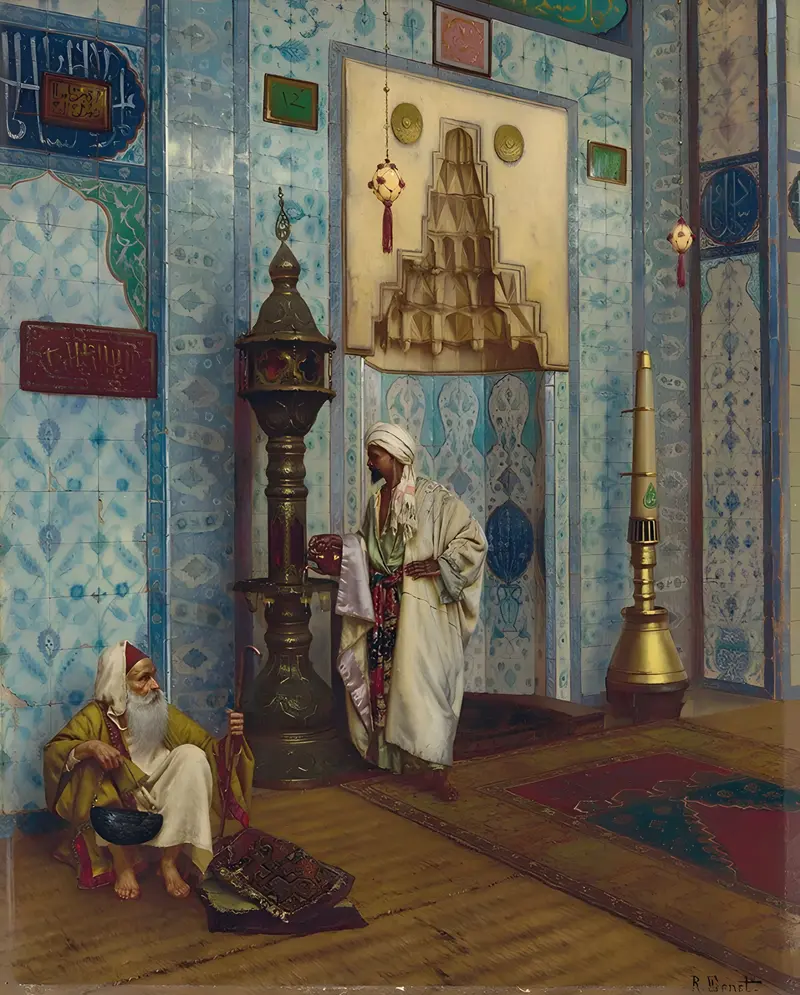
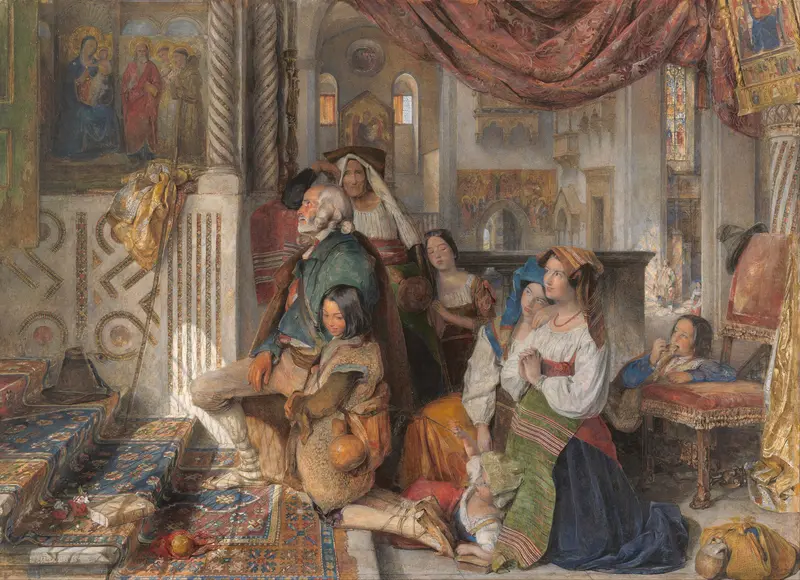
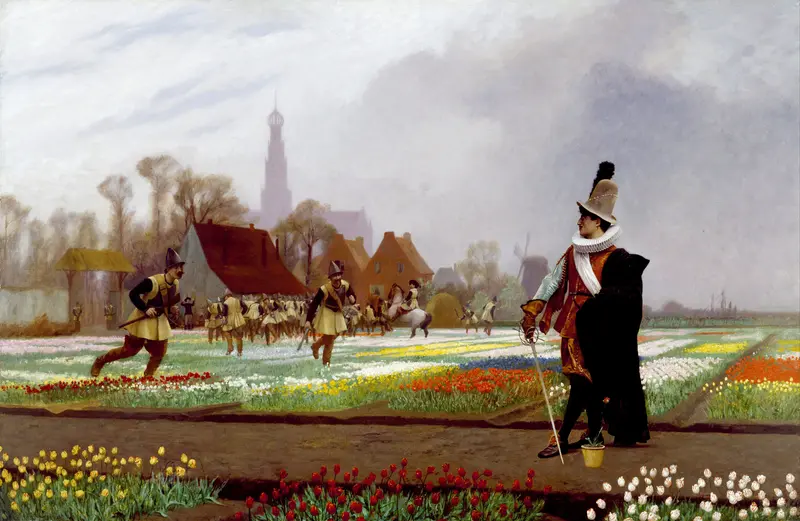
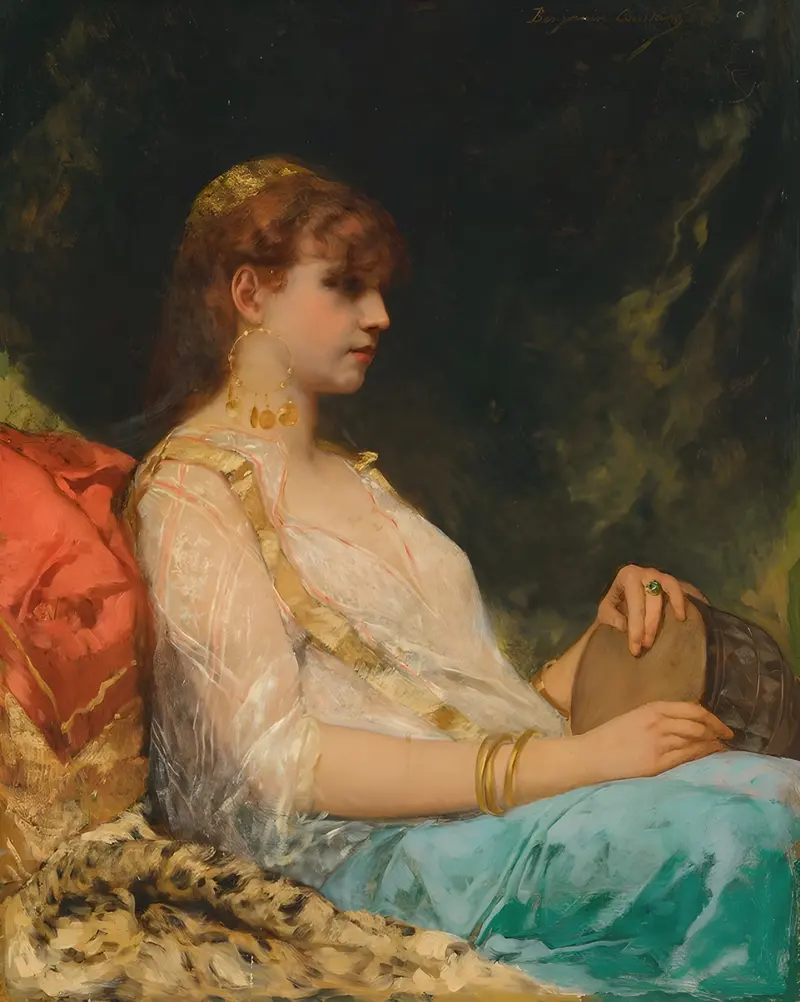
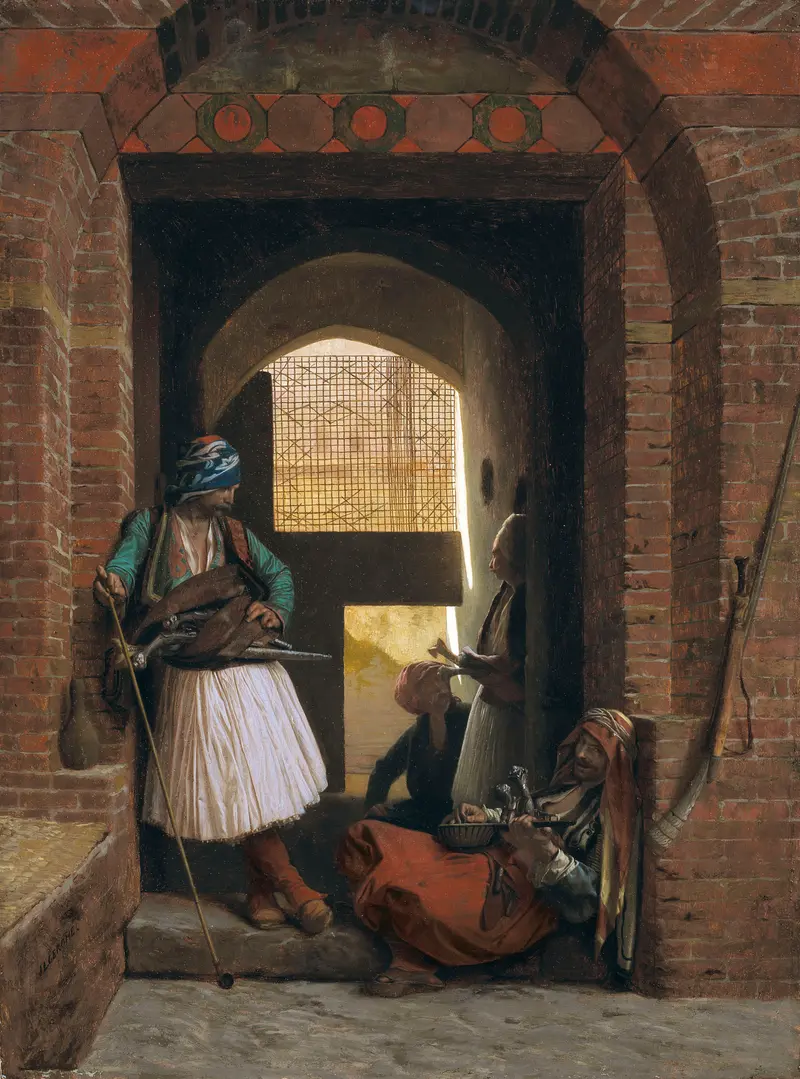
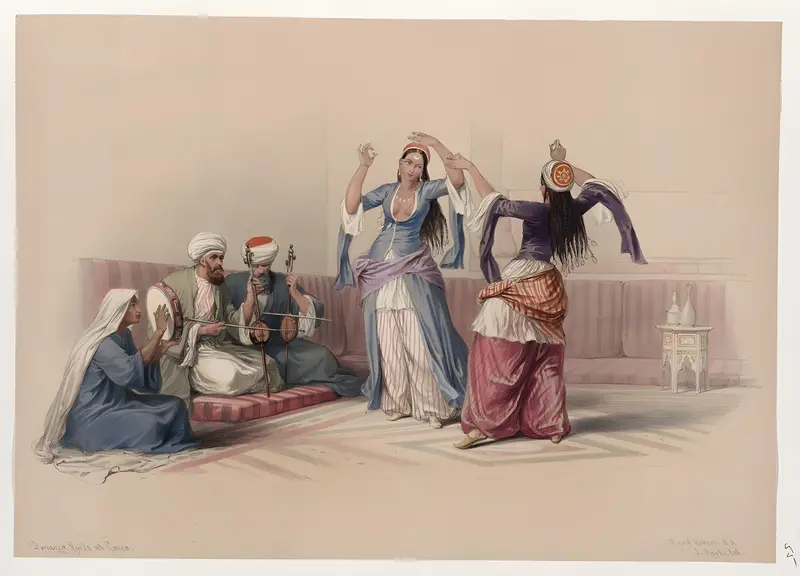
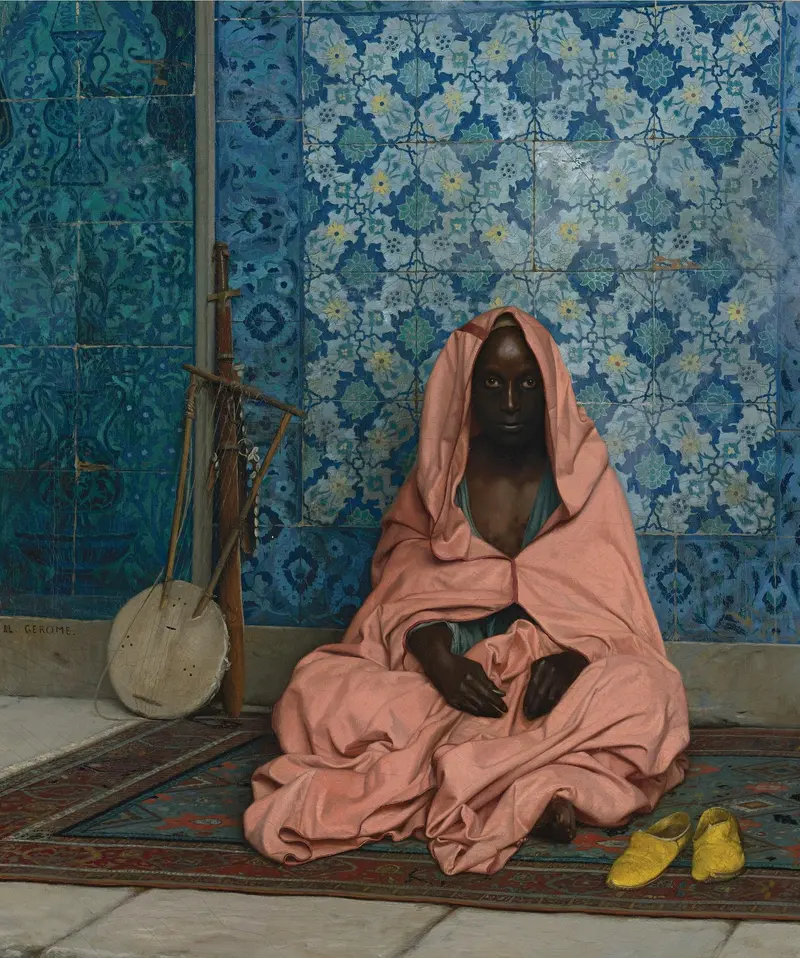
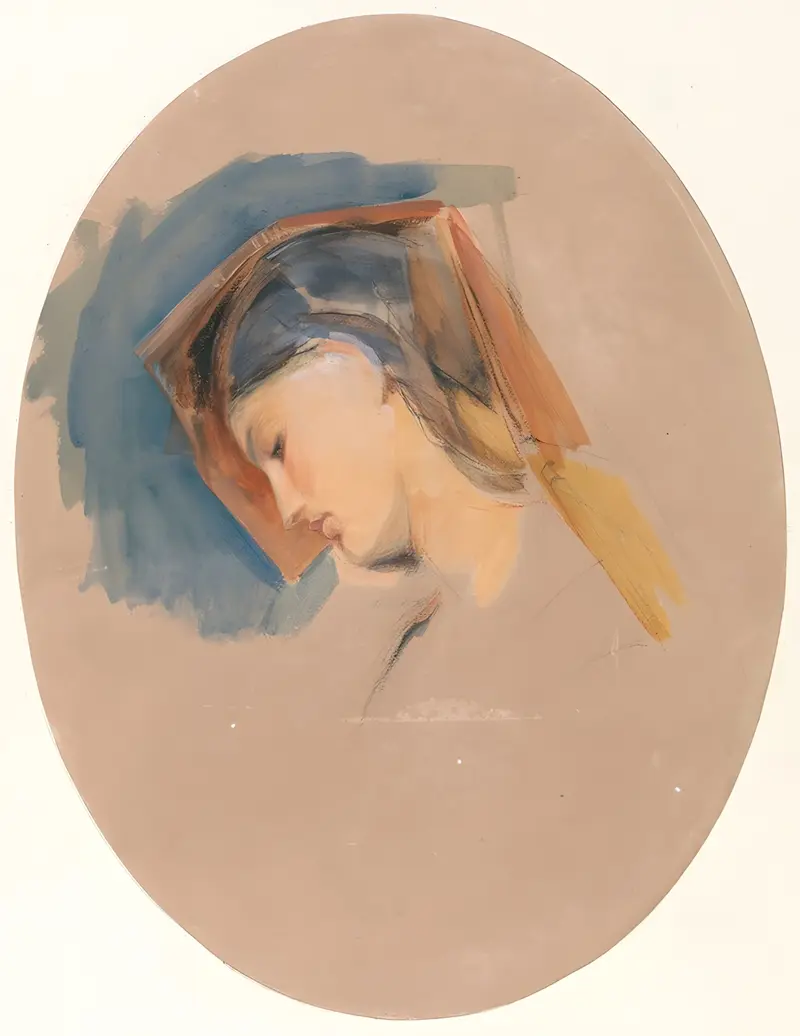
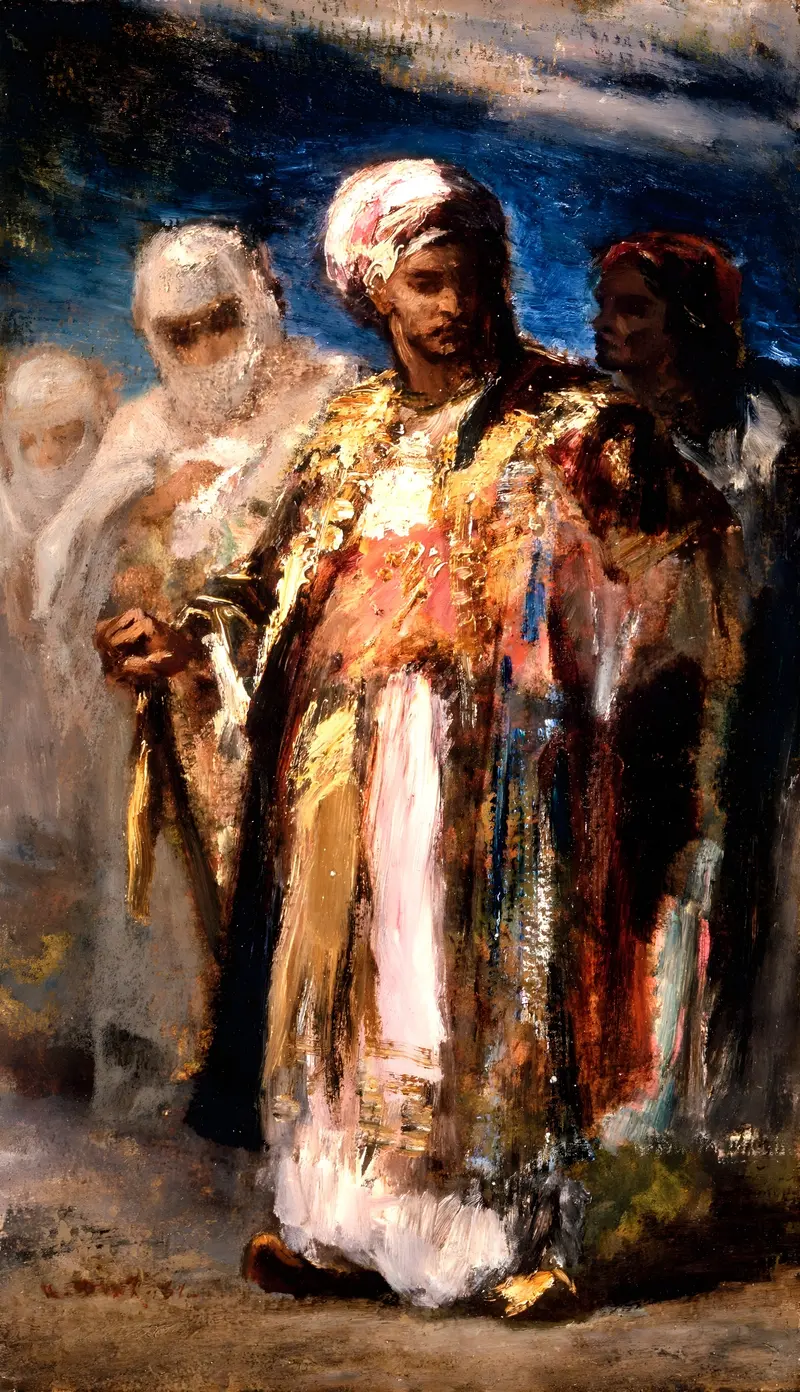


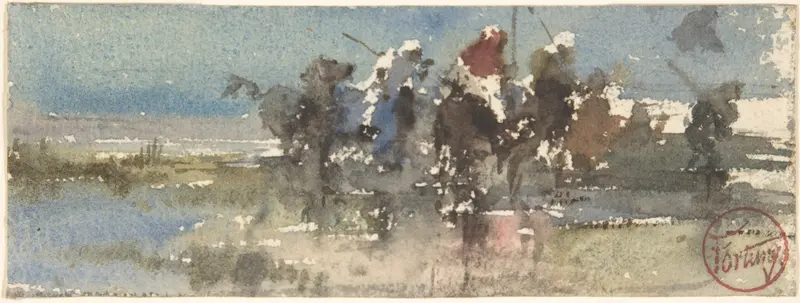
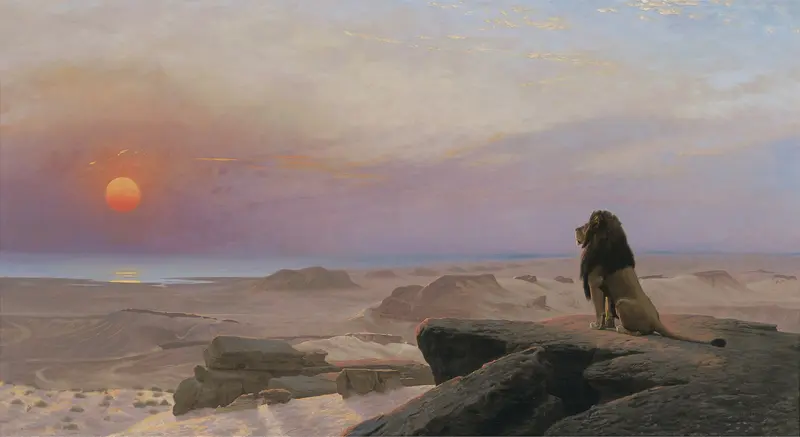
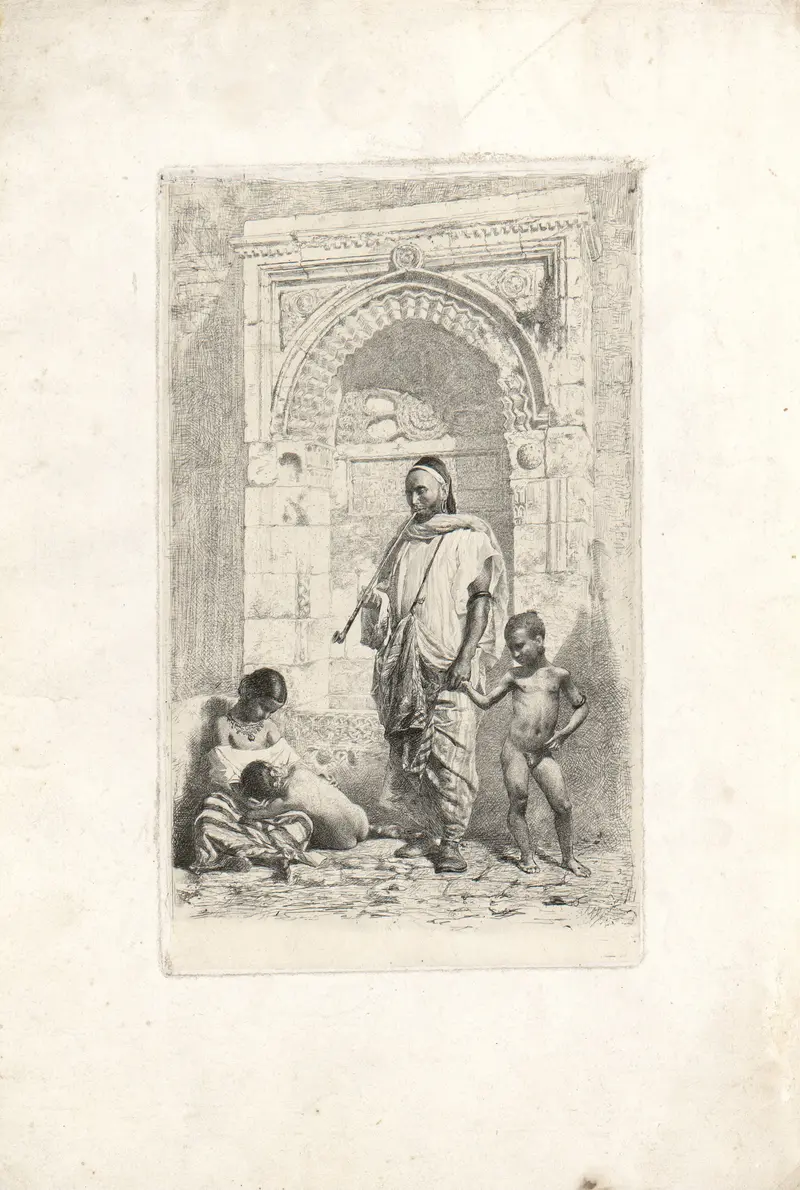
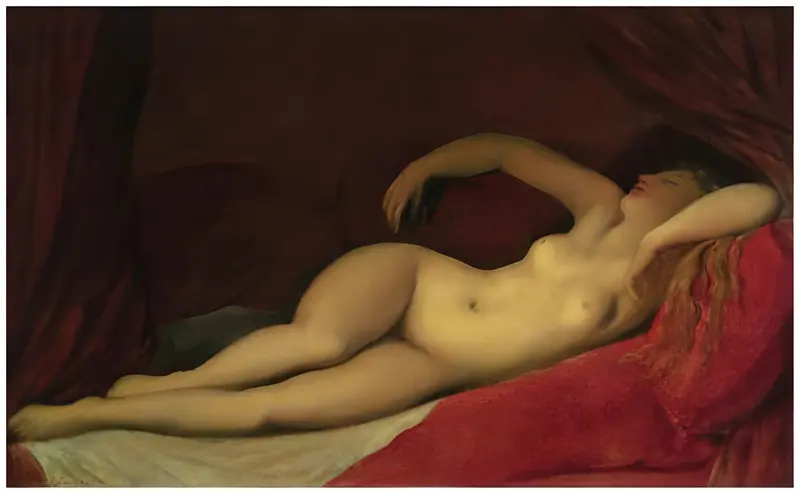
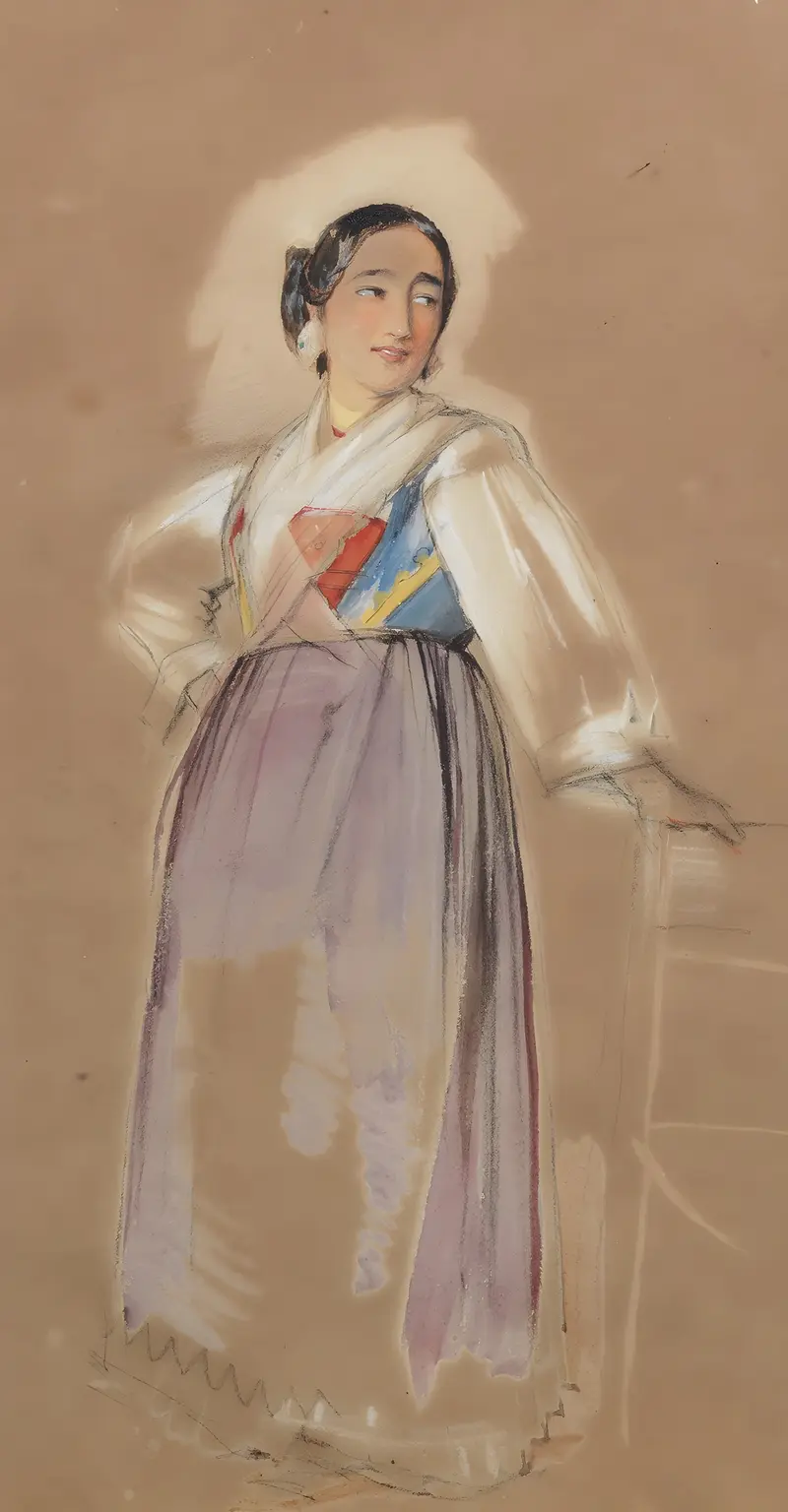
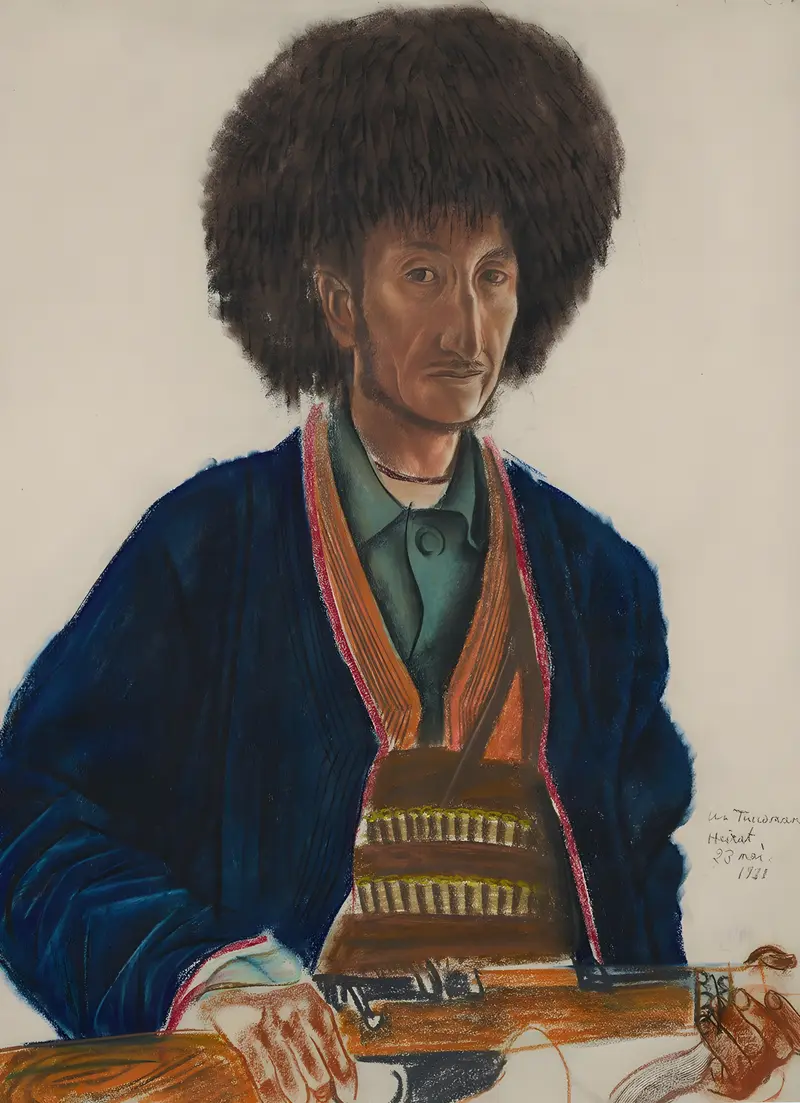
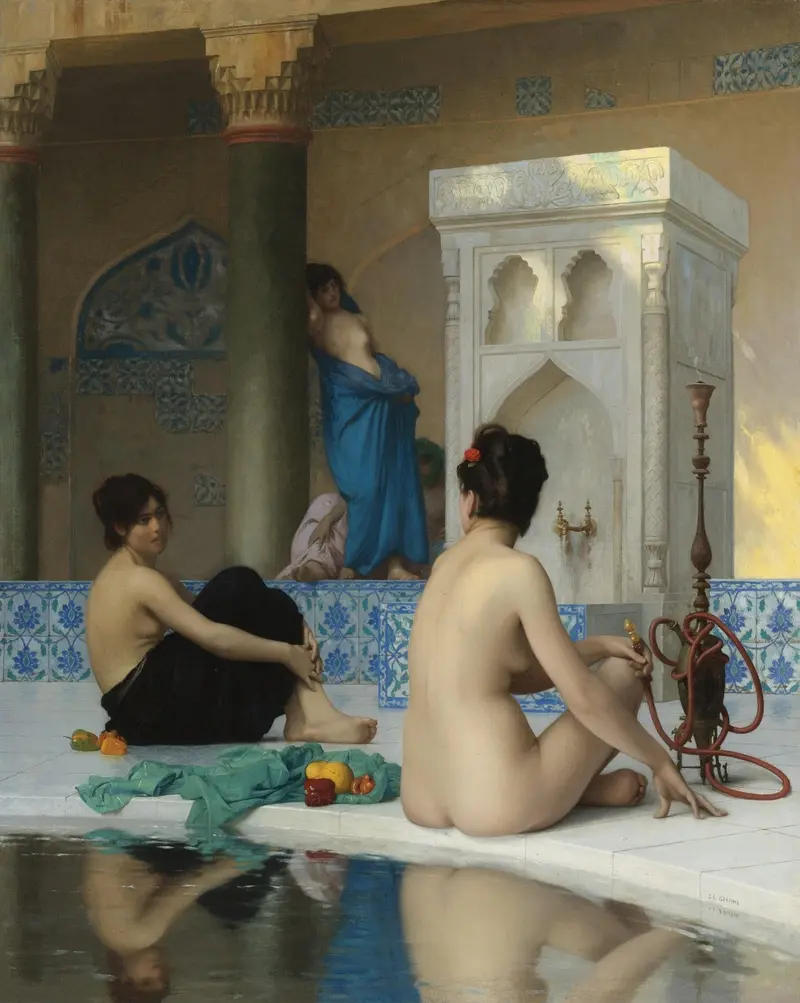
Famous Orientalist paintings
The best-known Orientalist paintings. Click any painting to see it up close and download it free.
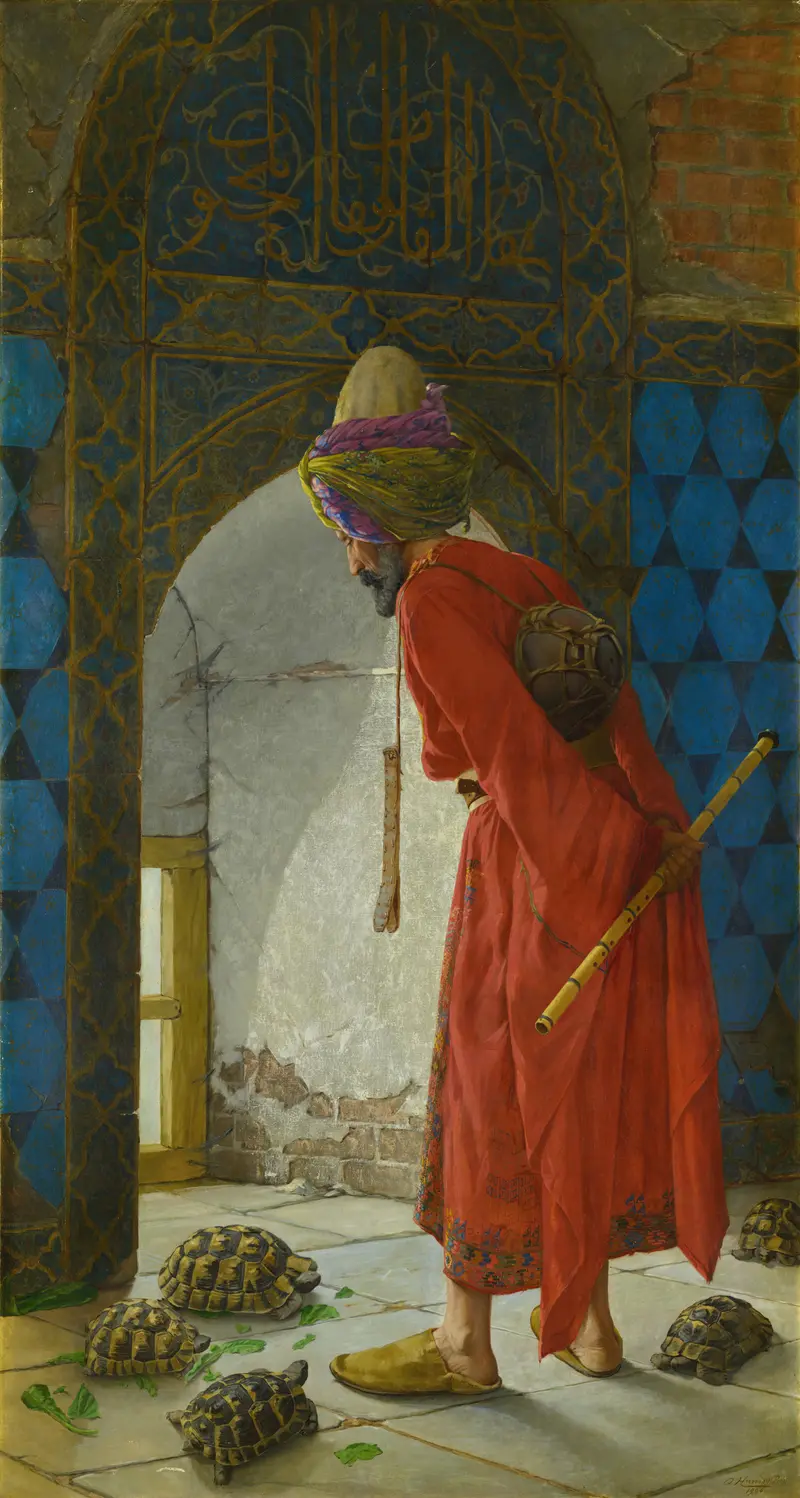 The Tortoise TrainerOsman Hamdi Bey
 Women of Algiers in Their ApartmentEugène Delacroix
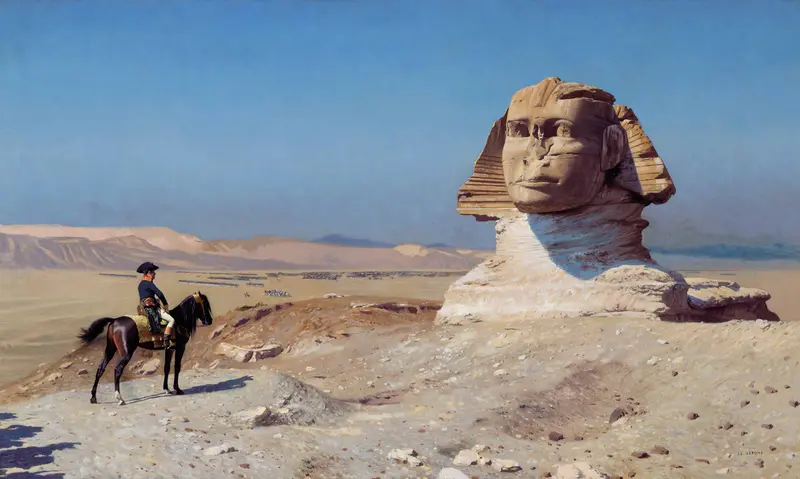 Bonaparte Before the SphinxJean-Léon Gérôme
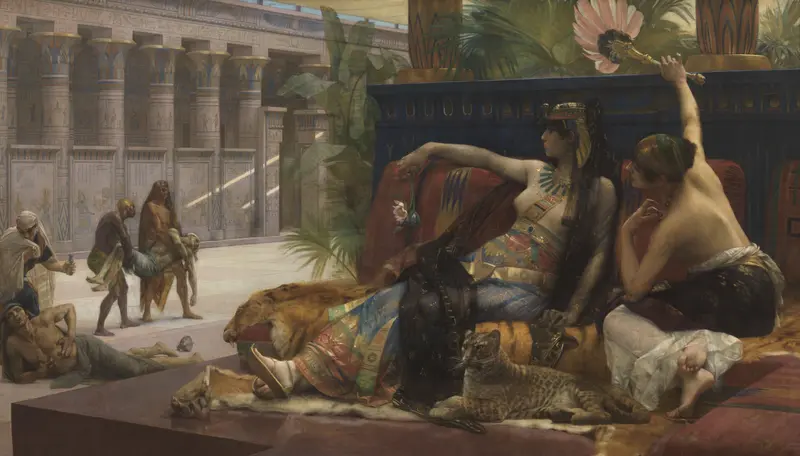 Cleopatra Testing Poisons on Condemned PrisonersAlexandre Cabanel
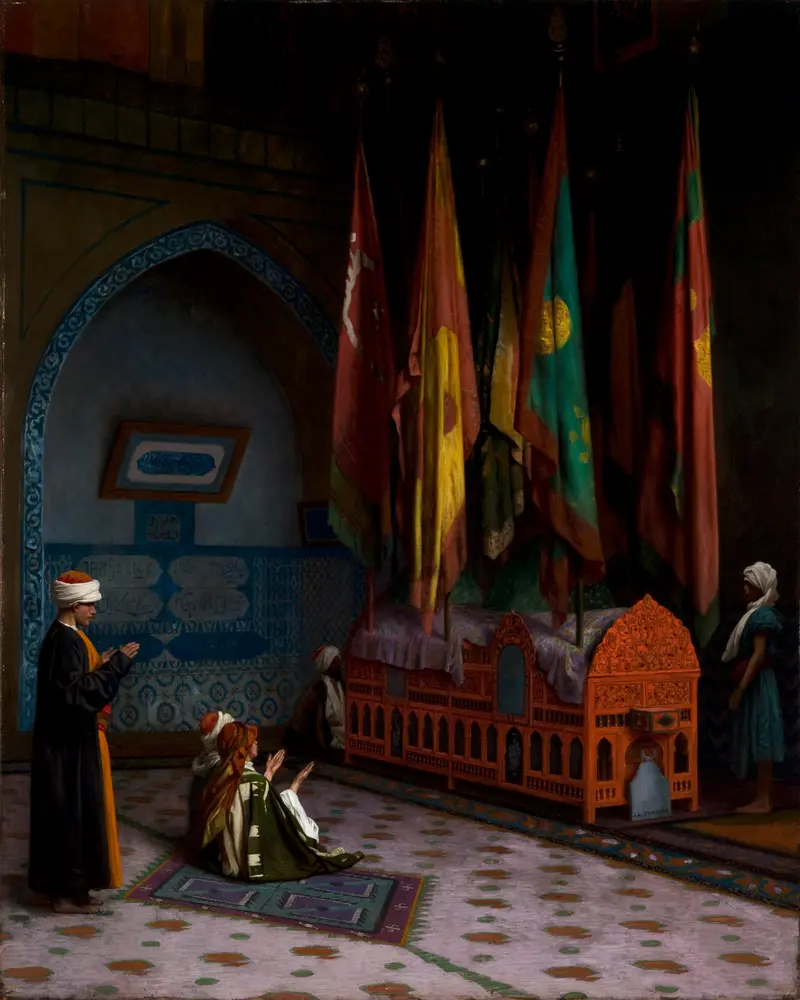
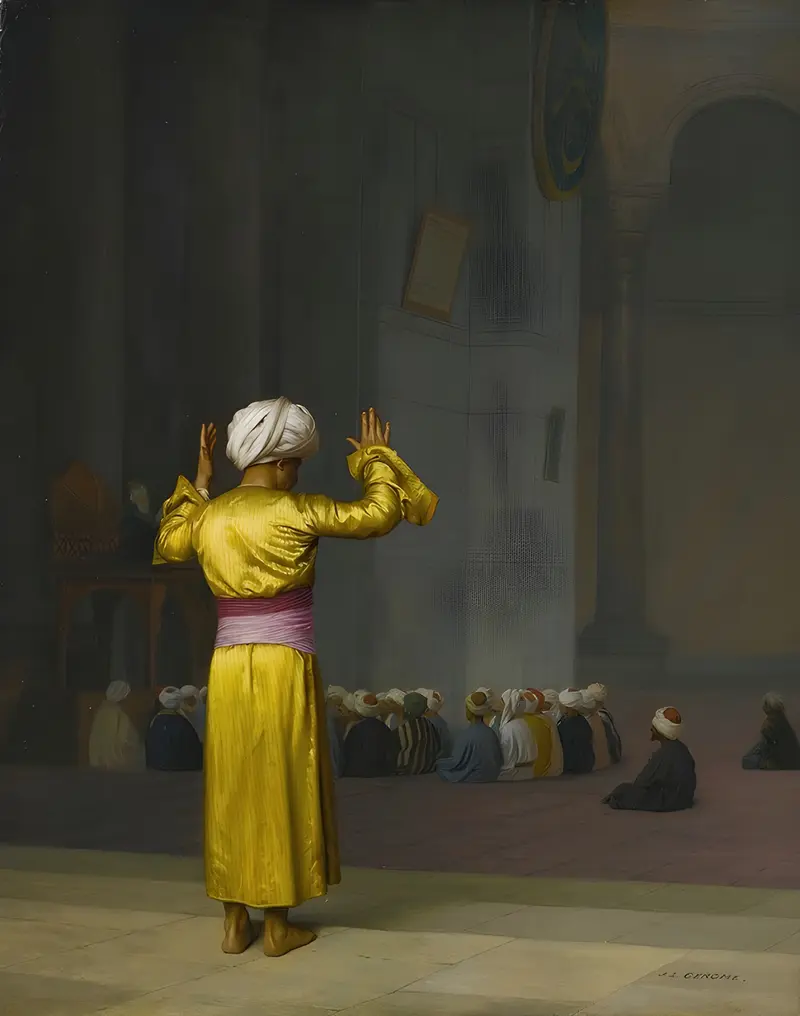
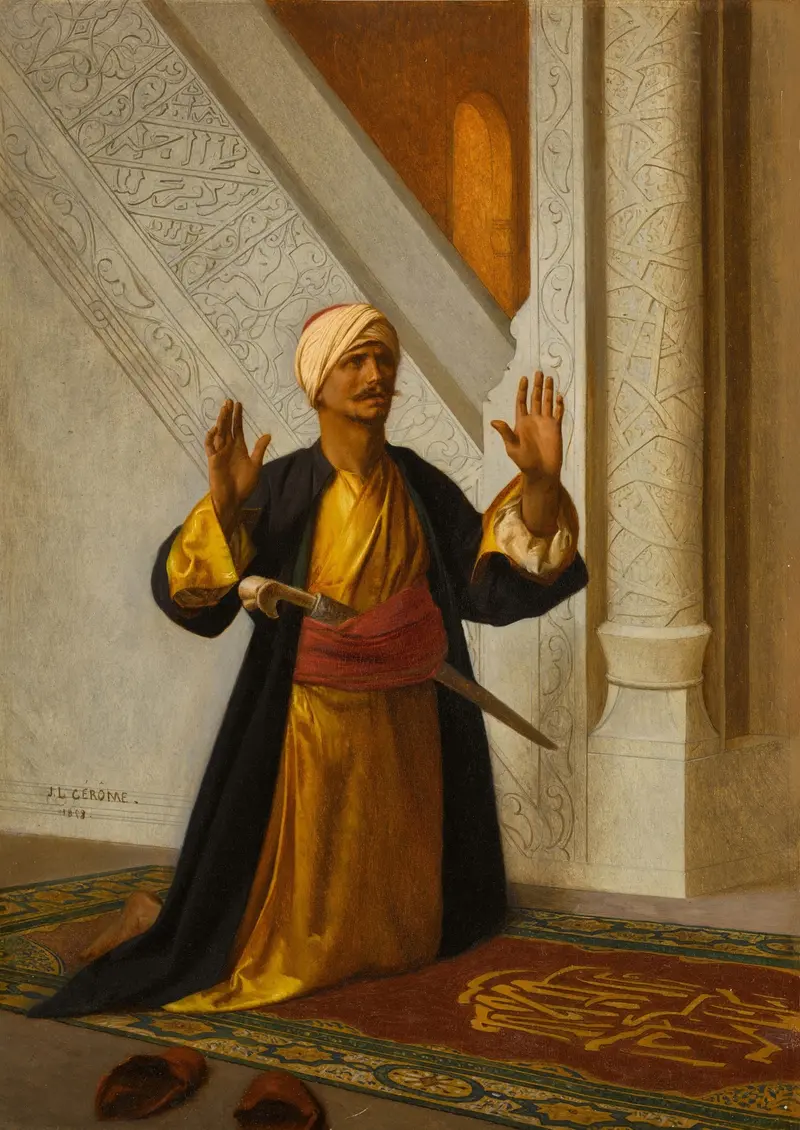
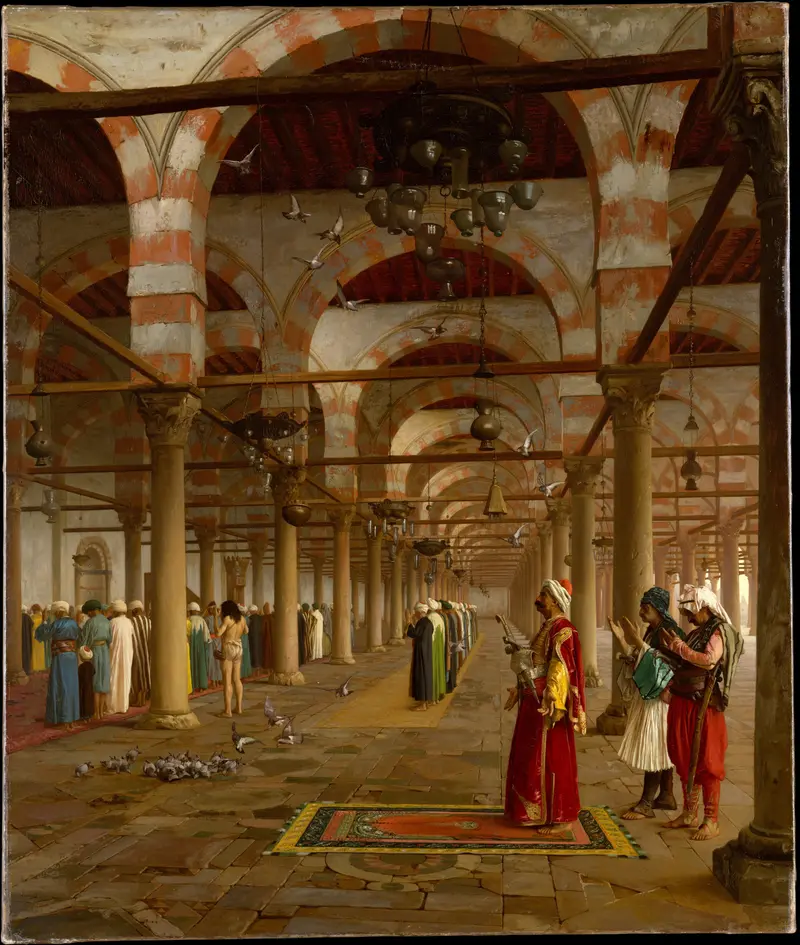 Prayer in the MosqueJean-Léon Gérôme
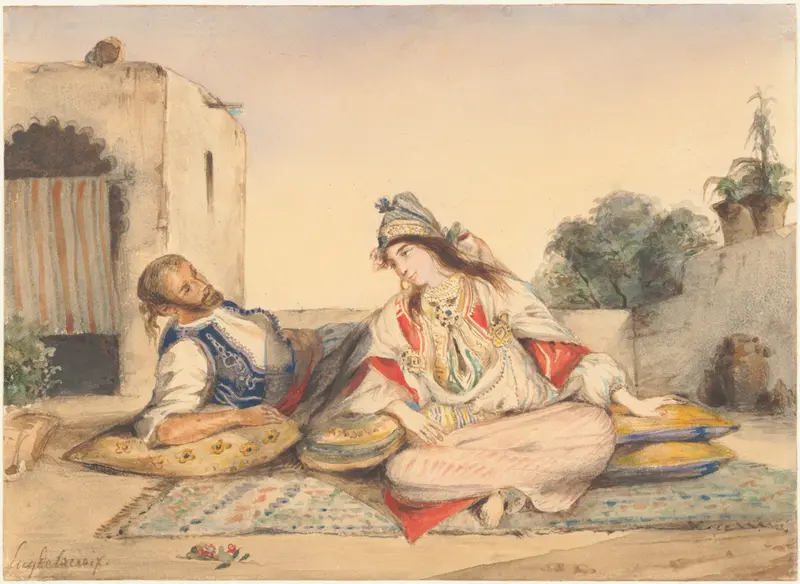
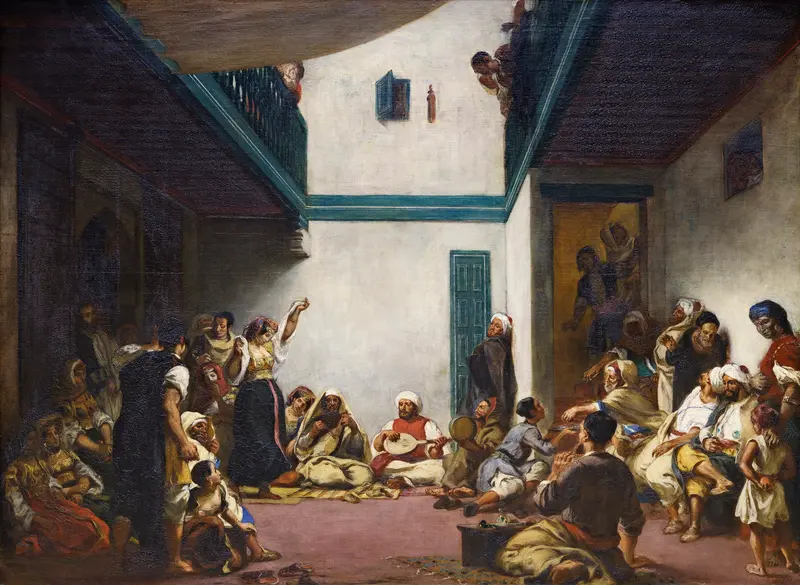 Jewish Wedding in MoroccoEugène Delacroix
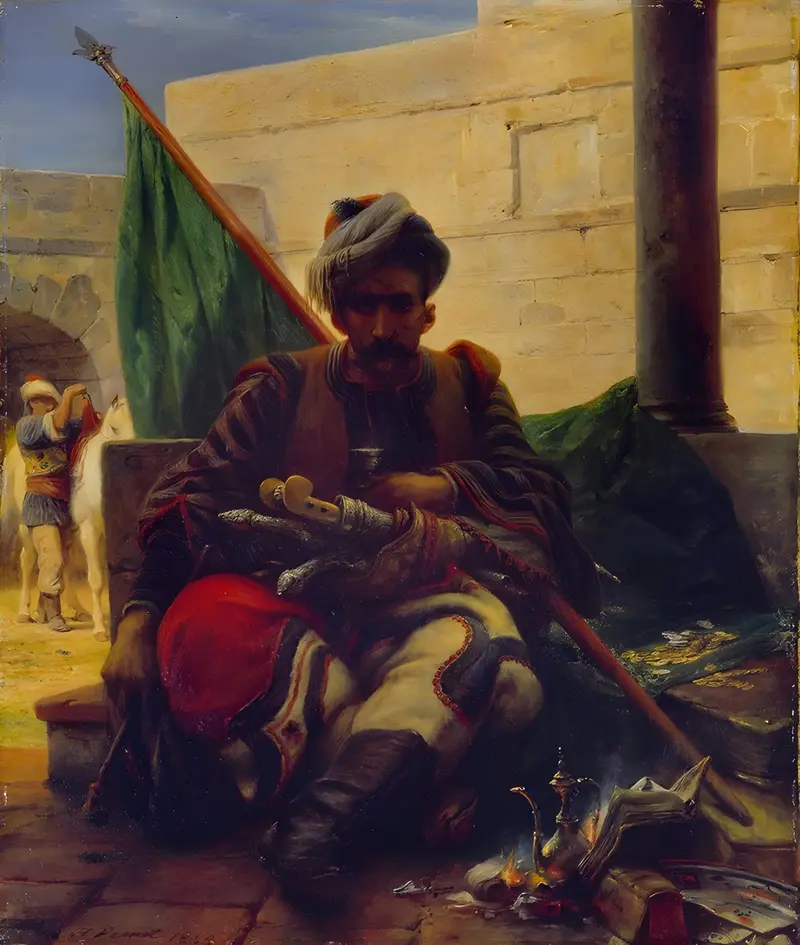
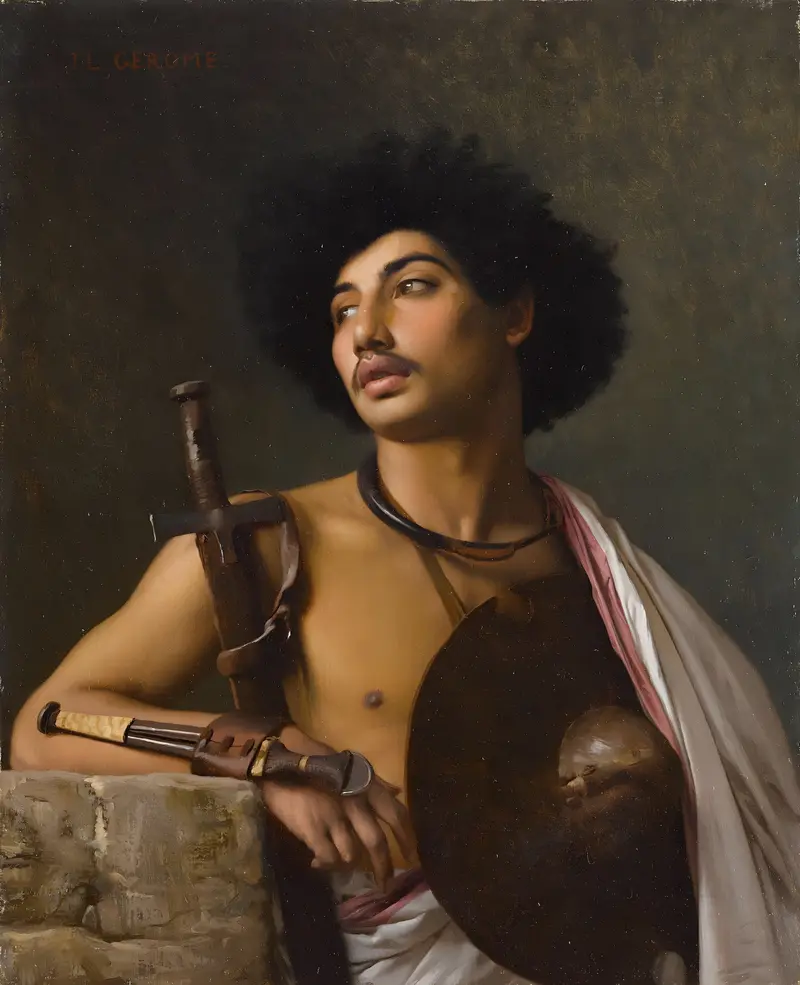
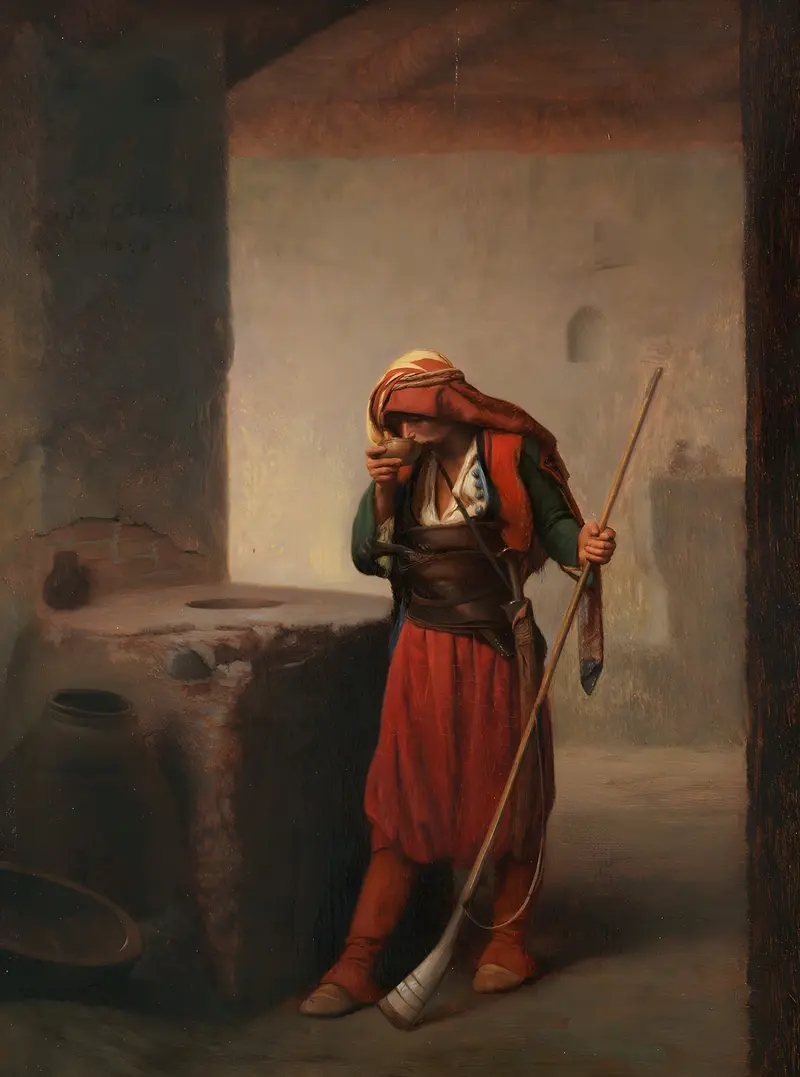
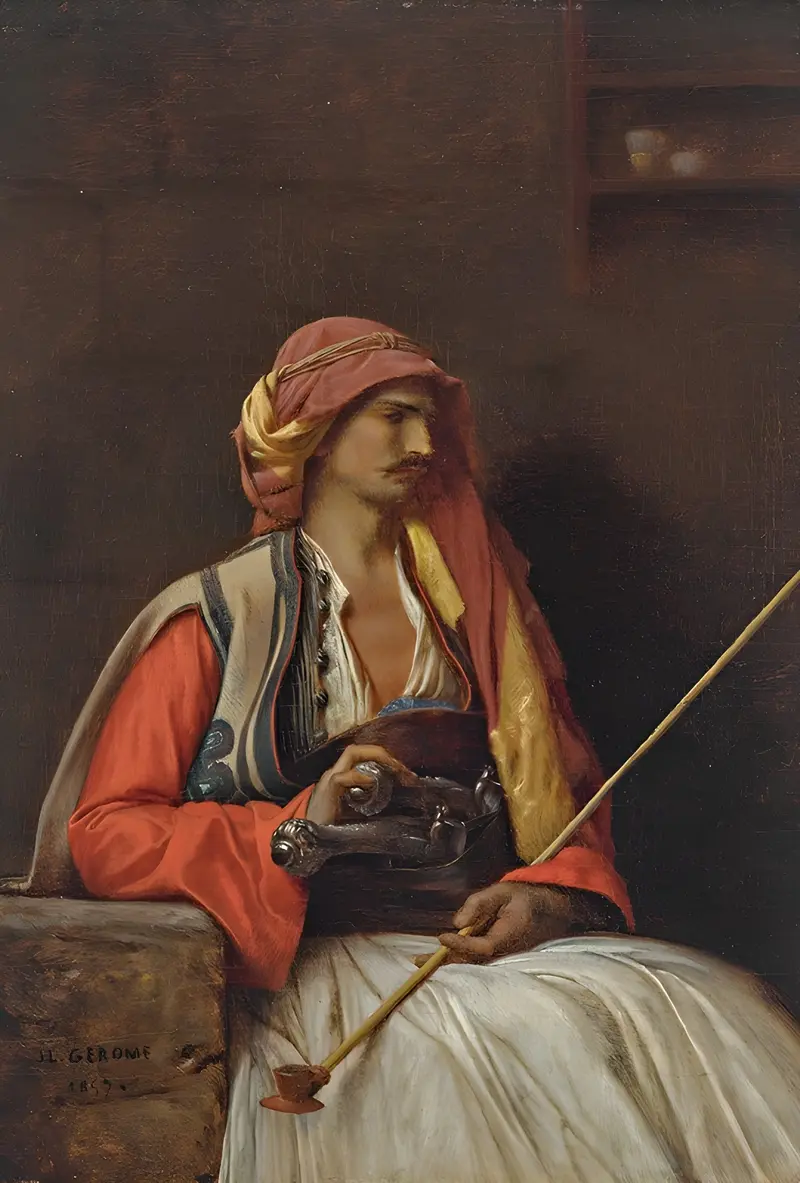
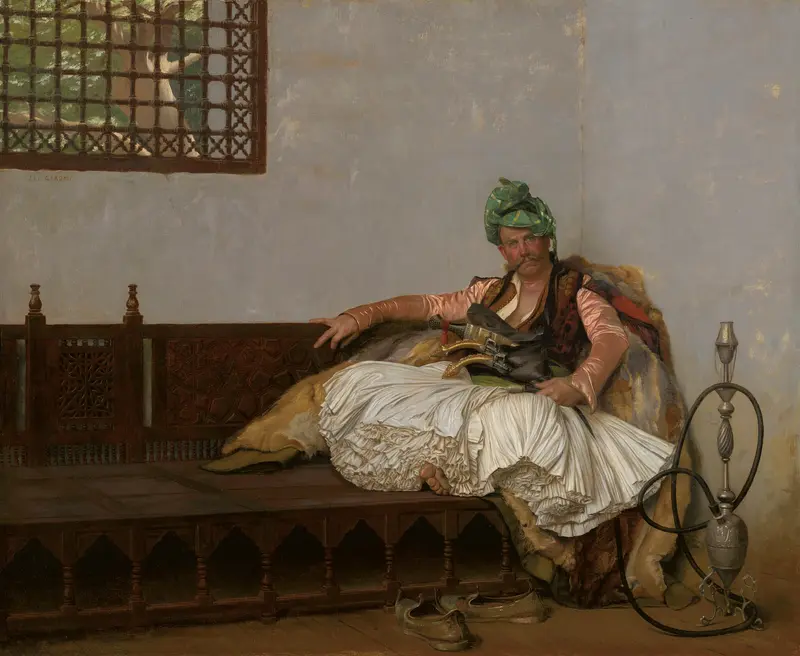
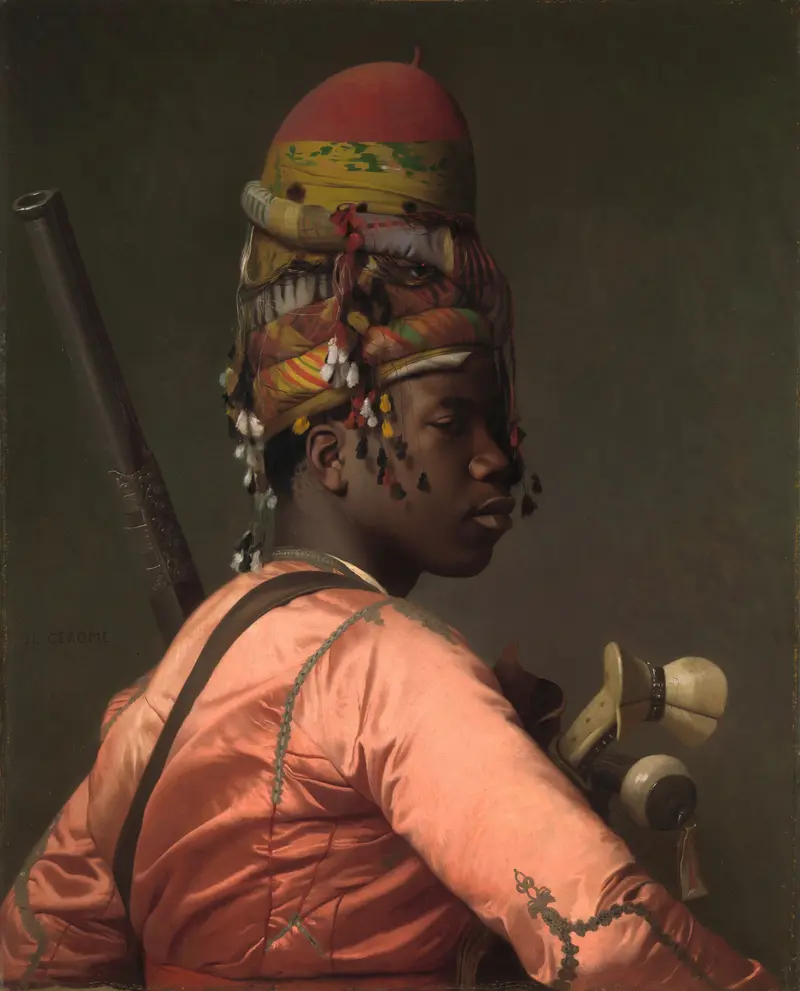 Bashi-BazoukJean-Léon Gérôme
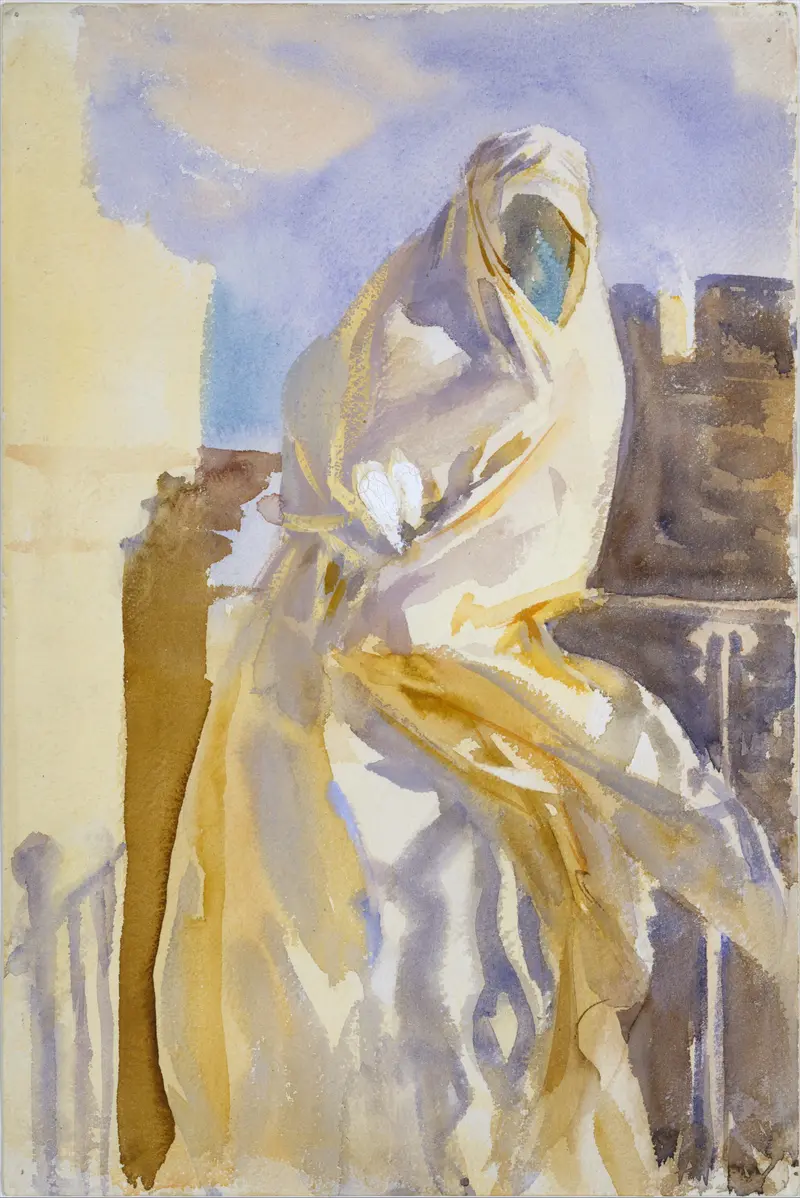 Arab WomanJohn Singer Sargent
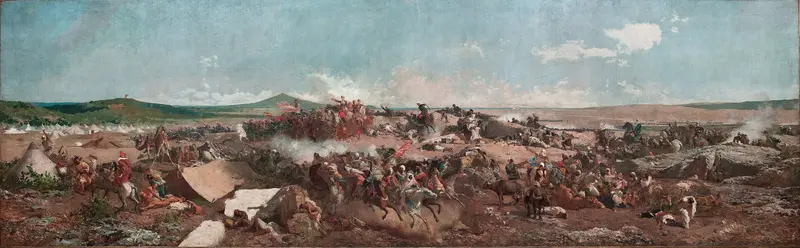 The Battle of TetouanMariano Fortuny
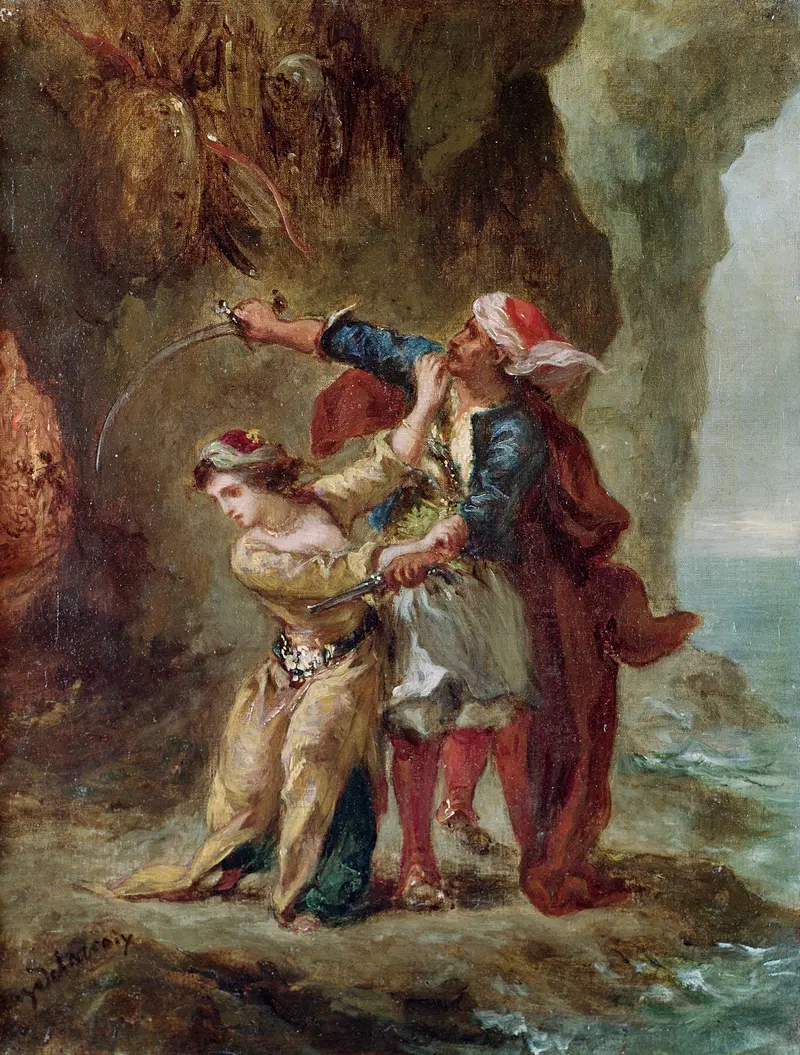 The Bride of AbydosEugène Delacroix
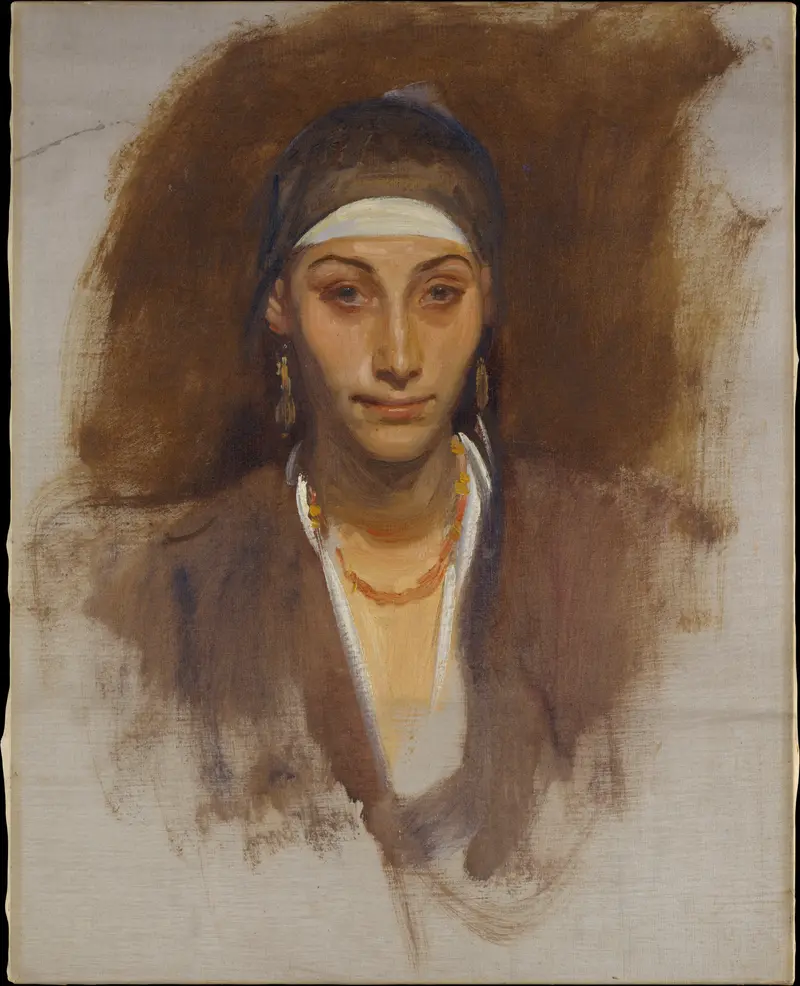 Egyptian Woman with EarringsJohn Singer Sargent
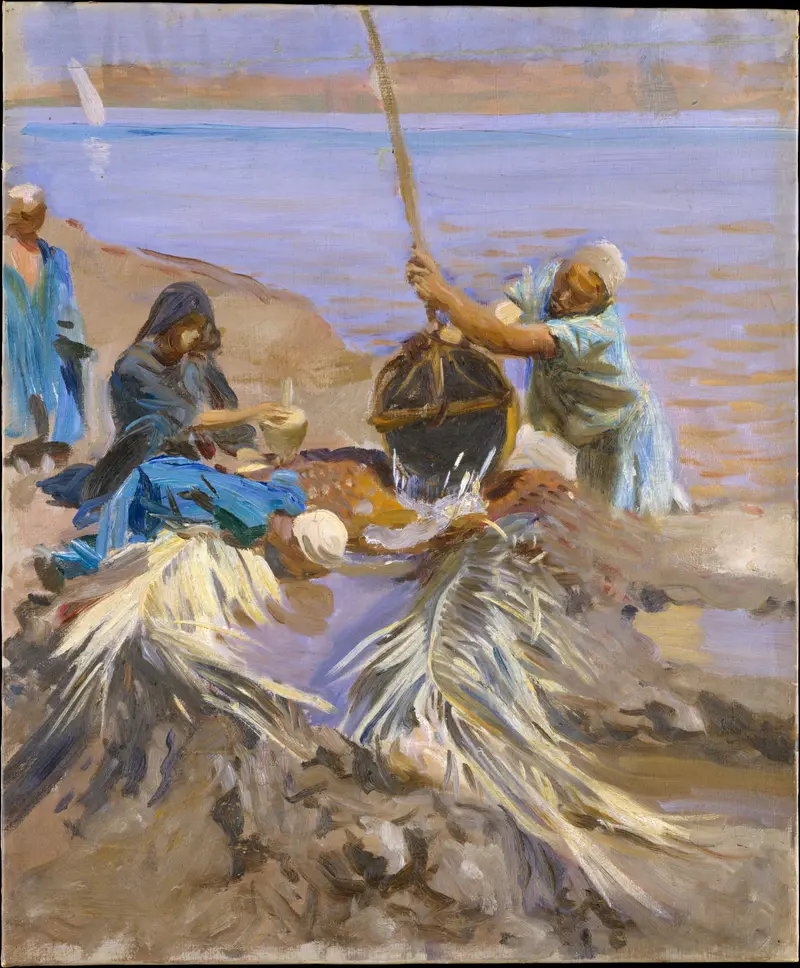 Egyptians Raising Water from the NileJohn Singer Sargent
Famous Orientalist painters
Nine painters at the heart of Orientalism, from Gérôme and Delacroix to John Frederick Lewis in Cairo and Osman Hamdi Bey in Istanbul. Each link opens all their paintings.
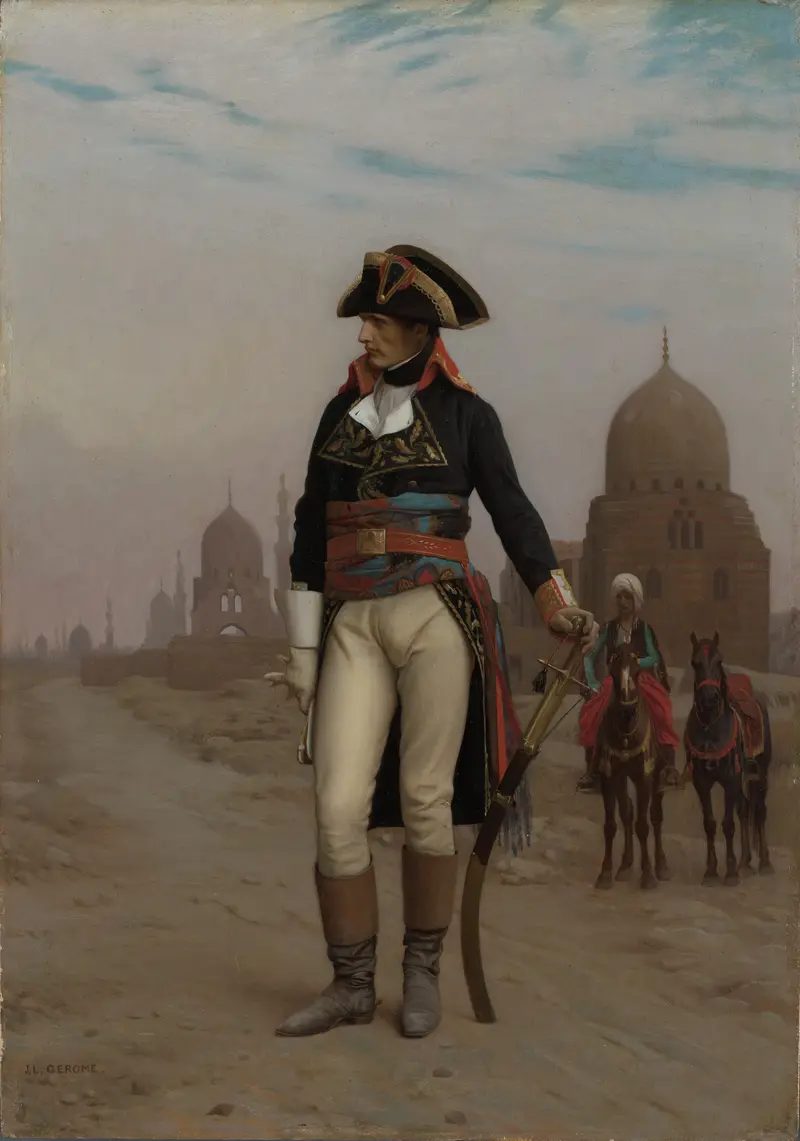 Jean-Léon Gérôme1824–1904. Born in Vesoul, he studied with Delaroche and Gleyre and first visited Istanbul in 1853 and Egypt in 1856; the Pera Museum calls him one of the first names that come to mind for Orientalist art.
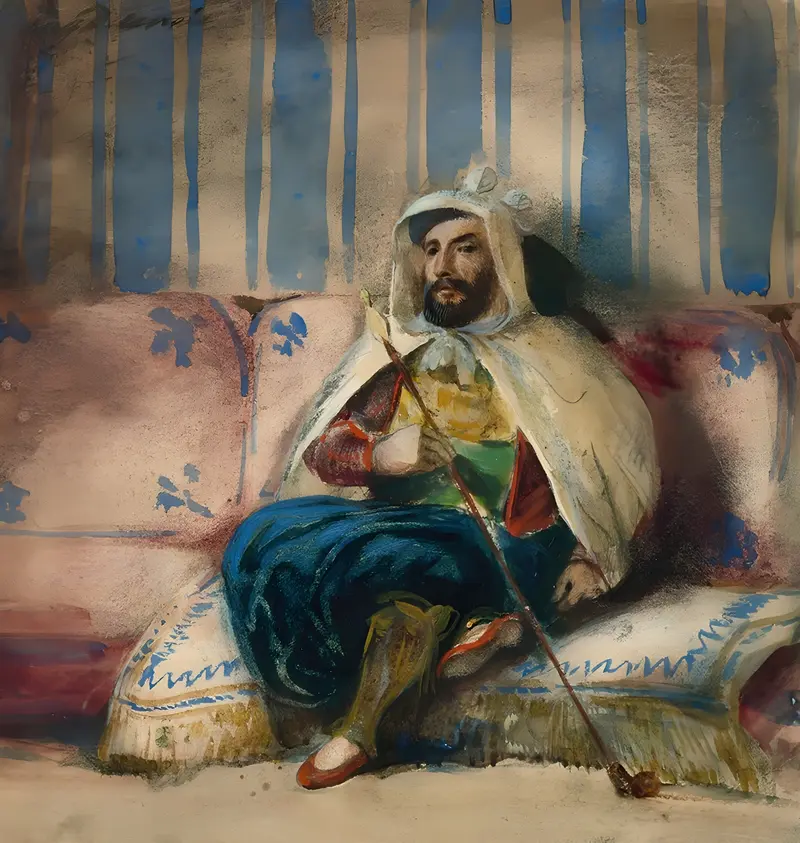
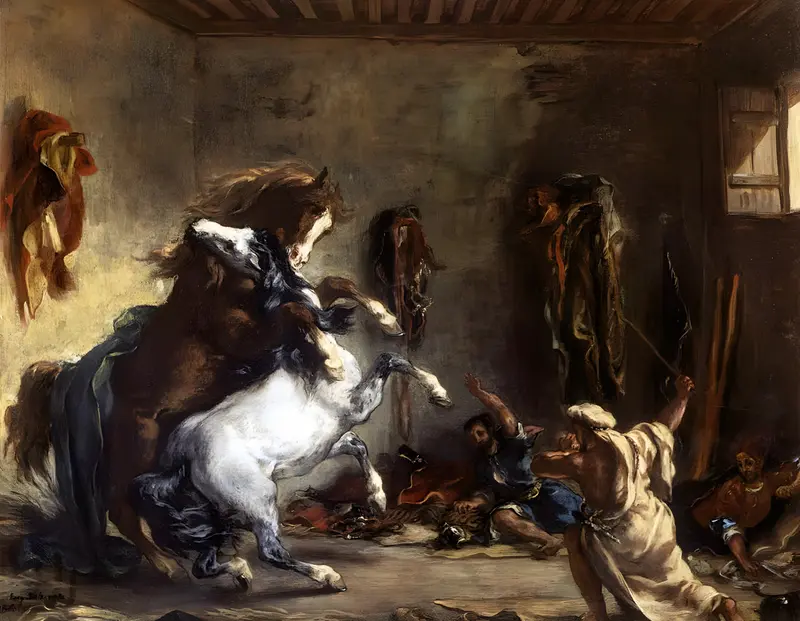
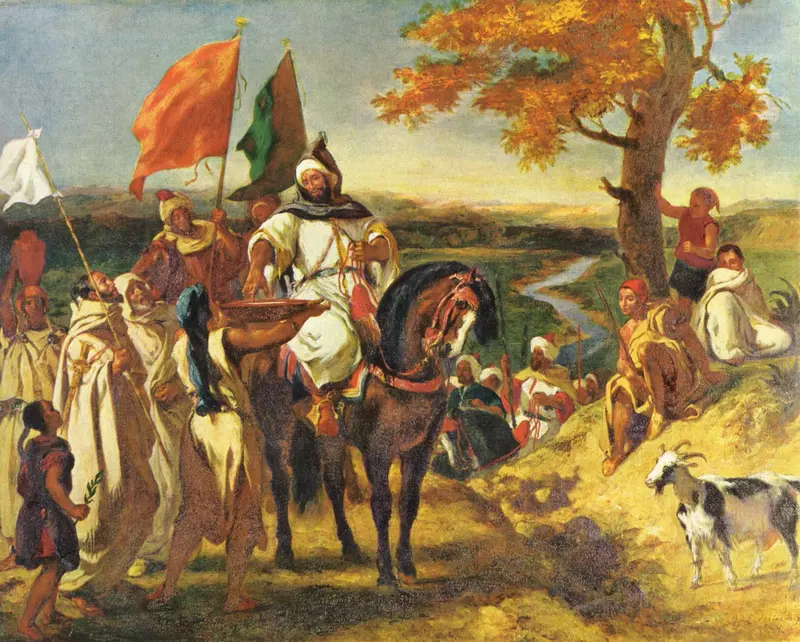 Eugène Delacroix1798–1863. The leading Romantic painter in France; in 1832 he traveled to Spain, Morocco and Algiers, and Moroccan subjects such as Arab Horses Fighting in a Stable (1860) followed for decades.
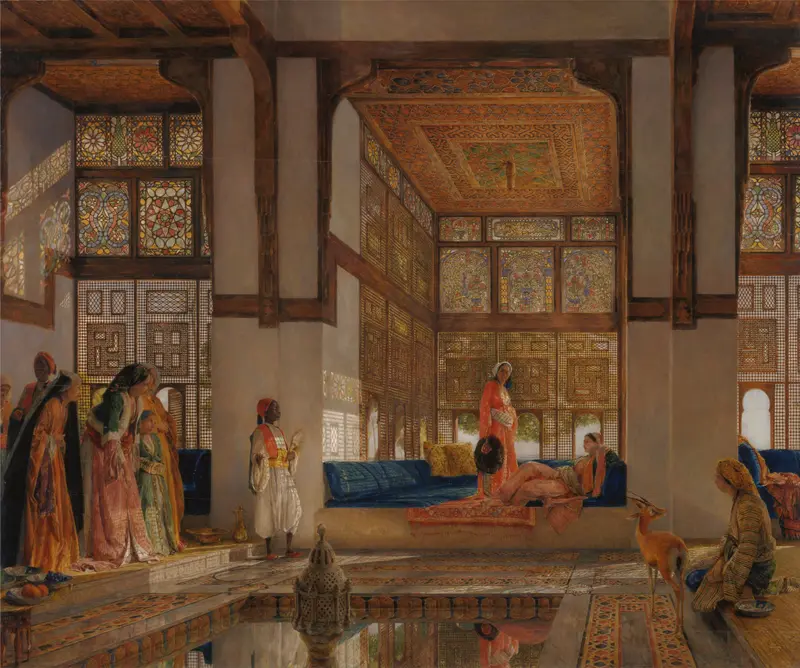 John Frederick Lewis1805–1876. English painter who arrived in Cairo in 1841 and stayed about ten years; his watercolor The Hhareem helped establish him as England's chief Orientalist artist, says the UK Government Art Collection.
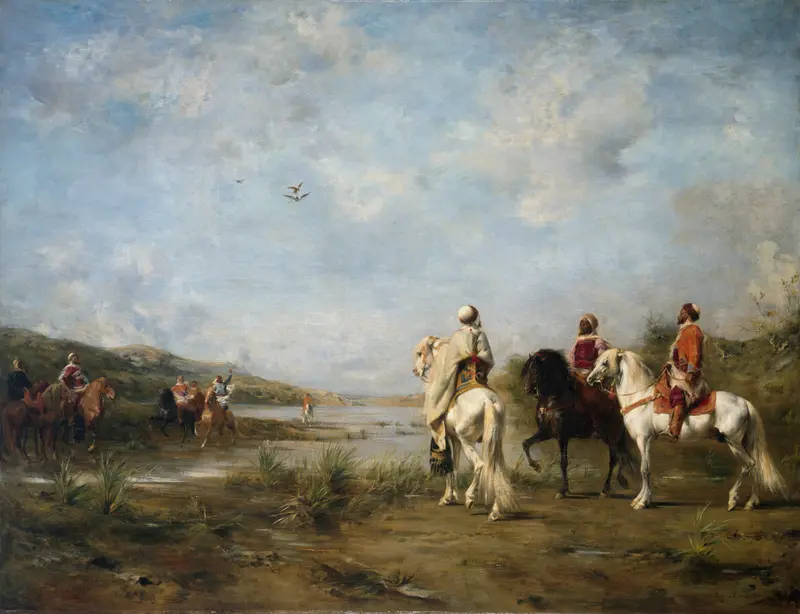 Eugène Fromentin1820–1876. Specialized in scenes of North Africa, which he visited several times, and wrote a celebrated book on Dutch and Flemish painting, The Old Masters (1876).
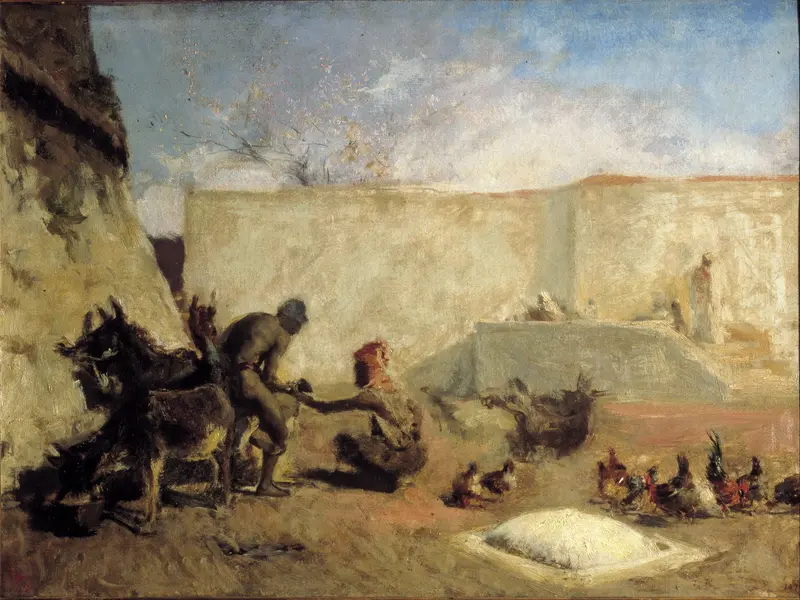 Mariano Fortuny1838–1874. Born and trained in Catalonia, he won a scholarship to Rome and was active in Morocco, Italy and France; his unfinished Battle of Tetouan is an icon of Catalan culture.
- Osman Hamdi Bey1842–1910. Ottoman painter who trained in Paris as a pupil of Gustave Boulanger, later directed the Imperial Museum in Istanbul, and was a friend of Gérôme; he showed The Tortoise Trainer at the Paris Salon of 1906.
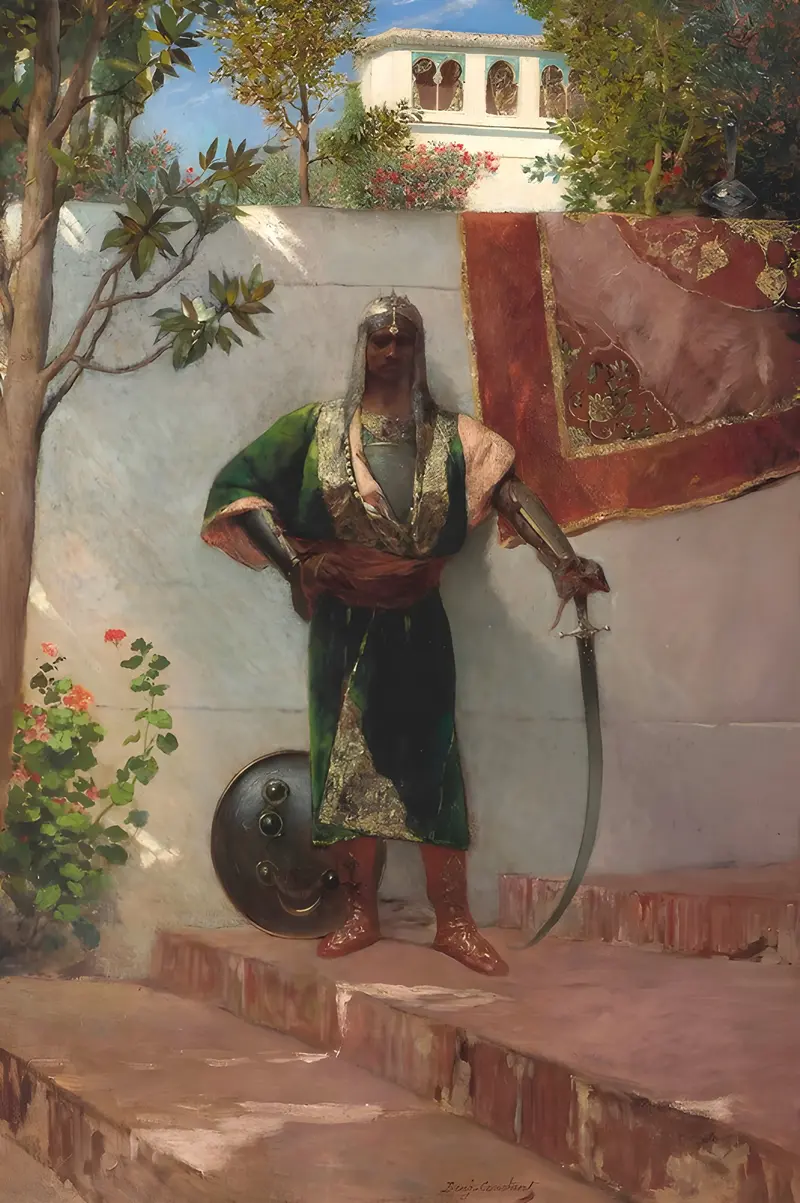 Jean-Joseph Benjamin-Constant1845–1902. Paris-born painter whom the Petit Palais calls a skillful stager of his Moroccan memories, from a stay in Spain and Fez, in large Salon pictures.
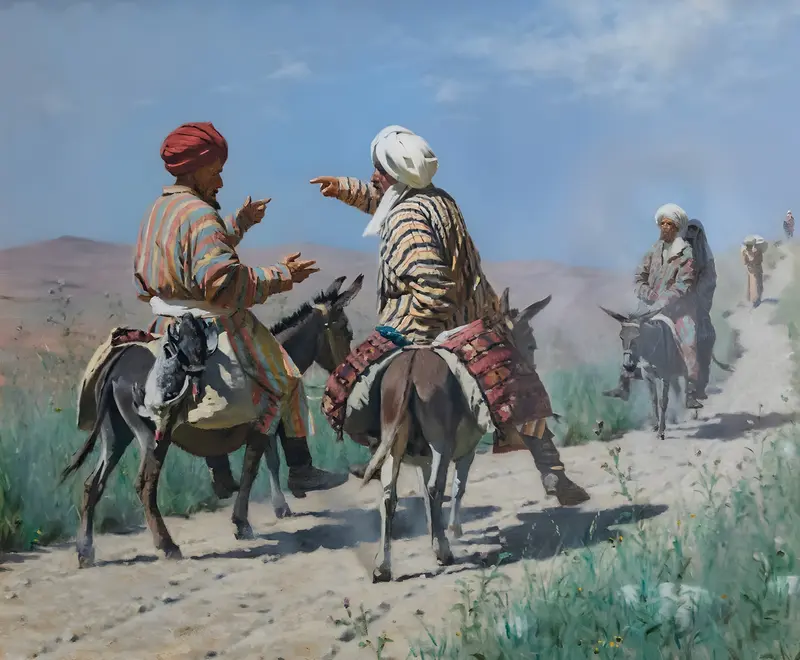 Vasily Vereshchagin1842–1904. Russian painter who studied in Gérôme's Paris studio from 1864 to 1866 and showed at the Salon of 1866; he died near Port Arthur in 1904.
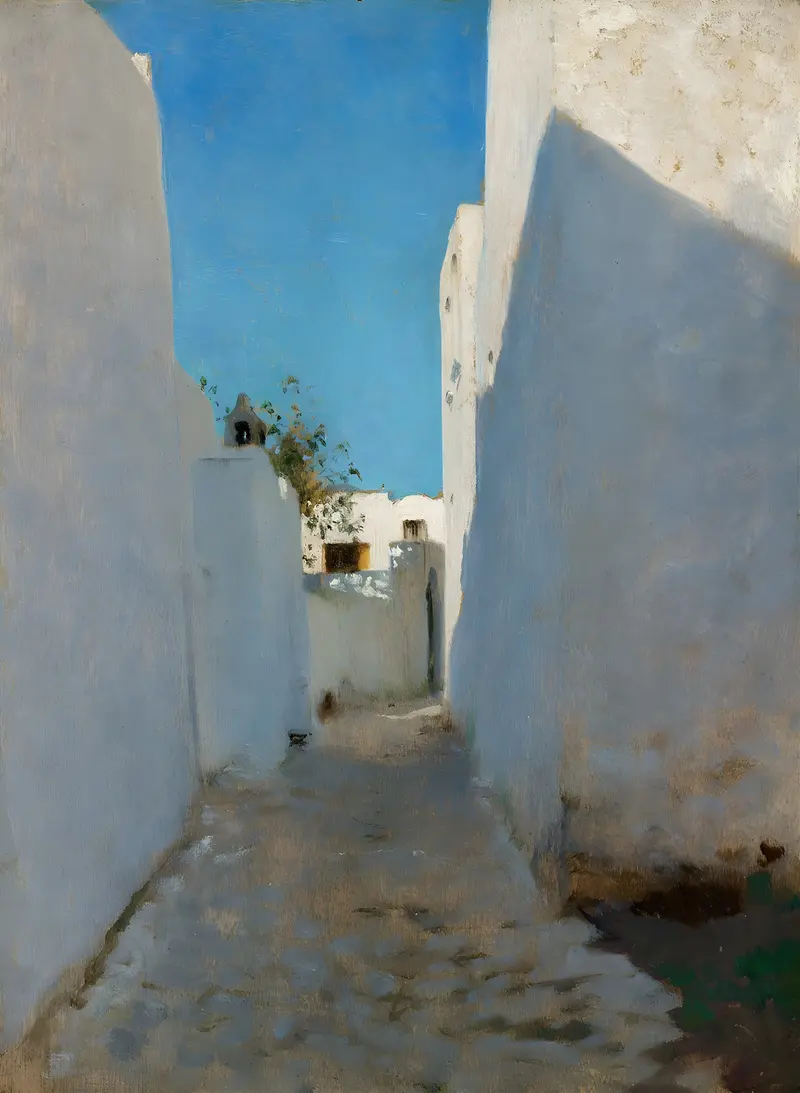
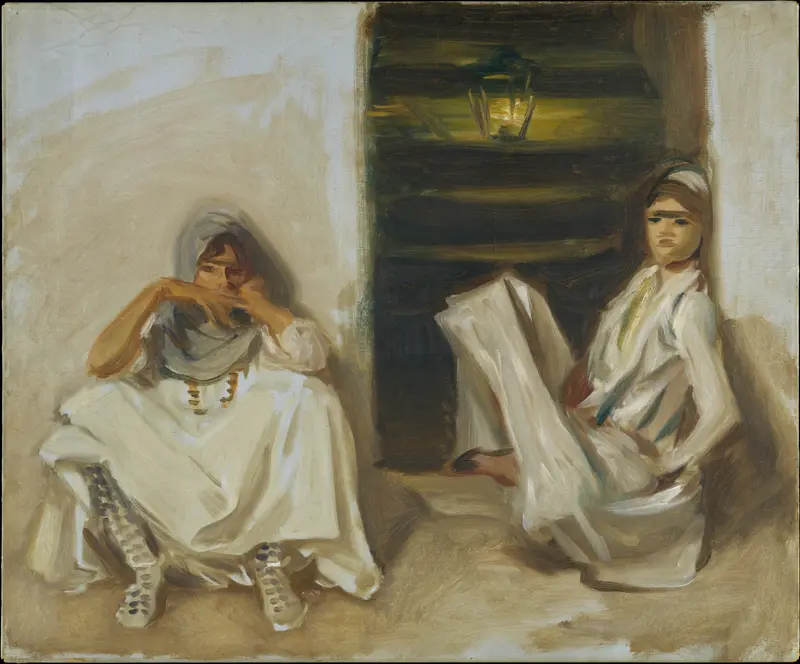 John Singer Sargent1856–1925. Born in Florence to American parents, a society portraitist, landscape painter and muralist; the Met holds his oil studies of Egyptian people from 1890–1891.
Jean-Léon Gérôme's Orientalist paintings
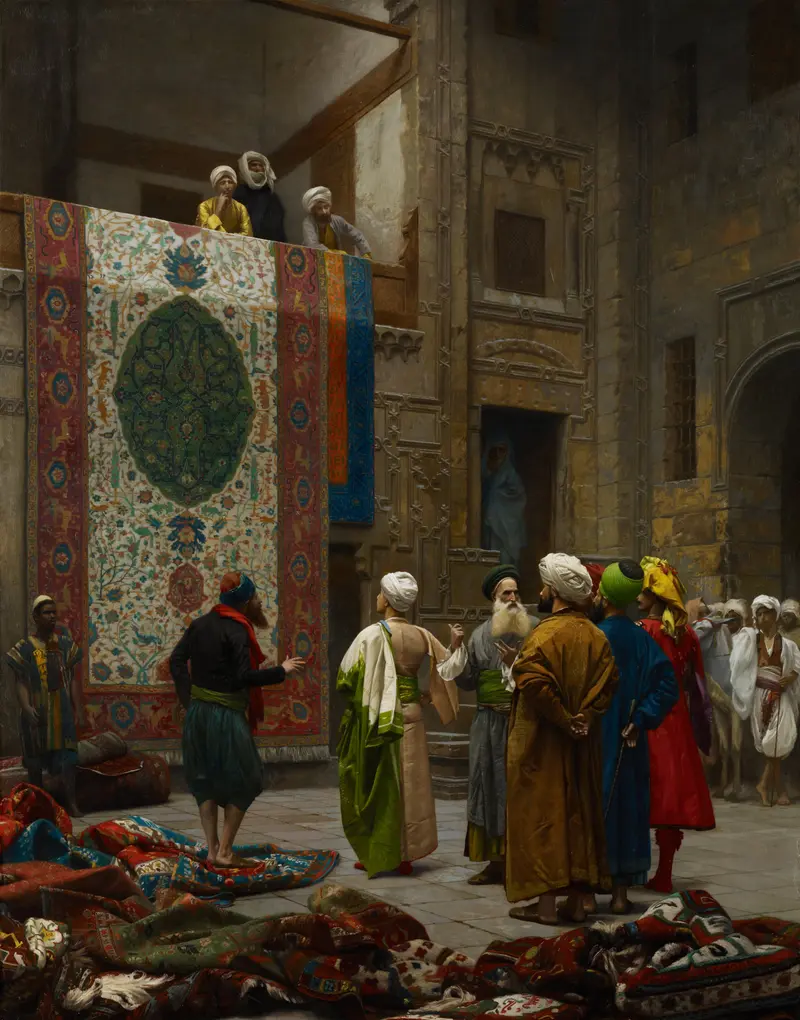
Gérôme first went to Istanbul in 1853 and to Egypt in 1856, and returned many times. The sketches and photographs he brought back supplied his Orientalist paintings, which, the Pera Museum says, found great favor with collectors for three decades.
Delacroix's Orientalist paintings
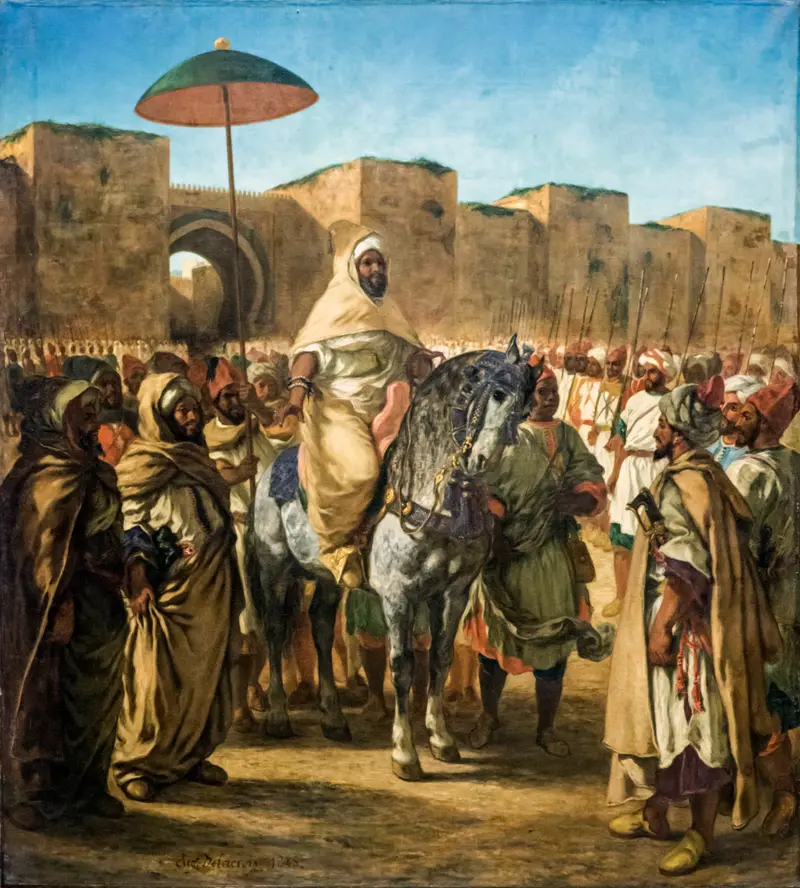
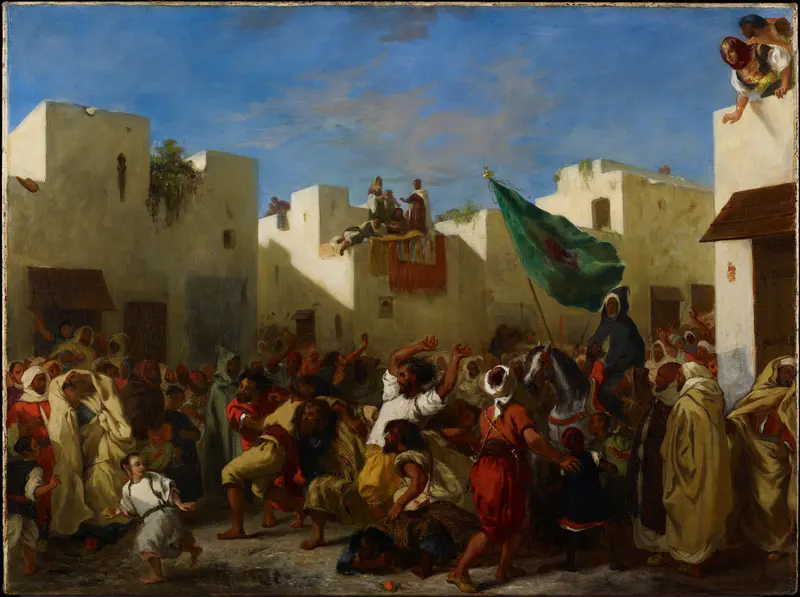
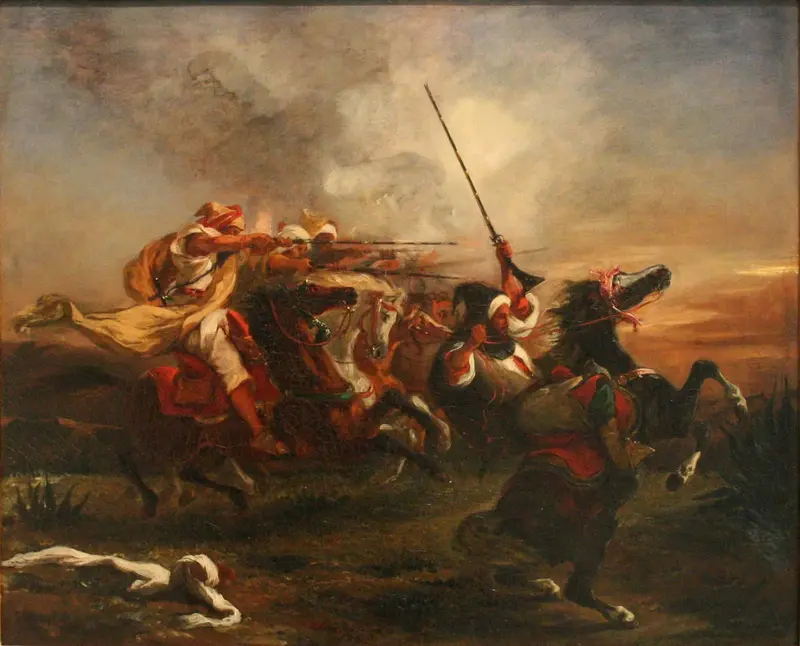
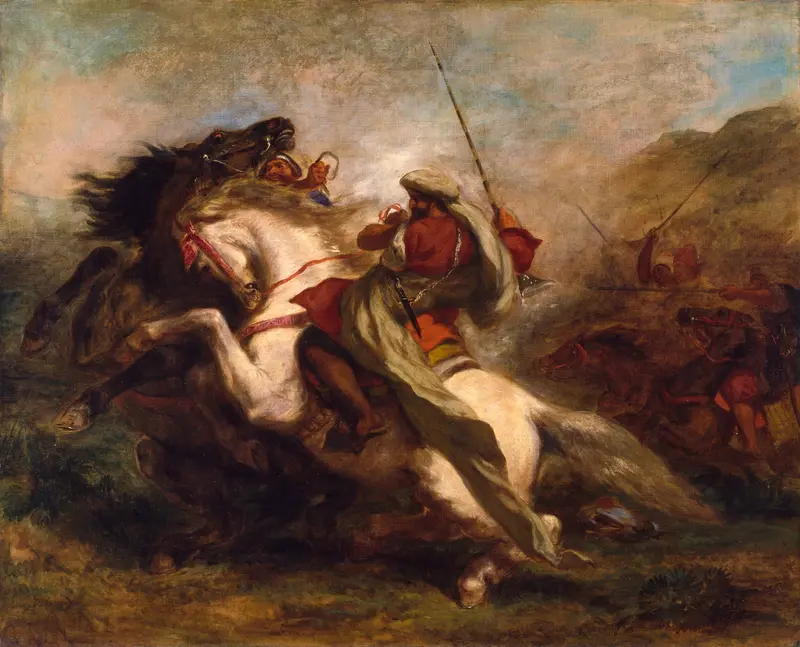
In 1832 Delacroix traveled to Morocco with Count de Mornay, the French envoy to the sultan, and also visited Spain and Algiers. He drew on the journey for decades, from The Fanatics of Tangier (1837–1838) to Arab Horses Fighting in a Stable (1860).
Orientalist paintings of Egypt
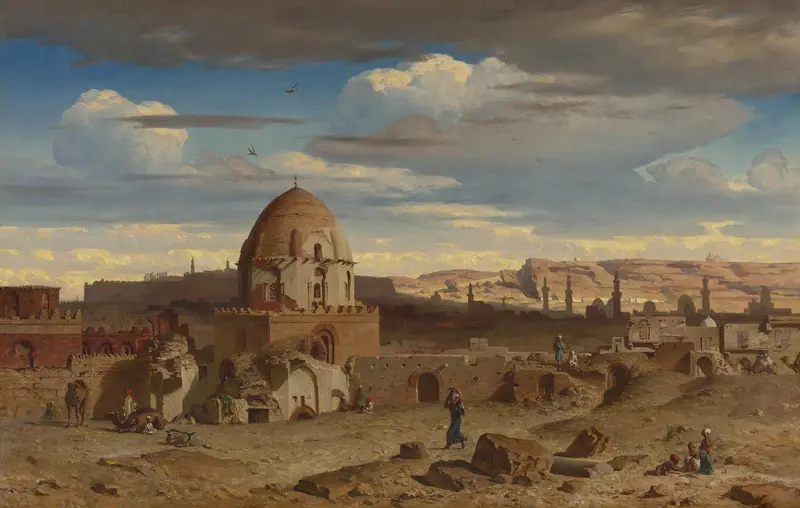
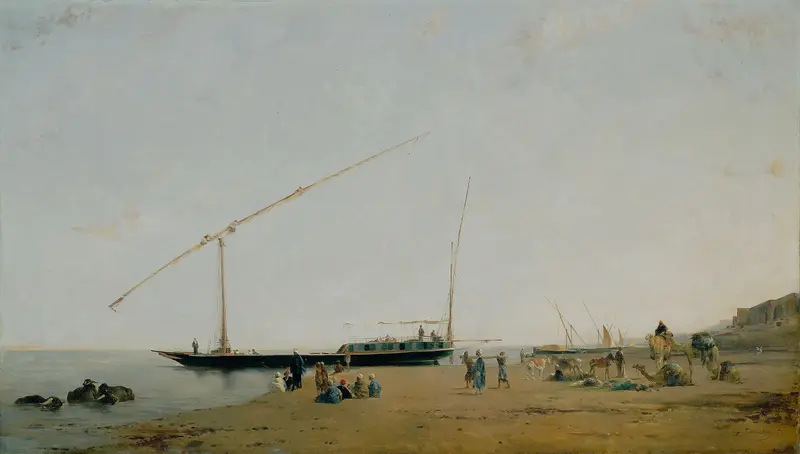
Napoleon's conquest of Egypt helped start the genre, the National Gallery in London says, and steam travel later made Cairo easy to reach, says Tate. Gérôme spent eight months along the Nile and in Cairo in 1856; Marilhat, Fromentin, Seddon, Makovsky and the American Frederick Arthur Bridgman painted its mosques, streets and riverbanks.


Characteristics of Orientalism: how to recognize it
Detail that looks authentic
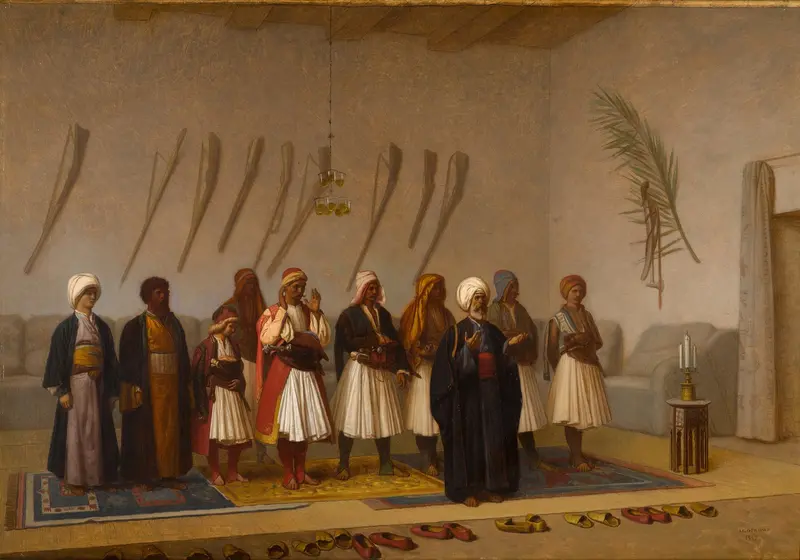
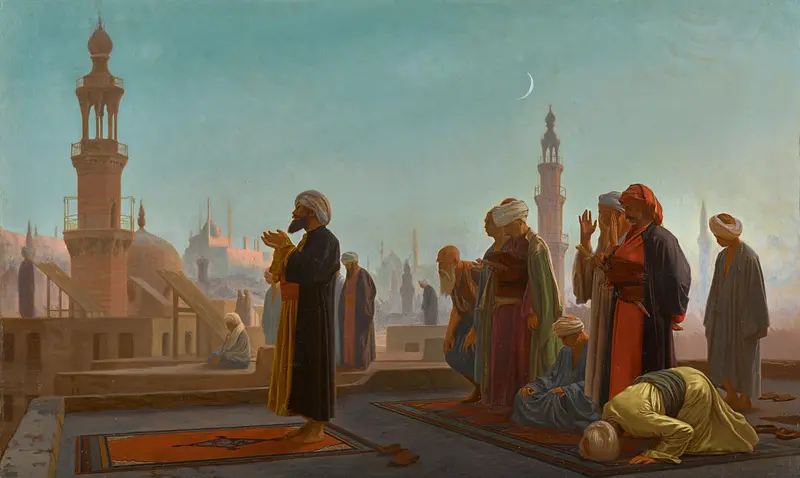
Every column, carpet and turban is painted with care, so the scene reads like a record of a real mosque in Cairo. Tate says Orientalist painters often used intensely detailed compositions to convince their audiences of authenticity, and the Clark Art Institute says Gérôme's accurate details give an impression of overall accuracy.
Prayer in the Mosque, Jean-Léon Gérôme
Real places, staged scenes
The Sphinx is real, but the meeting is staged: Gérôme left the pyramids out of the view to sharpen the face-off between general and monument, the Fondation Napoléon notes. The Clark says many of his scenes bring together elements he could not have seen together.
Bonaparte Before the Sphinx, Jean-Léon Gérôme
Costumes from the studio
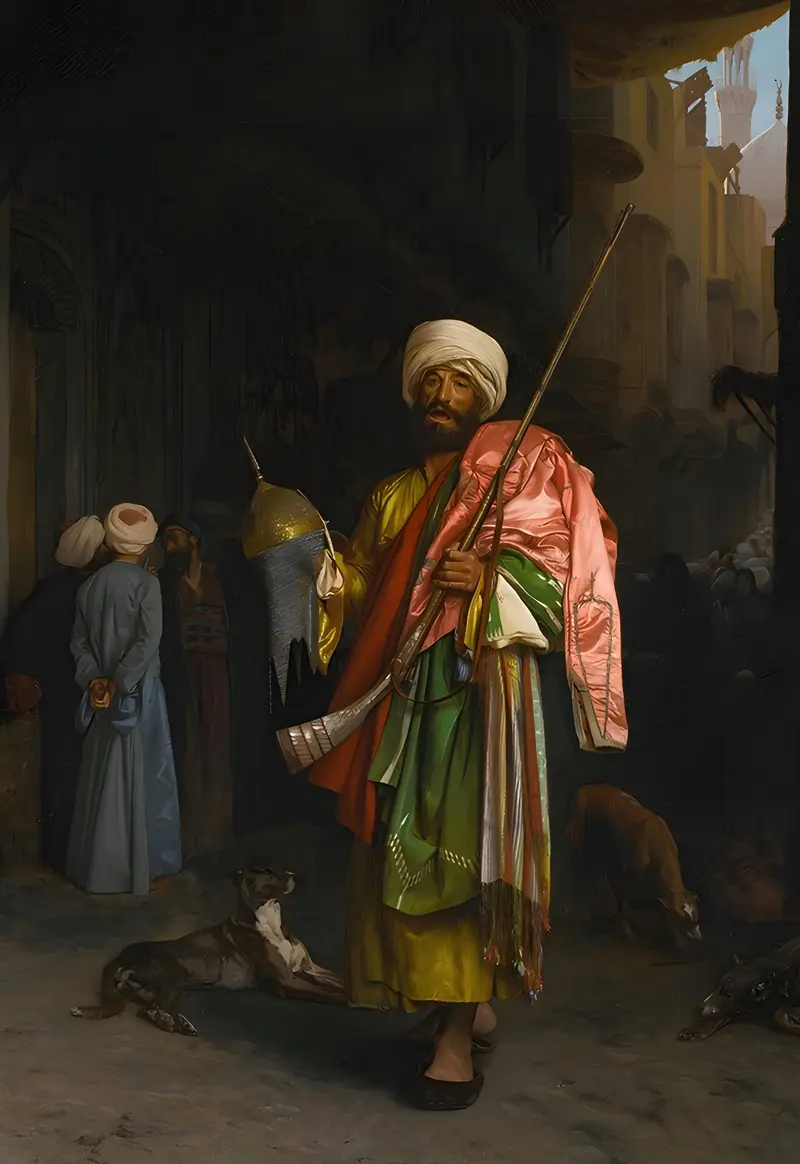
Gérôme dressed a model in his Paris studio in textiles he had bought on his travels, the Met says. The costumes, weapons and objects painters brought home supplied the details of many Orientalist pictures, as the Clark notes of his studio collection.
Bashi-Bazouk, Jean-Léon Gérôme
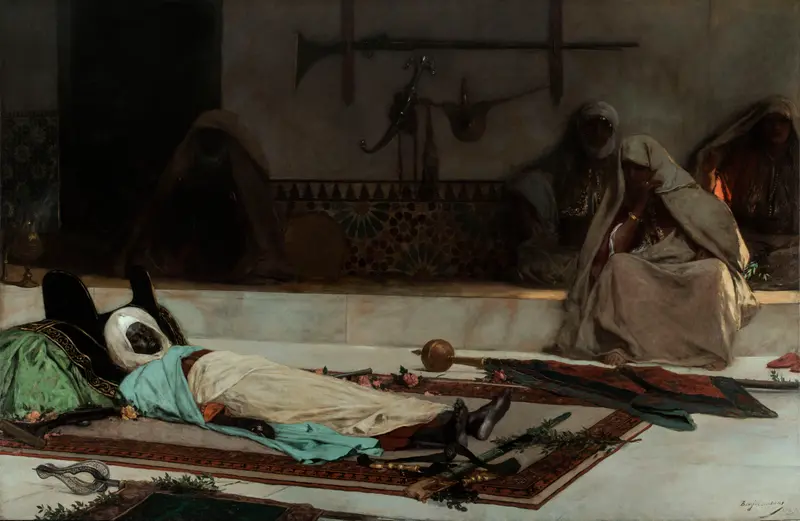
Memories staged years later
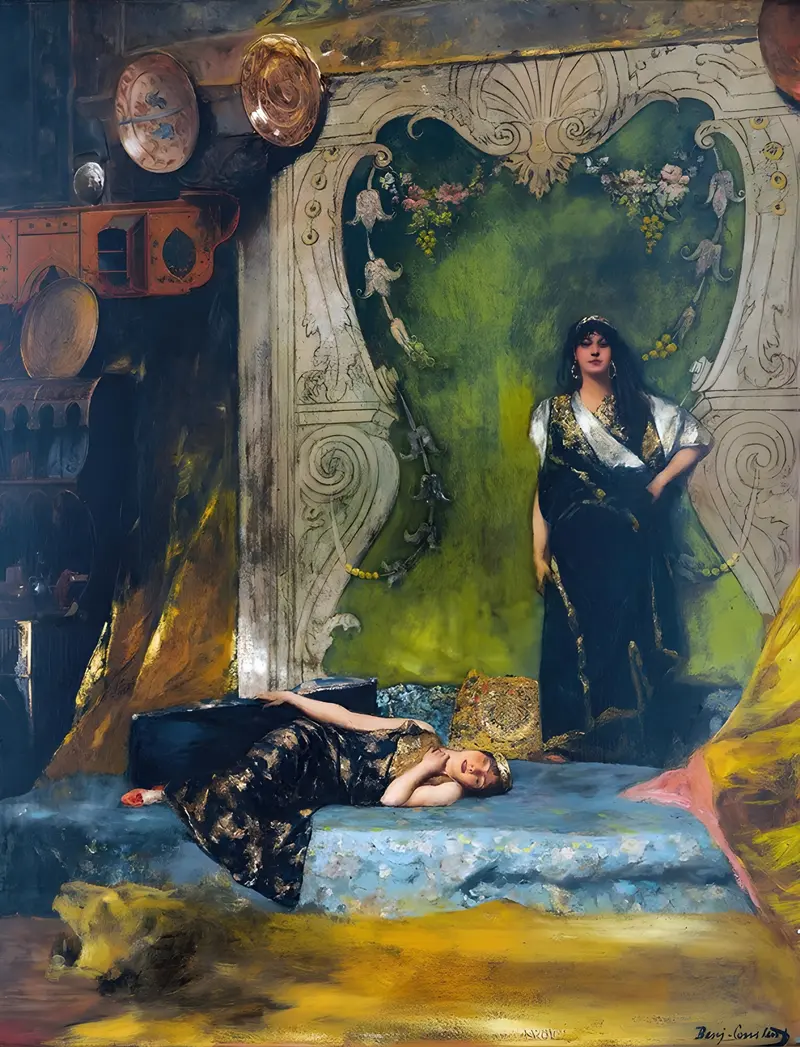
Benjamin-Constant painted this Moroccan wake for the Salon of 1889, long after his stay in Fez; the Petit Palais calls him a skillful stager of his Moroccan memories. Fromentin, too, stored up images on his journeys to turn into pictures for the French taste for oriental subjects, says the National Gallery in London.
Le jour des funérailles – Scène du Maroc, Jean-Joseph-Benjamin Constant
Drama and romance
Delacroix took this flight on a stormy shore from Byron's poem The Bride of Abydos. Tate says that deriving drama and romance from the East was central to Orientalist painters' work, often in tension with their claims to accuracy.
The Bride of Abydos, Eugène Delacroix
Before and after Orientalism
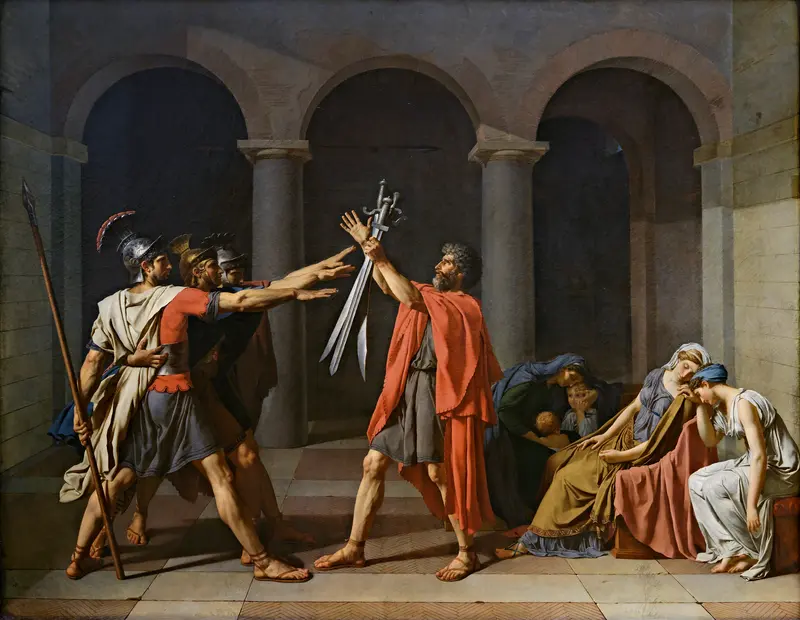 Neoclassicismc. 1750–1850
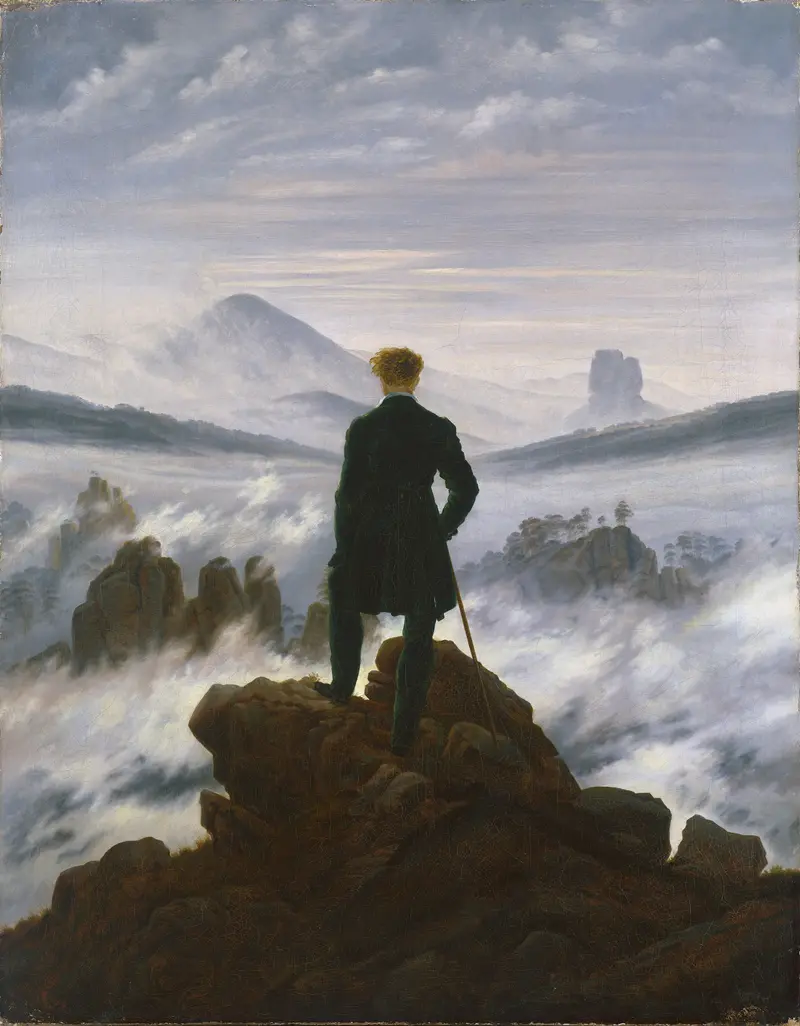 Romanticismc. 1780–1850
- Orientalism19th century
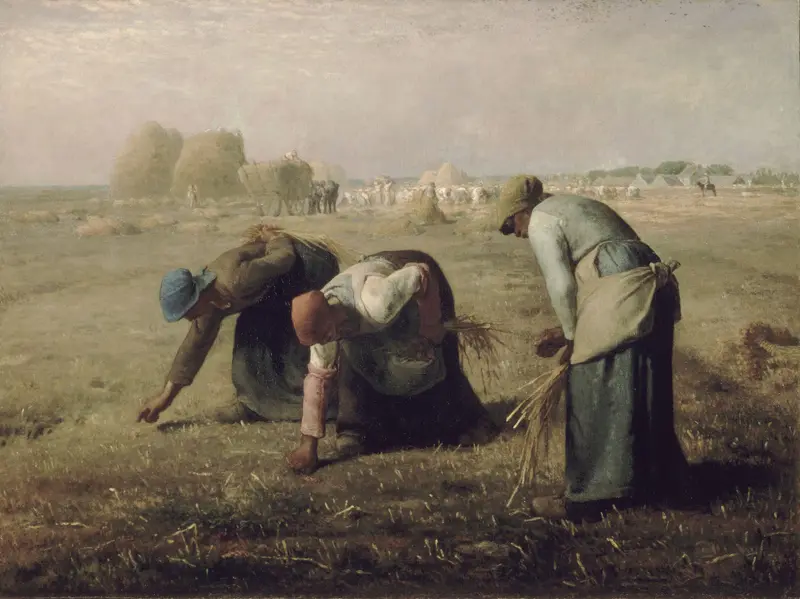 Realismc. 1840–1880
 Academic artmid–late 19th century
Orientalism vs Romanticism and Academic art
| Compared | Romanticism | Orientalism | Academic art |
|---|---|---|---|
| When | c. 1780–1850 | 19th century | Mid–late 19th century |
| Subject | Wild nature, storms, recent wars and revolutions, the Middle Ages, nightmares | North Africa and the Middle East: streets, markets, mosques, deserts, soldiers, imagined harems | Classical myths, nudes and grand history scenes |
| Aim | Emotion, drama and individual expression | Authentic-looking detail of a world Western viewers saw as exotic | A polished finish that follows the academy's rules |
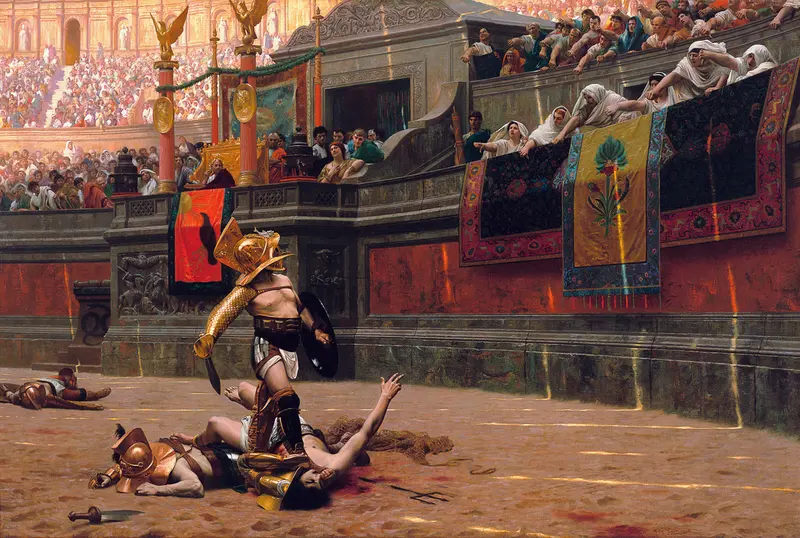
| Famous example | Delacroix, Liberty Leading the People | Gérôme, Bonaparte Before the Sphinx | Gérôme, Pollice Verso |
| Key artists | Friedrich, Turner, Delacroix, Goya | Gérôme, Delacroix, Lewis, Fromentin, Fortuny | Bouguereau, Cabanel, Gérôme |
List of famous Orientalist paintings and their artists
The famous Orientalist paintings: who painted them, when, and where each one is today.
Show the listHide the list
| Painting | Painted by | Year | Medium | Size | Located in | City |
|---|---|---|---|---|---|---|
| The Tortoise Trainer | Osman Hamdi Bey | 1906 | Oil on canvas | 221.5 × 120 cm (87.2 × 47.2 in) | Pera Museum | Istanbul |
| Women of Algiers in Their Apartment | Eugène Delacroix | 1834 | Oil on canvas | 180 × 229 cm (70.9 × 90.2 in) | Louvre Museum | Paris |
| Bonaparte Before the Sphinx | Jean-Léon Gérôme | c. 1867 | Oil on canvas | 61.6 × 101.9 cm (24.3 × 40.1 in) | Hearst Castle | San Simeon, California |
| Cleopatra Testing Poisons on Condemned Prisoners | Alexandre Cabanel | 1887 | Oil on canvas | 162.6 × 287.6 cm (64 × 113.2 in) | Royal Museum of Fine Arts Antwerp | Antwerp |
| Prayer in the Mosque | Jean-Léon Gérôme | by 1874 | Oil on canvas | 88.9 × 74.9 cm (35 × 29.5 in) | Metropolitan Museum of Art | New York |
| Jewish Wedding in Morocco | Eugène Delacroix | 1839 | Oil on canvas | 105 × 140.5 cm (41.3 × 55.3 in) | Louvre Museum | Paris |
| Bashi-Bazouk | Jean-Léon Gérôme | 1868–1869 | Oil on canvas | 80.6 × 66 cm (31.7 × 26 in) | Metropolitan Museum of Art | New York |
| Arab Woman | John Singer Sargent | 1905–1906 | Watercolor and gouache on paper | 45.7 × 30.5 cm (18 × 12 in) | Metropolitan Museum of Art | New York |
| The Battle of Tetouan | Mariano Fortuny | 1862–1866 | Oil on canvas | 300 × 972 cm (118.1 × 382.7 in) | Museu Nacional d'Art de Catalunya | Barcelona |
| The Bride of Abydos | Eugène Delacroix | c. 1825–1850 | Oil on canvas | 35.5 × 27.5 cm (14 × 10.8 in) | Louvre Museum | Paris |
| Egyptian Woman with Earrings | John Singer Sargent | 1890–1891 | Oil on canvas | 64.1 × 53.3 cm (25.2 × 21 in) | Metropolitan Museum of Art | New York |
| Egyptians Raising Water from the Nile | John Singer Sargent | 1890–1891 | Oil on canvas | 63.5 × 53.3 cm (25 × 21 in) | Metropolitan Museum of Art | New York |
| The Day of the Funeral, Scene in Morocco | Jean-Joseph Benjamin-Constant | 1889 | Oil on canvas | 278 × 428 cm (109.4 × 168.5 in) | Petit Palais | Paris |
Orientalism: questions and answers
What does Orientalism mean in art?
In art, Orientalism means 19th-century European paintings of North Africa and the Middle East: streets and markets, mosques, deserts, soldiers and imagined harems, often painted in sharp, authentic-looking detail. The National Gallery in London calls it a fluid, complex and contentious term, French in origin, and says many of these paintings reflected Western stereotypes of people then under colonial control. The Getty's art vocabulary files it under exoticism, as Western art that takes up the look of Asian art or culture.
Sources: National Gallery: Orientalism (glossary) · Getty AAT: Orientalism
What are the characteristics of Orientalist paintings?
Orientalist paintings combine precise, convincing detail with drama and fantasy. Tate says British Orientalists sought to convince their audiences that their pictures were authentic, often with intensely detailed compositions, while also deriving drama and romance from the East; in images of the harem and the Holy Land the two impulses were often in tension. The Clark Art Institute says Gérôme's accurate architecture, ornament and costume give an impression of overall accuracy even in scenes he could not have witnessed.
Sources: Tate: The Lure of the East, British Orientalist Painters (press release) · Clark Art Institute: Snake Charmer, collection catalogue entry (PDF)
When did Orientalism start and end?
Orientalism belongs mainly to the 19th century. The National Gallery in London links its emergence to Napoleon's conquest of Egypt at the turn of the 19th century and to the later French colonization of North Africa, and Tate says Orientalist painting flourished after steam travel made Cairo, Jerusalem and Istanbul relatively easy to reach. Western painters had pictured the region before and went on doing so after: Tate's 2008 exhibition The Lure of the East covered British painting from the 17th to the early 20th century.
Sources: National Gallery: Orientalism (glossary) · Tate: The Lure of the East, British Orientalist Painters (press release)
Is Orientalism in art the same as Edward Said's Orientalism?
No, but the two are linked. Orientalism in art is the 19th-century painting of North Africa and the Middle East; Edward Said's book Orientalism (1978) is a critique of how the West represented the East, which he defined as “a Western style for dominating, restructuring, and having authority over the Orient.” The Clark Art Institute notes that Gérôme's The Snake Charmer was illustrated on the cover of the book, although Said never mentioned the painting, and that many later authors have examined Orientalist painting in the light of his argument. The National Gallery in London calls it a contentious term.
Sources: Clark Art Institute: Snake Charmer, collection catalogue entry (PDF) · Pera Museum: Jean-Léon Gérôme, Cultural Interactions in the Age of Change · National Gallery: Orientalism (glossary)
Who are the famous Orientalist painters?
The best-known Orientalist painters are Jean-Léon Gérôme, Eugène Delacroix, Jean-Auguste-Dominique Ingres, John Frederick Lewis and Eugène Fromentin. The Pera Museum in Istanbul calls Gérôme one of the first names that come to mind for Orientalist art; the National Gallery in London says Ingres is famous for his escapist scenes of the Orient and that Fromentin specialized in North African scenes; and the UK Government Art Collection calls Lewis England's chief Orientalist artist. The Spaniard Mariano Fortuny, the Russian Vasily Vereshchagin, who studied with Gérôme, and the Ottoman painter Osman Hamdi Bey, who knew him, also painted the region.
Sources: Pera Museum: Jean-Léon Gérôme, Cultural Interactions in the Age of Change · National Gallery: Jean-Auguste-Dominique Ingres · National Gallery: Eugène Fromentin · UK Government Art Collection: John Frederick Lewis · National Gallery: Mariano Fortuny · Russian Museum: Vasily Vereshchagin
Why did European artists paint North Africa and the Middle East?
European artists painted North Africa and the Middle East because conquest, travel and the art market all pointed them there. The National Gallery in London ties the rise of the genre to propaganda around Napoleon's conquest of Egypt and to the later French colonization of North Africa; Tate says steam travel made Cairo, Jerusalem and Istanbul easy to reach; and the National Gallery says Fromentin turned images from his journeys into pictures to satisfy the French taste for oriental subjects. Some went on official business: Delacroix traveled to Morocco in 1832 with the French envoy Count de Mornay.
Sources: National Gallery: Orientalism (glossary) · Tate: The Lure of the East, British Orientalist Painters (press release) · National Gallery: Eugène Fromentin · Minneapolis Institute of Art: Delacroix, Fanatics of Tangier (Google Arts & Culture)
Were Orientalist paintings accurate?
Orientalist paintings were often accurate in their details but not in the scenes as a whole. The Clark Art Institute shows that Gérôme copied the tiles of The Snake Charmer from photographs of Topkapı Palace in Istanbul and the floor from his own picture of a mosque in Cairo, and set a performance from Egypt in a room he invented, a scene he could not possibly have witnessed. Tate says harem and Holy Land pictures in particular leave viewers to question their accuracy, while the Petit Palais finds a fairly precise picture of people, objects and costumes in Benjamin-Constant's Moroccan funeral scene.
Sources: Clark Art Institute: Snake Charmer, collection catalogue entry (PDF) · Pera Museum: Jean-Léon Gérôme, Cultural Interactions in the Age of Change · Tate: The Lure of the East, British Orientalist Painters (press release) · Petit Palais, Paris: Benjamin-Constant, Le jour des funérailles (Paris Musées)
What did Delacroix paint in Morocco?
Delacroix painted Moroccan subjects for decades after his journey of 1832, when he traveled with the French envoy Count de Mornay to the sultan of Morocco. The Minneapolis Institute of Art says he watched the frenzy of the Aïssaoua sect from an attic in Tangier, the scene of his Fanatics of Tangier (1837–1838). He painted the sultan leaving his palace at Meknes for the Salon of 1845 and showed Jewish Wedding in Morocco at the Salon of 1841. His Women of Algiers in Their Apartment, bought at the Salon of 1834, hangs in the Louvre.
Sources: Minneapolis Institute of Art: Delacroix, Fanatics of Tangier (Google Arts & Culture) · National Gallery: Eugène Delacroix · Musée des Augustins, Toulouse: Delacroix, The Sultan of Morocco (Joconde record, French) · Louvre Museum · Louvre Museum
What are Jean-Léon Gérôme's famous Orientalist paintings?
Gérôme's best-known Orientalist paintings include Bonaparte Before the Sphinx, Prayer in the Mosque, The Snake Charmer, Bashi-Bazouk and The Carpet Merchant. He first went to Istanbul in 1853 and to Egypt in 1856, and the sketches and photographs he brought back from many later journeys supplied these pictures, the Pera Museum says. The Carpet Merchant shows the court of the rug market in Cairo, which he visited in 1885, according to the Minneapolis Institute of Art.
Sources: Pera Museum: Jean-Léon Gérôme, Cultural Interactions in the Age of Change · Clark Art Institute: Snake Charmer, collection catalogue entry (PDF) · Minneapolis Institute of Art: Gérôme, The Carpet Merchant (Google Arts & Culture) · Metropolitan Museum of Art
What do Orientalist paintings of women show?
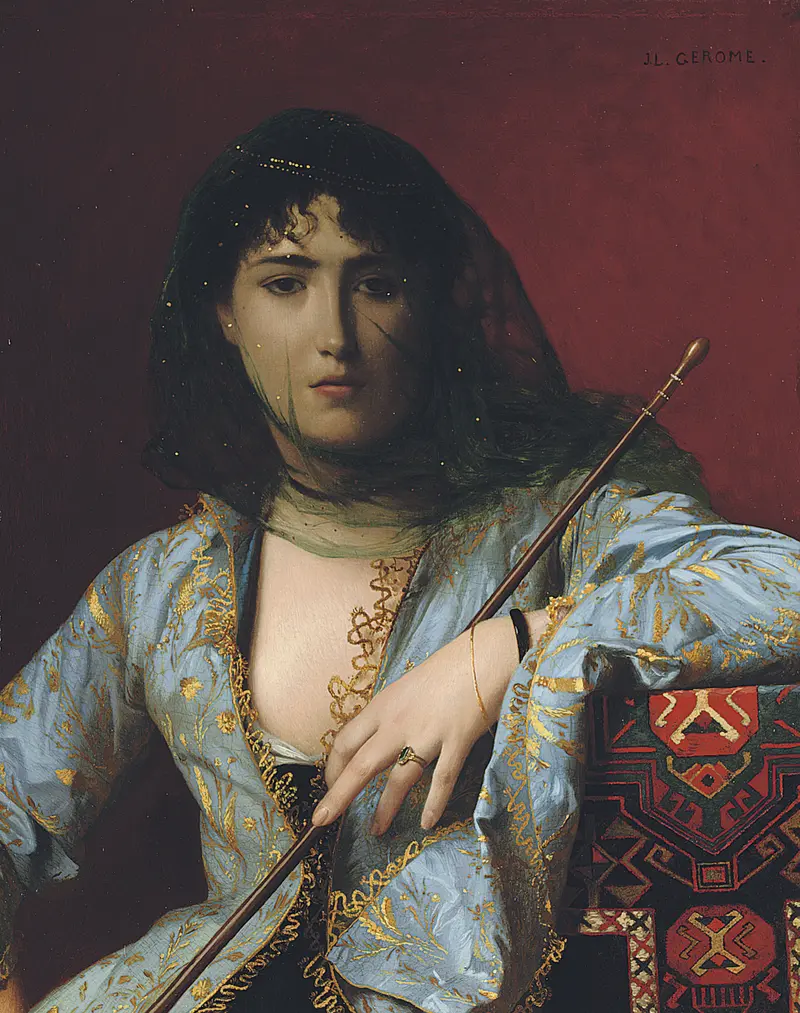
Orientalist paintings of women are mostly of two kinds: imagined harem and bath scenes, and portraits or studies of women the painters met on their travels. Tate says harem pictures in particular mixed claims of authenticity with drama and romance. On this page, Sargent's Arab Woman and Egyptian Woman with Earrings and Gérôme's Veiled Circassian Beauty are of the second kind, while Delacroix's Women of Algiers in Their Apartment (1834) shows women in an interior in Algiers.
Sources: Tate: The Lure of the East, British Orientalist Painters (press release) · Metropolitan Museum of Art · Metropolitan Museum of Art · Louvre Museum
What is the difference between Orientalism and Romanticism?
Romanticism is a broad movement of feeling, drama and nature that Tate dates to about 1780–1830, while Orientalism is defined by its subject, North Africa and the Middle East, and runs through the whole 19th century. The two overlap: Delacroix, whom the National Gallery in London calls the leading exponent of Romanticism in French painting, painted Moroccan subjects after 1832, and the Louvre hangs his Women of Algiers in its Romanticism gallery. In 2012 the Musée Condé in Chantilly titled an exhibition Delacroix and the Dawn of Orientalism.
Sources: Tate: Romanticism · National Gallery: Eugène Delacroix · Louvre Museum · Louvre Museum
Is Orientalism the same as Islamic art?
No. Orientalism is art by Western painters, mostly French and British, picturing North Africa and the Middle East; the Getty's art vocabulary defines it as characteristics of Asian art or culture appearing in Western practice. Islamic art is art made within Islamic cultures themselves, such as the Persian manuscript paintings on our Islamic art page.
Sources: Getty AAT: Orientalism · National Gallery: Orientalism (glossary)
Where can you see famous Orientalist paintings?
The Louvre in Paris holds Delacroix's Women of Algiers in Their Apartment, in its Romanticism gallery, and his Jewish Wedding in Morocco; the Metropolitan Museum of Art in New York holds Gérôme's Prayer in the Mosque and Bashi-Bazouk. Gérôme's The Snake Charmer belongs to the Clark Art Institute in Williamstown, Massachusetts, and his Bonaparte Before the Sphinx to Hearst Castle in California. Delacroix's Sultan of Morocco is in the Musée des Augustins in Toulouse, Fortuny's Battle of Tetouan in the Museu Nacional d'Art de Catalunya in Barcelona, and Osman Hamdi Bey's The Tortoise Trainer in the Pera Museum in Istanbul.
Sources: Louvre Museum · Metropolitan Museum of Art · Metropolitan Museum of Art · Clark Art Institute: Snake Charmer, collection catalogue entry (PDF) · Fondation Napoléon: Bonaparte devant le Sphinx, dit aussi Œdipe (French) · Musée des Augustins, Toulouse: Delacroix, The Sultan of Morocco (Joconde record, French) · Museu Nacional d'Art de Catalunya: The Battle of Tetouan · Pera Museum: The Tortoise Trainer
Is Orientalist art in the public domain, and can I download it free?
Yes. Every painter on this page died by 1928, so their paintings are in the public domain in the United States and in countries where copyright ends 70 years after the artist's death. You can download them free and use them for anything, including commercial projects. A few countries have their own rules on photographs of artworks, so check them if you publish outside the U.S.
Sources: Cornell University Library: Copyright Term and the Public Domain
How we chose the famous paintings
The famous paintings on this page are the Orientalist paintings known most widely around the world, measured by the number of languages that have an encyclopedia entry about each one, checked in November 2026, and counting only paintings with entries in at least two languages. No painter has more than three of them, which is why Gérôme's The Carpet Merchant and The Two Majesties appear in their own row further down, and Delacroix's Arabs Playing Chess is not in the list.
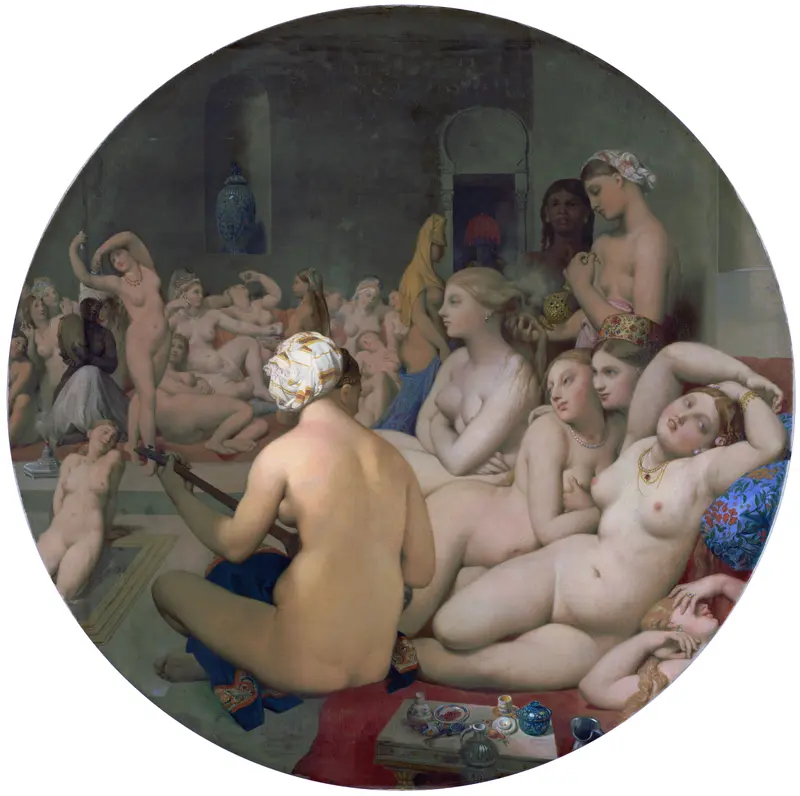
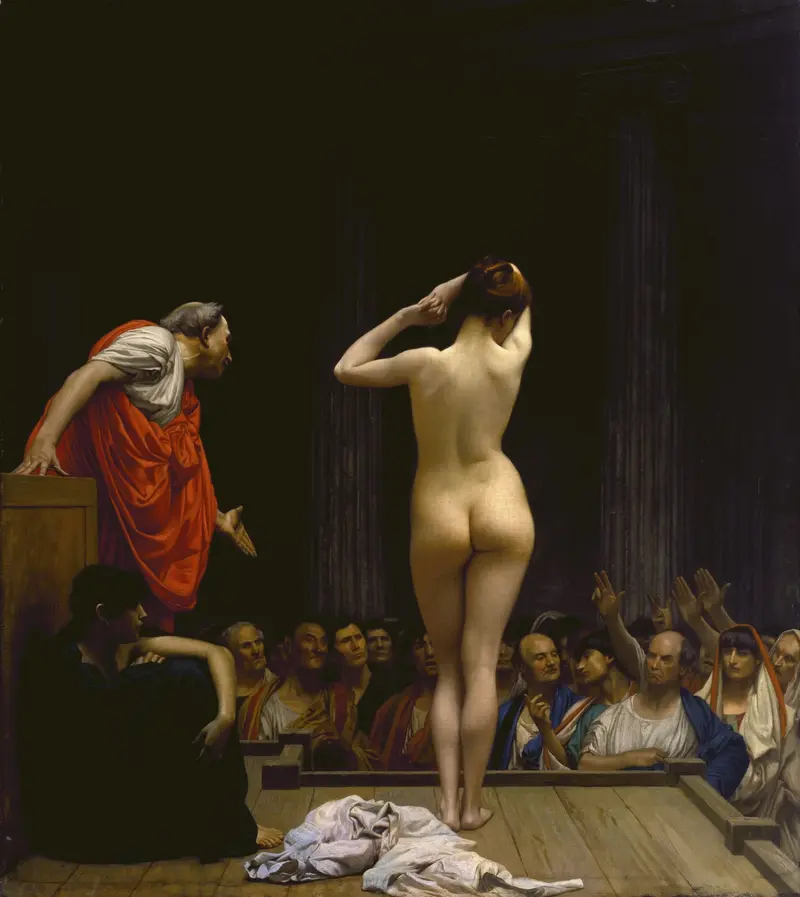
We include only paintings that our catalogue labels Orientalism or that the holding museum or Wikidata classes as Orientalist, and only scenes of North Africa and the Middle East: some pictures filed under Orientalism, such as Gérôme's Young Greeks Attending a Cock Fight, set in ancient Greece, are not. We also left out harem, bath and slave-market scenes with nudity, among them Ingres's The Turkish Bath and Gérôme's The Slave Market, as well as Gérôme's The Snake Charmer, whose performer is a naked boy. A few famous works, such as Gérôme's Cleopatra and Caesar, are not yet in our catalogue.
Dates, sizes and locations come from the museums' own records and from Wikidata.
Spotted a mistake? Tell us and we will correct it.