Bedouin Camp, Biskra — History & Facts
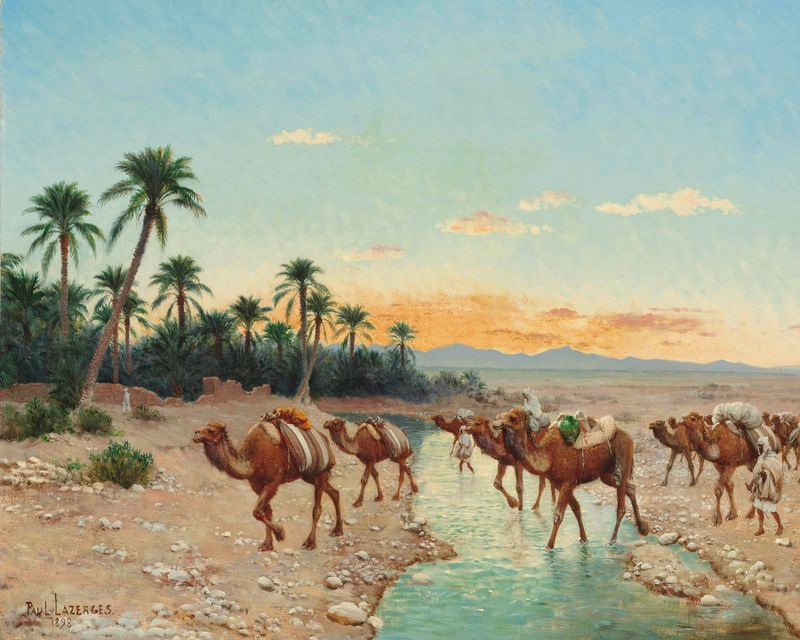
What if silence could speak through light? In Bedouin Camp, Biskra, the stillness of the desert night resonates with an uncanny intensity that hints at the madness lurking beneath the serene surface. To appreciate the gravity of this piece, focus on the soft glow illuminating the tents, a warm light that cradles the scene. The artist’s brushwork captures the texture of the canvas, creating the illusion of sand amidst the subtle hues of twilight. Look closely at the figures gathered around the fire; their shadows stretch and twist, merging into the night.
The composition balances the vibrancy of the flames with the cool, enveloping darkness, revealing the fragile interplay between warmth and void. Within the harmonious arrangement lies a tension between tranquility and chaos. The calmness of the camp belies the harsh realities of life in the desert, embodying the juxtaposition of comfort and survival. Each figure, while appearing at peace, suggests the weight of their existence, as if madness lurks just outside the flickering light.
The surrounding landscape, vast and unyielding, reflects the inner struggles of those who wander through it, evoking a sense of collective yearning. In 1890, when this work was created, Lazerges was captivated by Algeria's landscapes and cultures, having settled in the region during a time of artistic exploration. The experiences of colonial expansion influenced many artists, as they sought to capture the essence of foreign lands, blending their observations with a sense of romanticism. This painting stands as a testament to his immersion in the Bedouin life, a moment frozen where beauty and chaos coexist.