The Caravan — History & Facts
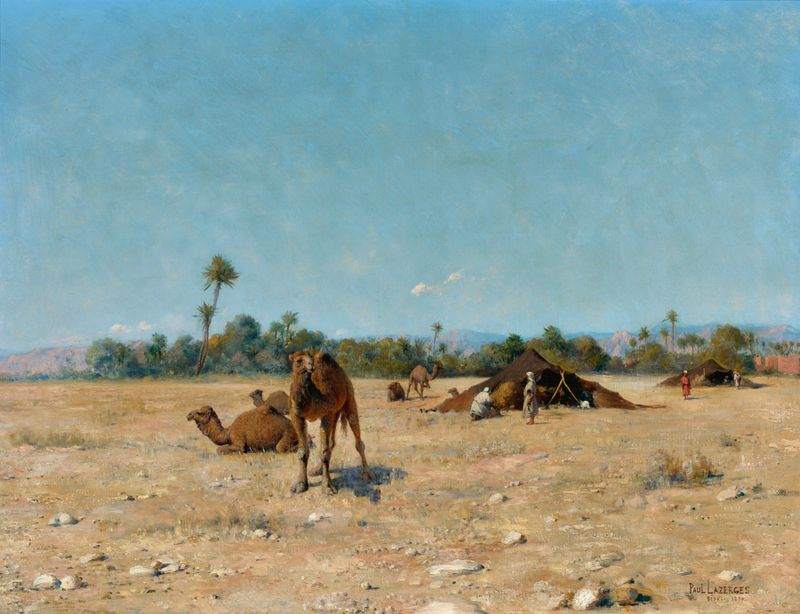
Did the painter know this moment would outlive them? In The Caravan, a quiet melancholy hangs in the air, whispering a timeless tale of solitude and reflection. Look to the left at the caravan itself, a tapestry of rich earth tones, weathered by time and journey. The worn textures and muted colors evoke both the weight of history and the promise of stories untold. Notice how the light softly caresses the figures, bathing them in an ethereal glow that contrasts with the deep shadows cast by the looming dunes.
This interplay of illumination and darkness accentuates the sense of nostalgia, inviting the viewer to ponder the lives captured within the scene. The emotional tension within the painting lies in the delicate balance between movement and stillness. Each figure, lost in thought, embodies a moment suspended in time, representing not just a physical journey but an introspective one. The caravan, a symbol of both escape and burden, suggests an underlying yearning for freedom amidst the weight of existence.
The horizon stretches endlessly, hinting at the journey ahead while reminding us of paths already traveled. In 1898, Jean Baptiste Paul Lazerges painted The Caravan amidst a burgeoning interest in impressionism and the exploration of light and color in art. Living in France during a time marked by rapid industrial change, he sought to capture the beauty of life's transient moments. This piece reflects not only his personal artistry but also a broader cultural movement, one that cherished the fleeting yet profound experiences defining the human condition.