
Beech Wood in May — History & Facts
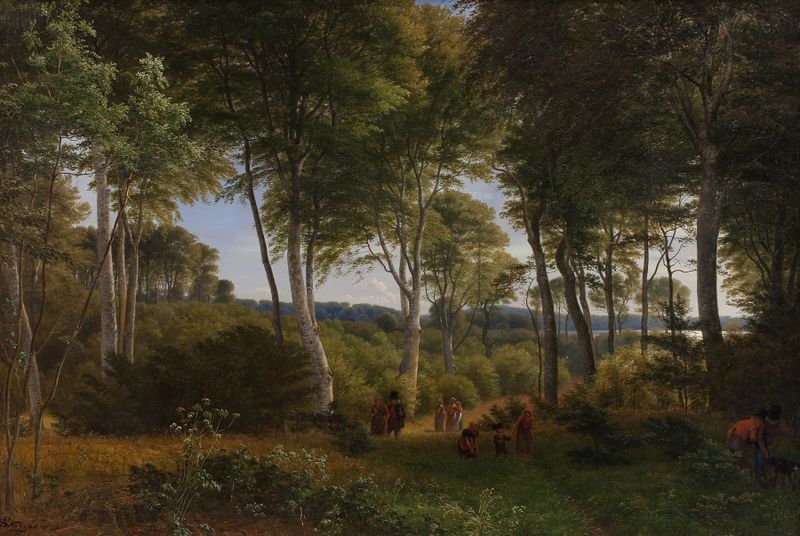
In this stillness, the truth of nature emerges not in grand declarations, but in the quiet whispers of the woods. Look to the center, where a myriad of beech trees rise, their trunks slender and graceful. The vibrant greens and soft browns blend seamlessly, inviting the eye to wander through the dappled light filtering through the leaves. Notice how the brushwork captures the texture of the bark, the shimmering leaves, and the undergrowth, creating a tapestry that feels both alive and serene.
The interplay of light and shadow draws you deeper, revealing hidden pathways and intimate spaces within the forest. Beneath the surface, this work resonates with themes of transience and renewal. The vibrant greenery symbolizes life, yet the shadows hint at the inevitable passage of time. Small wildflowers, strewn across the forest floor, offer a contrast to the towering trees, embodying fragility amidst strength.
This juxtaposition invites contemplation on the fleeting moments of beauty in nature, echoing the artist's intimate relationship with his surroundings. P. C. Skovgaard created Beech Wood in May between 1856 and 1857 while living in Denmark.
During this time, he was deeply engaged in the burgeoning naturalism movement, capturing the authenticity of landscapes with an almost reverent approach. The mid-19th century saw a growing appreciation for plein air painting, and Skovgaard's work reflects this shift, emphasizing a truth rooted in the simplicity and beauty of the natural world.
More Artworks by P. C. Skovgaard
Browse all →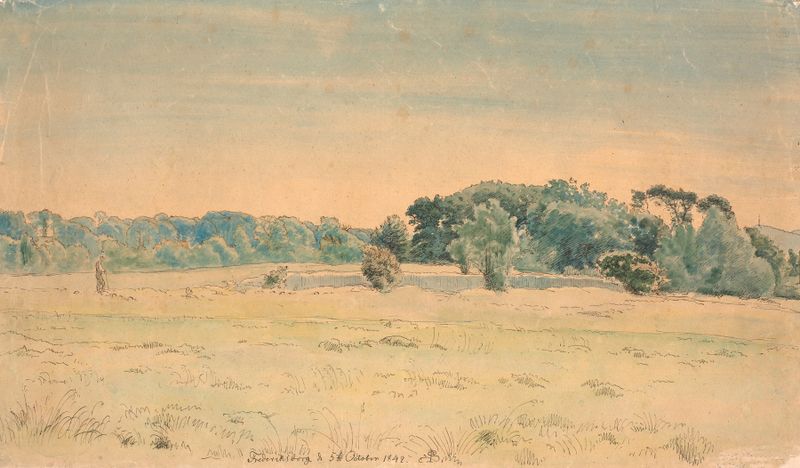
Landskab fra Frederiksborg
P. C. Skovgaard
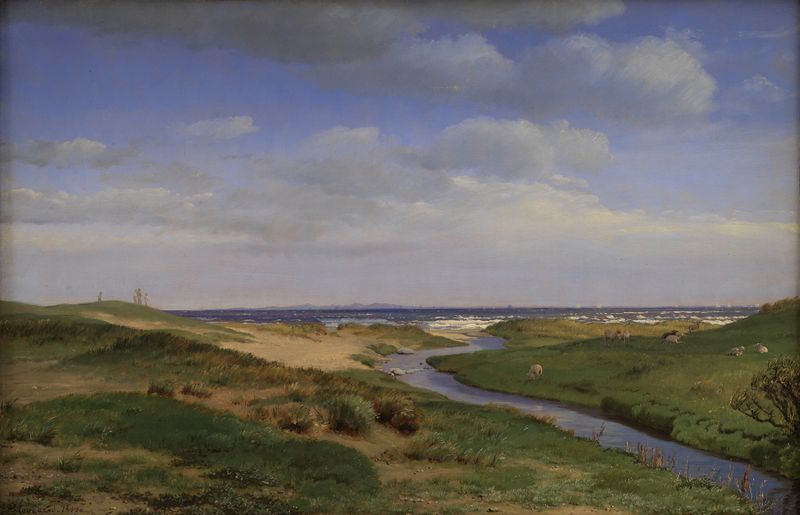
View of the North Coast of Zealand at Dronningmølle
P. C. Skovgaard
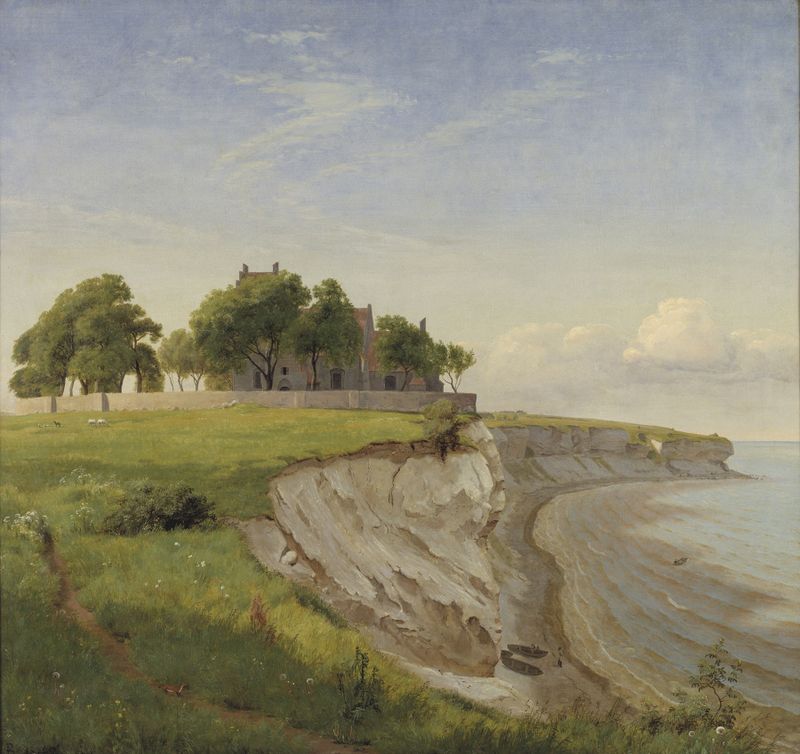
Højerup Church on the Cliffs of Stevns, Zealand
P. C. Skovgaard
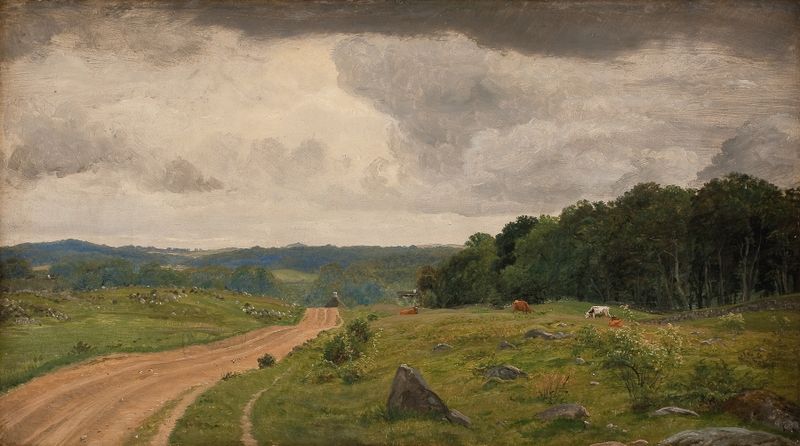
Landscape at Kongens Møller, Sealand. Afternoon Light
P. C. Skovgaard
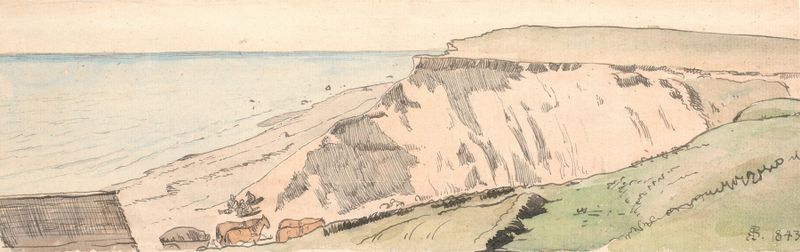
Kløften ved Helenes kilde i Tisvilde
P. C. Skovgaard
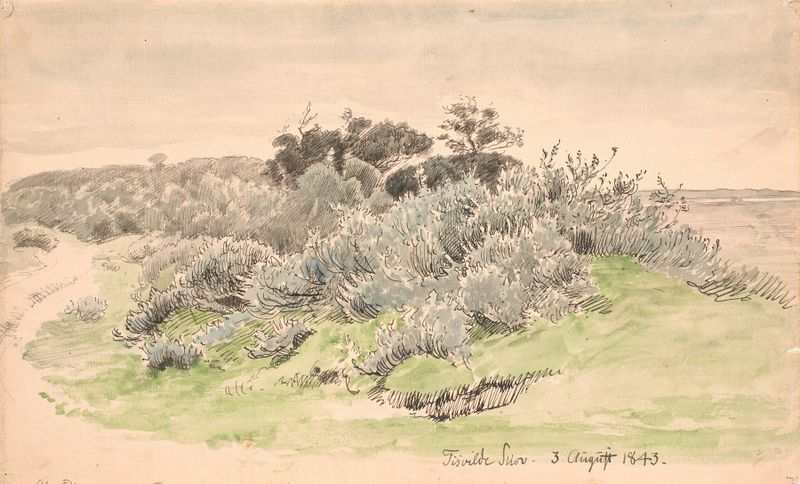
Landskab med krat
P. C. Skovgaard
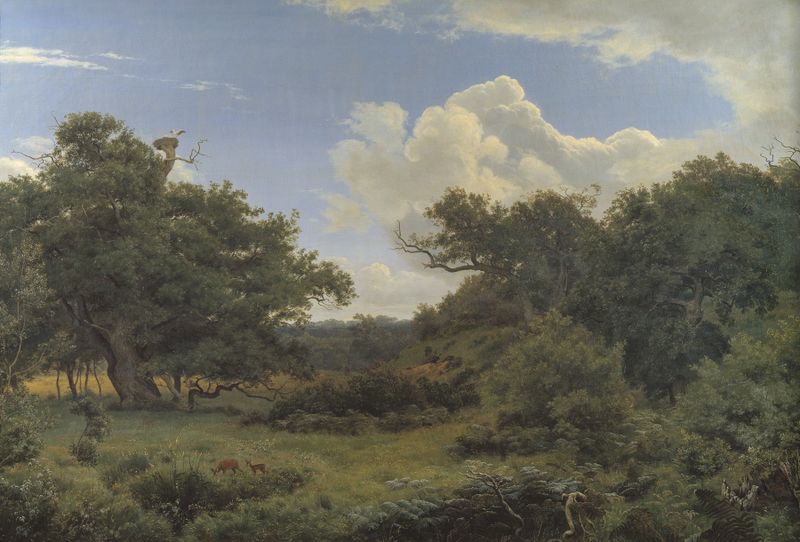
Oak Trees in Nordskoven near Jægerspris, Zealand
P. C. Skovgaard
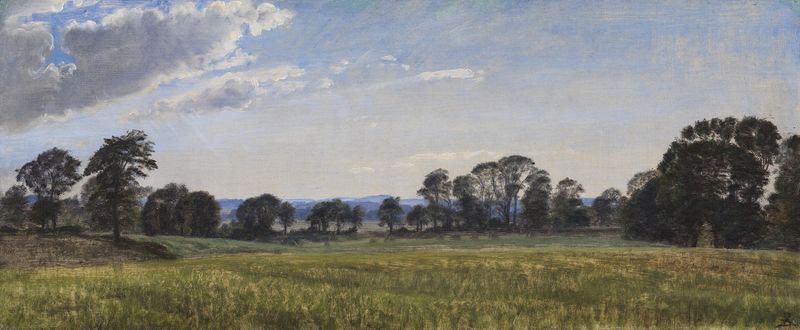
Engene ved Dortheaslyst
P. C. Skovgaard
Delhoved Wood near Lake Skarre, Zealand. Afternoon Light
P. C. Skovgaard
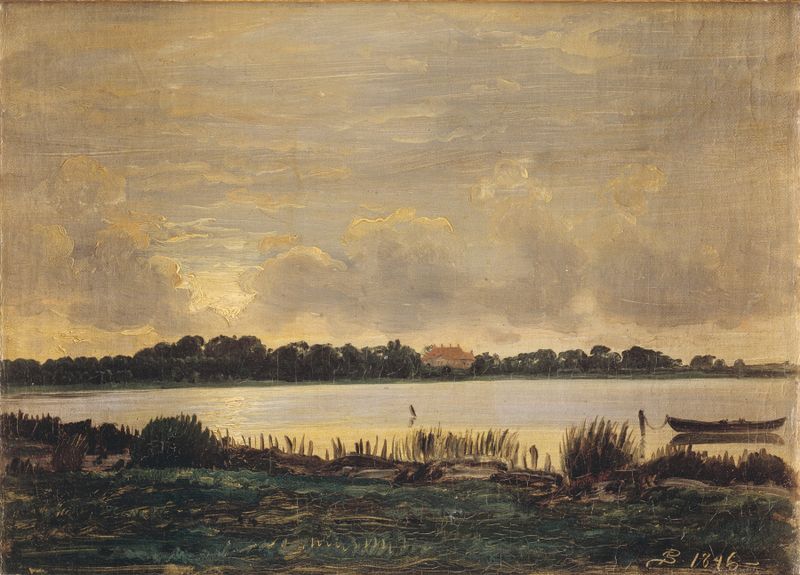
View Across Præstø Fiord towards the manor of Nysø
P. C. Skovgaard





