
Delhoved Wood near Lake Skarre, Zealand. Afternoon Light — History & Facts
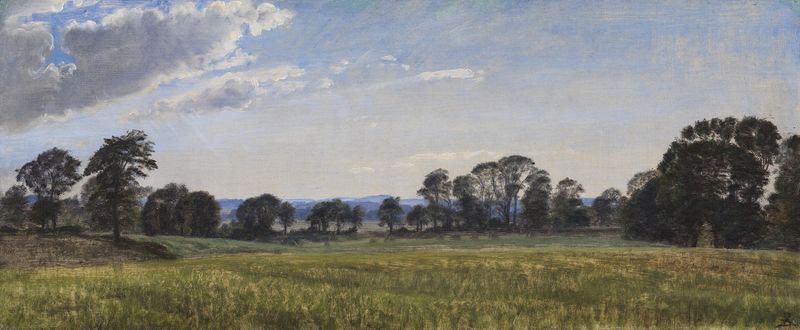
In the stillness of a woodland grove, one can almost hear the whispers of trees longing for the embrace of sunlight. Those fleeting moments of connection between earth and light, captured forever, evoke an ache for nature’s quiet beauty. Look to the left at the dense canopy of green, where leaves flutter gently in a breeze, inviting you deeper into the scene. The dappled sunlight filters through, casting a warm glow over the forest floor, accenting the earthy browns and rich golds of the underbrush.
Notice how the composition draws your eye along the winding path leading to the shimmering lake, where the reflections ripple softly, mirroring the sky's muted blues and grays. This deliberate interplay of light and shadow reveals the artist's mastery of capturing ephemeral moments, framing the natural world in serene harmony. Yet, beneath this tranquil surface lies a deeper emotional resonance. The juxtaposition of light and shadow suggests a longing, a desire for connection not just with nature but with the transient moments that define existence.
The trees stand tall, solitary yet united, embodying a quiet resilience. This subtle interplay of elements evokes a sense of nostalgia, inviting viewers to reflect on their own places of solace and yearning. Created between 1846 and 1847, this work emerged during a transformative period in Denmark, where Romanticism began to flourish. P.
C. Skovgaard, influenced by the natural landscape of Zealand, sought to elevate the everyday into the sublime. His commitment to capturing the essence of place resonated with broader artistic trends of the time, as painters turned increasingly toward nature for inspiration, seeking to convey the emotional depth inherent in the world around them.
More Artworks by P. C. Skovgaard
Browse all →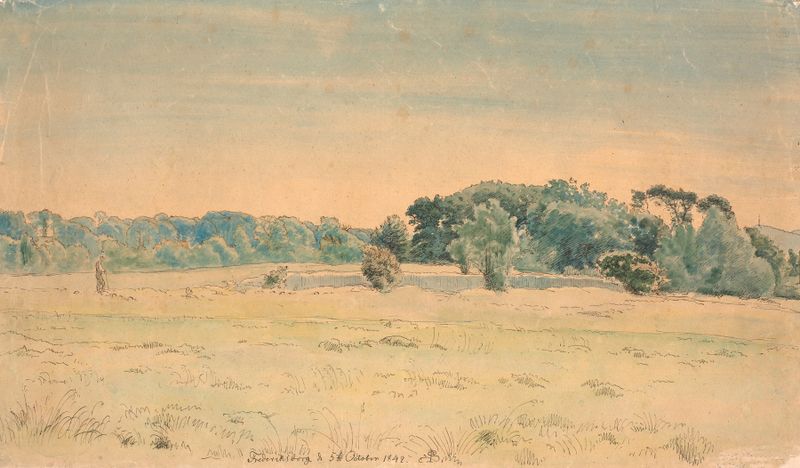
Landskab fra Frederiksborg
P. C. Skovgaard
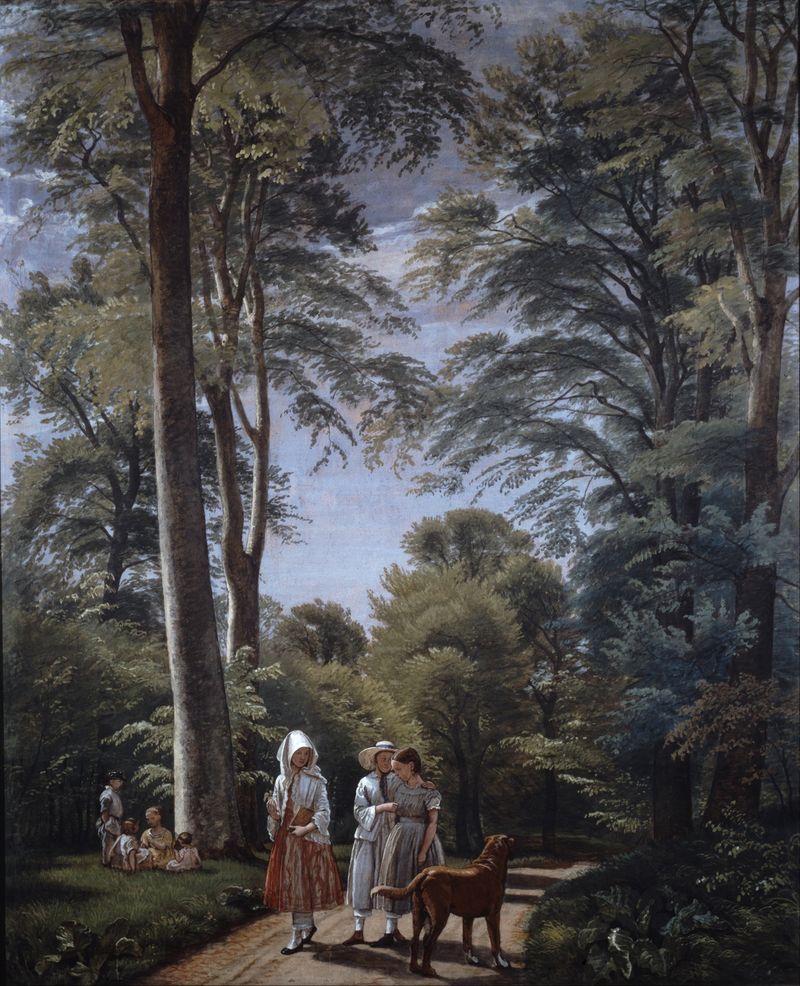
Beech Wood in May
P. C. Skovgaard
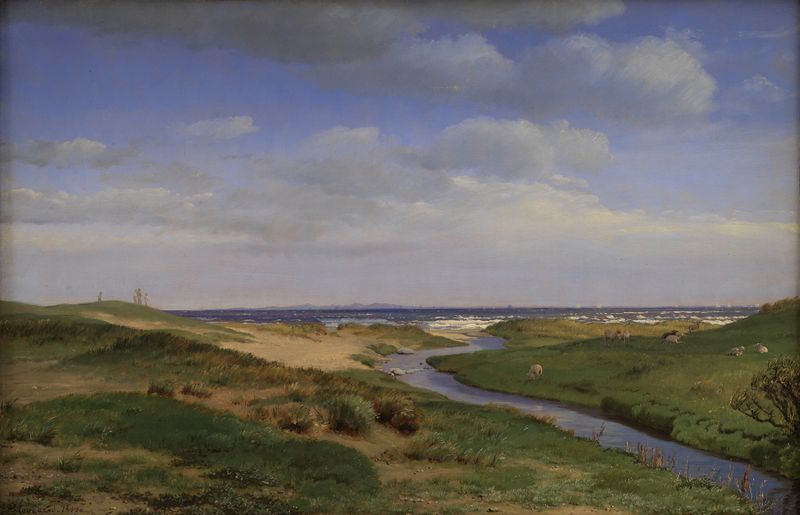
View of the North Coast of Zealand at Dronningmølle
P. C. Skovgaard
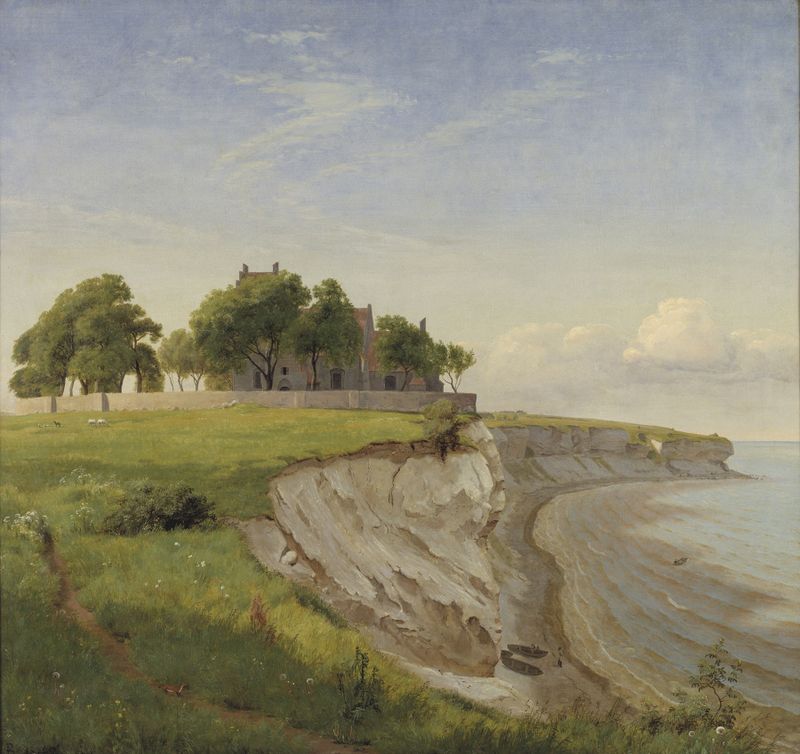
Højerup Church on the Cliffs of Stevns, Zealand
P. C. Skovgaard
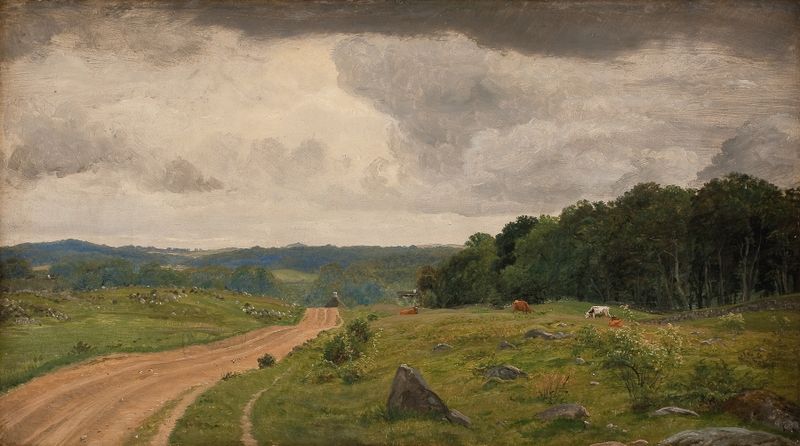
Landscape at Kongens Møller, Sealand. Afternoon Light
P. C. Skovgaard
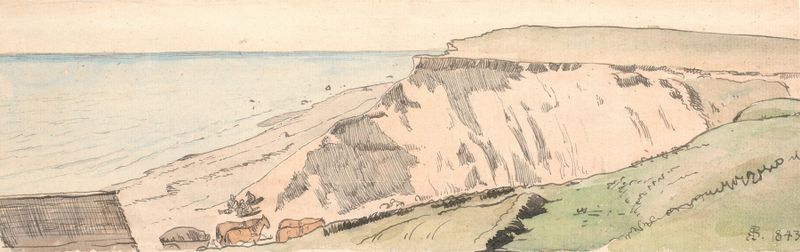
Kløften ved Helenes kilde i Tisvilde
P. C. Skovgaard
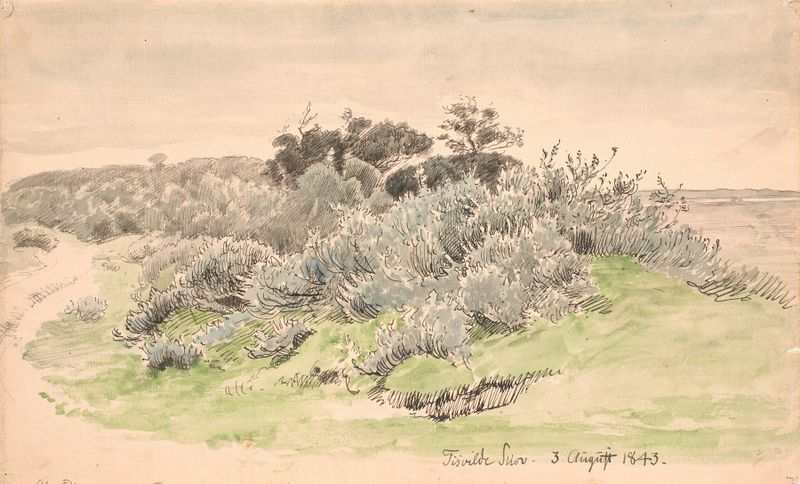
Landskab med krat
P. C. Skovgaard
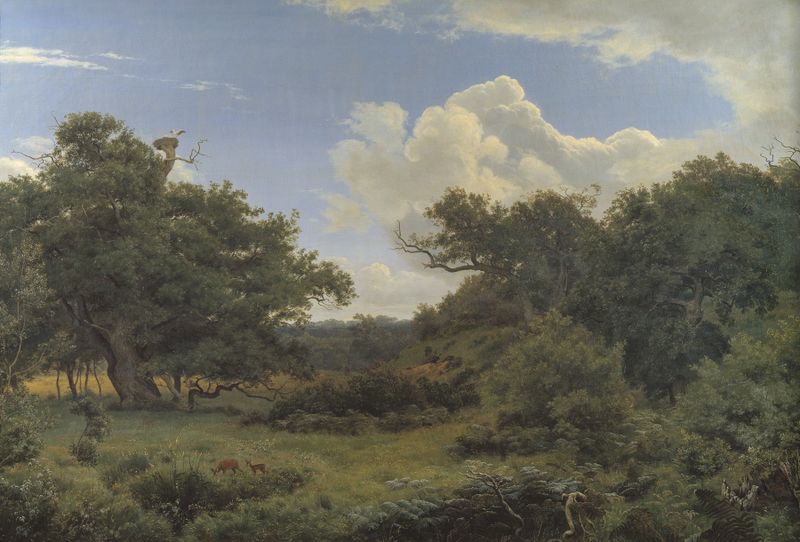
Oak Trees in Nordskoven near Jægerspris, Zealand
P. C. Skovgaard
Engene ved Dortheaslyst
P. C. Skovgaard
View Across Præstø Fiord towards the manor of Nysø
P. C. Skovgaard





