
Bei Stephanskirchen — History & Facts
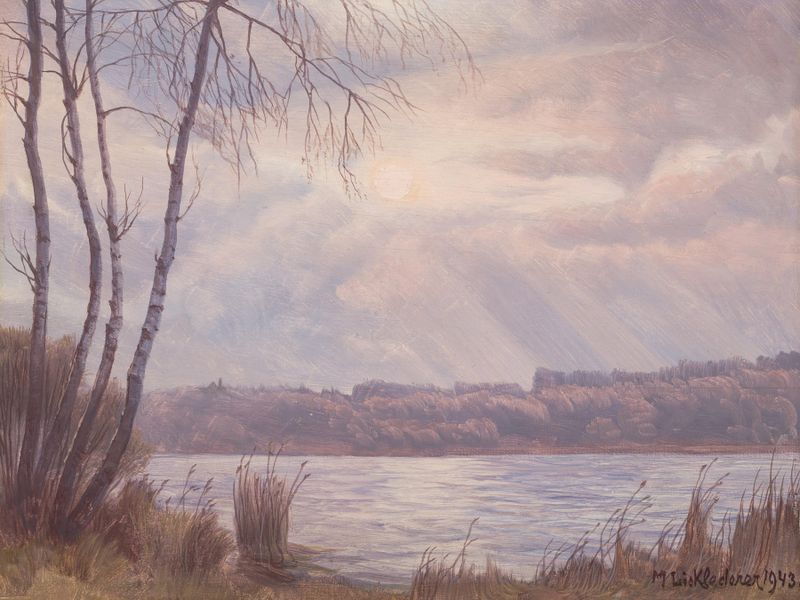
In the quiet embrace of nostalgia, a moment is captured where time feels both fleeting and endless, inviting deeper reflection on life and memory. Look to the center of the canvas, where a forlorn figure stands beneath a heavy sky, the muted colors of the landscape reflecting an autumnal melancholy. Notice how the soft, pale browns and grays blend seamlessly, imparting a sense of stillness. The gentle brushstrokes evoke a sense of movement, as if the wind whispers through the trees, while the distant hills create a horizon that seems both unreachable and familiar. Yet, beyond its picturesque simplicity, this work holds contrasts that resonate with emotional depth.
The solitary figure suggests isolation, a poignant reminder of the inner struggles faced amidst an expansive world. The interplay of light and shadow reinforces this tension; while the sky looms with a potential storm, the warmth of the earth hints at resilience and hope. Each element, from the gnarled branches to the distant path, symbolizes the journey through both despair and possibility. In 1919, as the world was recovering from the First World War, Bei Stephanskirchen emerged from the hands of Michael Licklederer in a landscape deeply affected by the echoes of conflict.
Having returned to Germany after the war, Licklederer found himself in a nation grappling with uncertainty and loss, and his work reflects this intricate dance between despair and the yearning for peace.
More Artworks by Michael Licklederer
Browse all →
Simsee mit Heuberg
Michael Licklederer
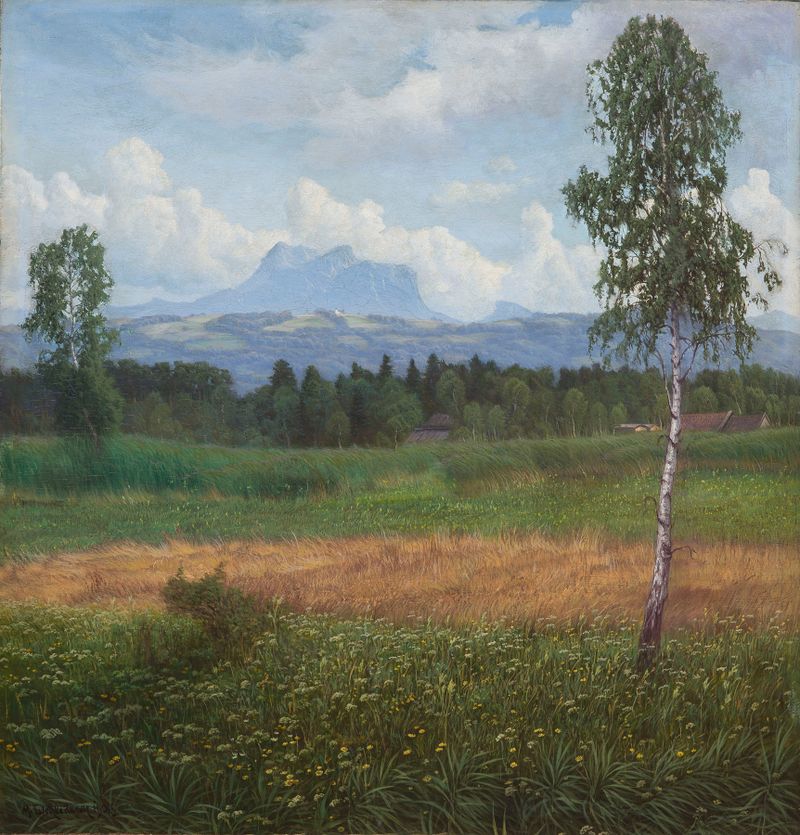
Blick zum Heuberg
Michael Licklederer

Altes Bauernhaus
Michael Licklederer
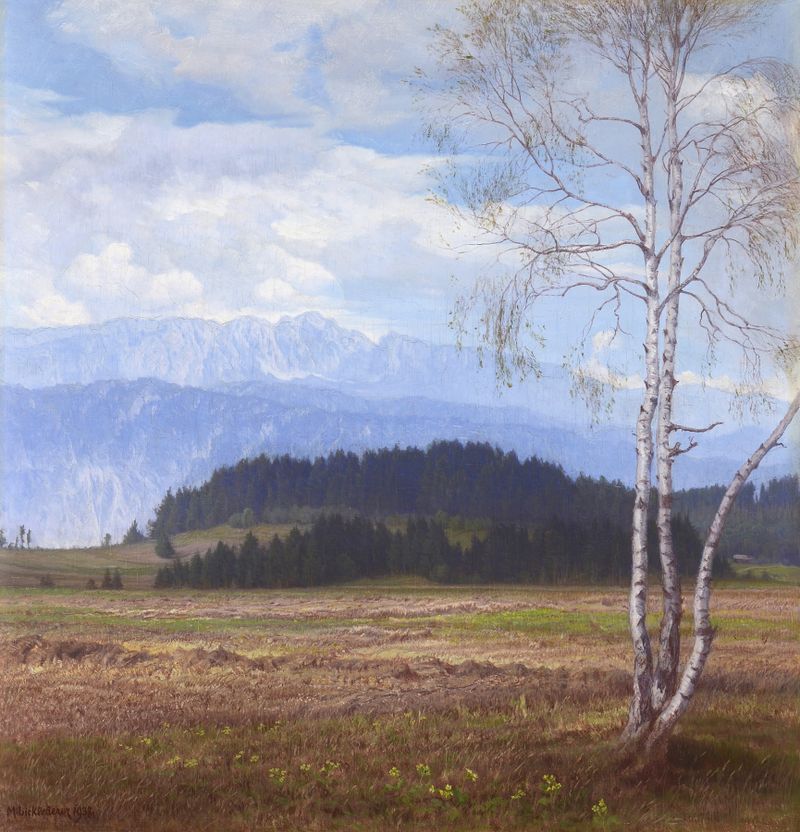
Blick auf das Kaisergebirge
Michael Licklederer
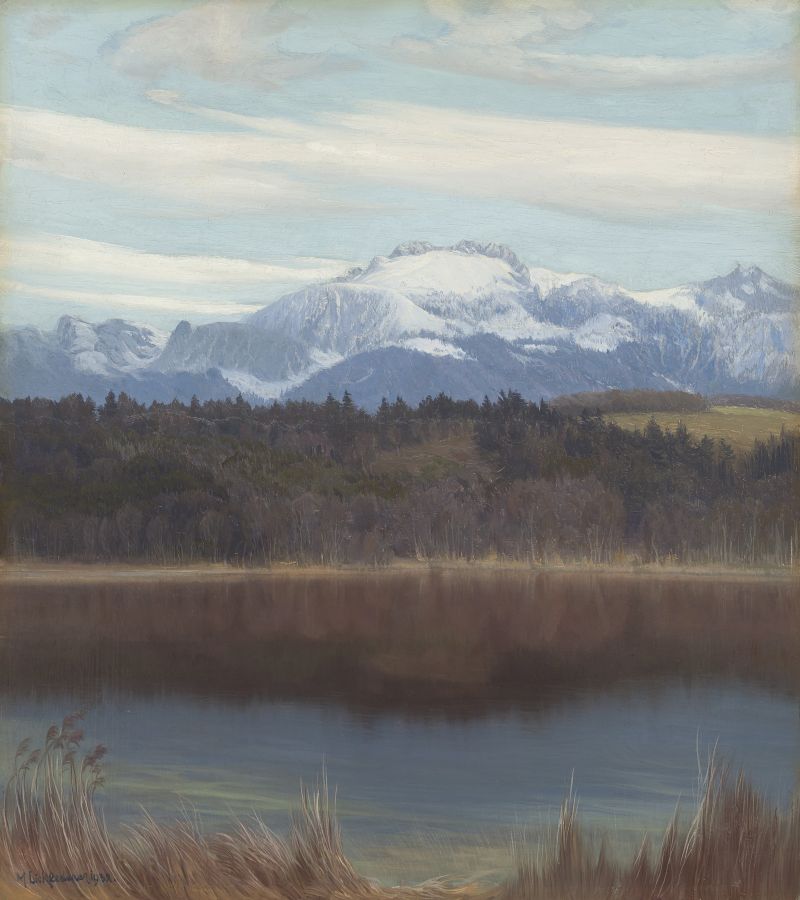
Kampenwand mit Simssee
Michael Licklederer
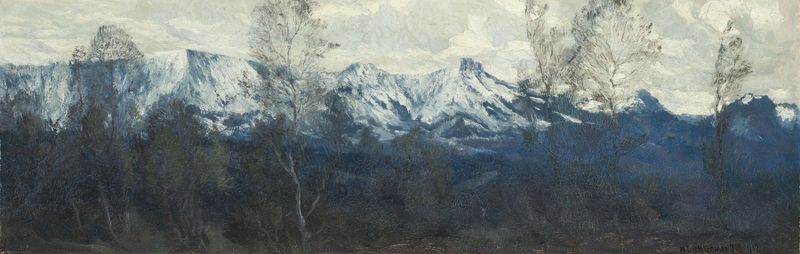
Wintertag (Hochries, Karkopf, Feuchteck)
Michael Licklederer
Simssee-Abend
Michael Licklederer

Stürmische Segelpartie am Simssee
Michael Licklederer

Blick über den Simssee
Michael Licklederer





