
Blick zum Heuberg — History & Facts
Could beauty survive in a century of chaos? In Blick zum Heuberg, the piercing silence of the landscape invites a moment of reflection, whispering stories of tranquility amidst the turmoil of 1930s Europe. Look to the left where the rolling hills gently rise, their soft greens and earthy browns merging seamlessly under a vast, muted sky. Notice how the delicate brushstrokes evoke a sense of depth, creating an inviting path that meanders through the composition. The artist’s choice of subtle color palette enhances the feeling of calm, while the distant mountains loom majestically, reminding us of nature’s grandeur and eternal presence. As you explore further, consider the contrast between the idyllic rural scene and the human turmoil of the time.
The stillness of the land stands in stark opposition to the unrest brewing in society. The light filtering through the clouds casts a serene glow, suggesting that even in tumultuous times, solace can be found in the natural world. The absence of any human figures amplifies this reflection, leaving the landscape to speak for itself, untouched and profound. Michael Licklederer painted Blick zum Heuberg in 1936, during a period when the world was on the brink of monumental change.
Living in pre-war Germany, he sought refuge in the beauty of his surroundings, capturing a moment of peace that contrasts sharply with the growing tensions of his time. This work exemplifies his dedication to depicting nature, a commitment that resonated deeply against the backdrop of his era's uncertainty.
More Artworks by Michael Licklederer
Browse all →
Simsee mit Heuberg
Michael Licklederer

Altes Bauernhaus
Michael Licklederer
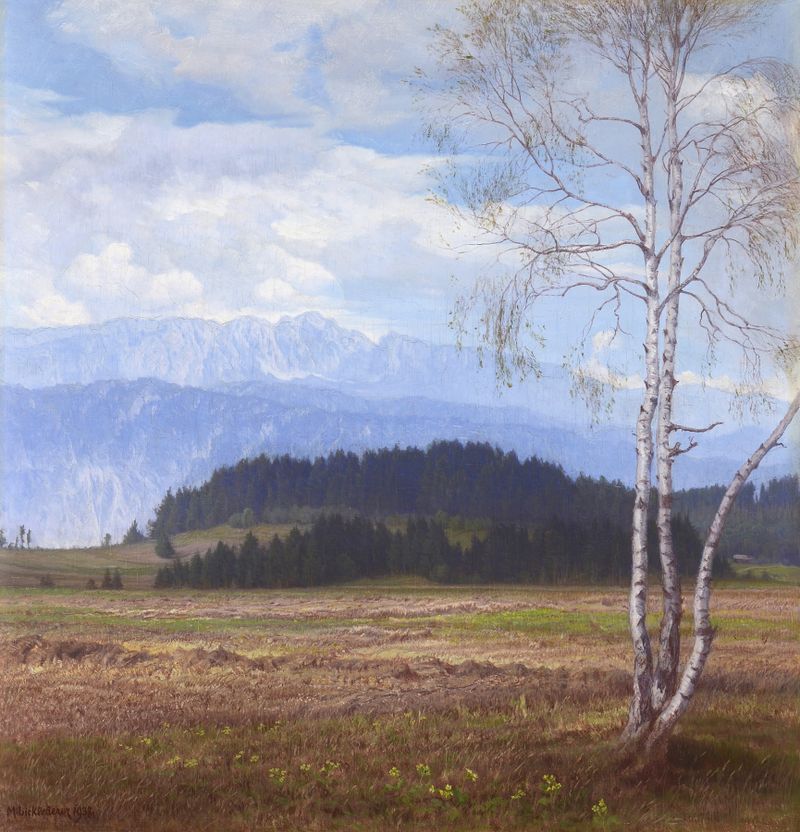
Blick auf das Kaisergebirge
Michael Licklederer
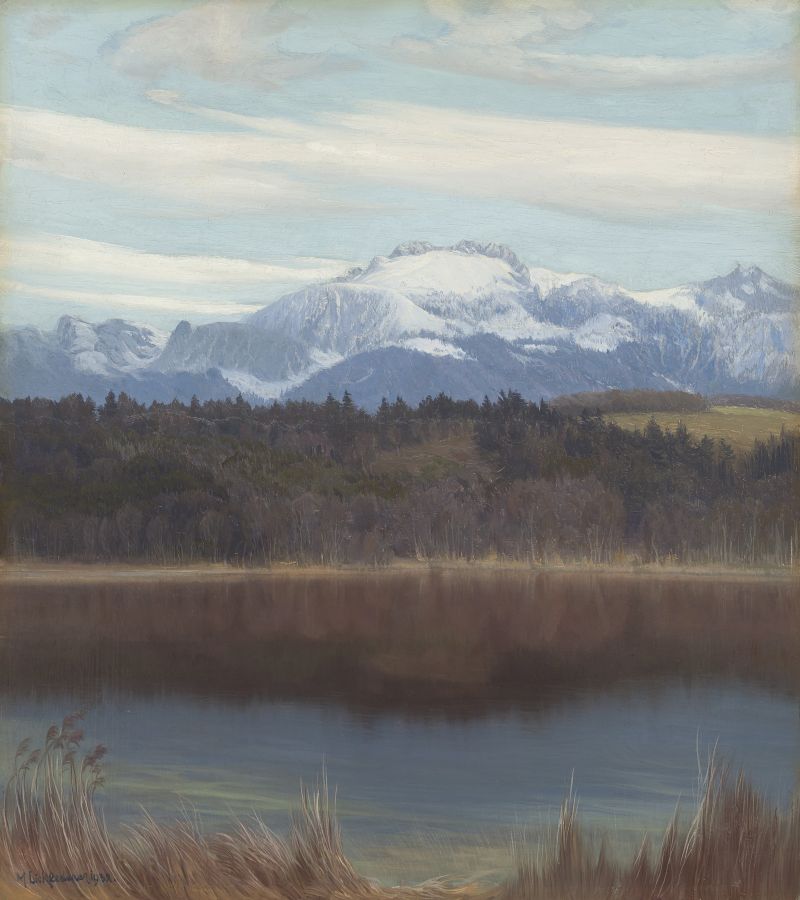
Kampenwand mit Simssee
Michael Licklederer
Wintertag (Hochries, Karkopf, Feuchteck)
Michael Licklederer
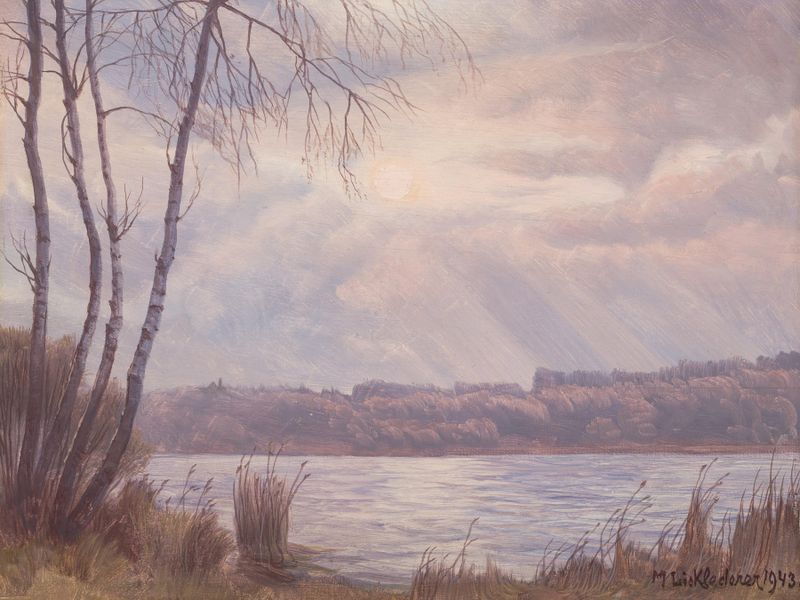
Simssee-Abend
Michael Licklederer

Stürmische Segelpartie am Simssee
Michael Licklederer

Bei Stephanskirchen
Michael Licklederer

Blick über den Simssee
Michael Licklederer





