Beim Holzfällen im Durlacher Wald — History & Facts
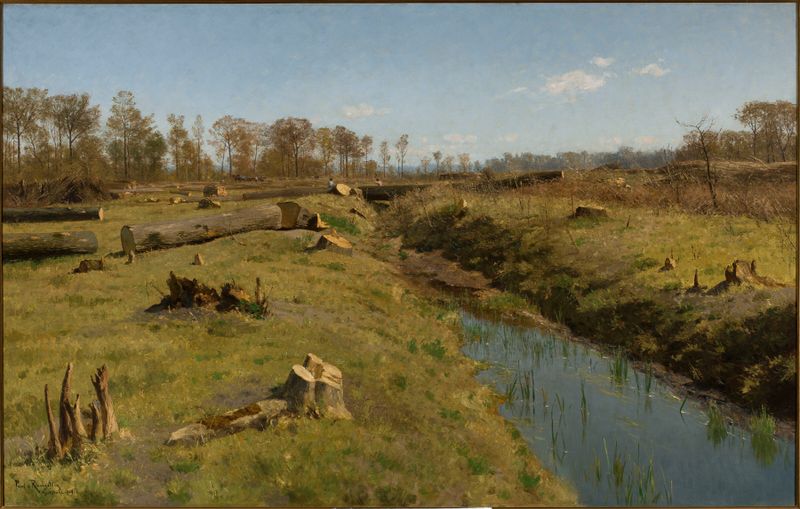
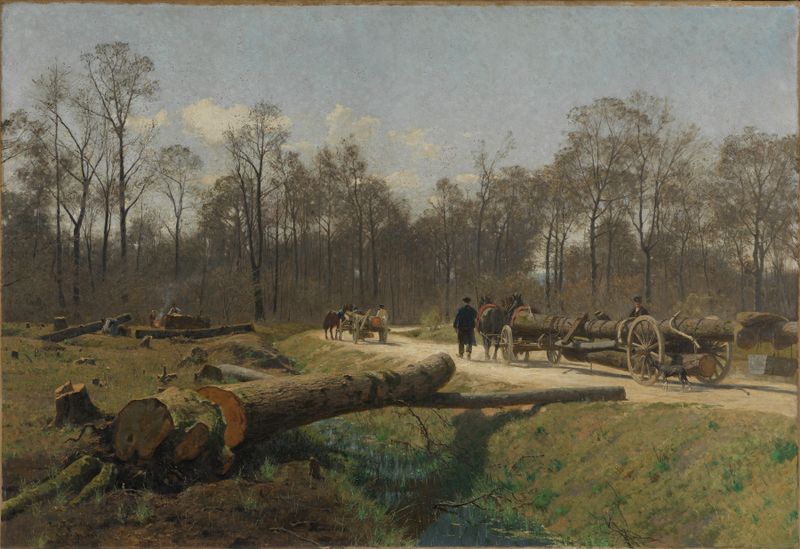
What secret hides in the quiet of the canvas? In the gentle embrace of nature, a story of legacy unfolds, whispering tales of labor, life, and the passage of time. Look to the center of the scene, where sturdy figures engage in the rhythmic act of woodcutting, their muscles taut and expressions focused. Notice how the dappled light filters through the trees, casting a soft glow on the ground beneath their feet. The rich, earthy tones of ochre and deep green evoke a sense of harmony, while the silvery sheen of the axes catches the light, emphasizing the labor's weight and purpose.
Each stroke of the brush reveals a meticulous attention to detail, bringing forth the raw beauty of the forest as a backdrop for human resilience. In this tranquil moment, contrasts emerge. The serenity of the woodland exists alongside the labor-intensive act of cutting wood, hinting at the ongoing dialogue between nature and industry. The stillness of the trees, silent witnesses to the toil, juxtaposes the vitality of the workers, suggesting that their effort is both a tribute to and an extraction from the land.
The way the figures are arranged suggests camaraderie, yet the solitary act of each woodsman speaks to individual struggle and persistence, emphasizing a deeply rooted connection to their environment. Paul von Ravenstein painted this work in 1893, during a period marked by a growing fascination with the natural world alongside industrial advancement. Living in Germany, he was influenced by the Romantic movement's embrace of nature, yet he also acknowledged the burgeoning changes of the late 19th century. This painting stands as a testament to both personal and collective narratives, embodying the legacy of a time when humanity encountered the wild with reverence and labor.