Early spring — History & Facts
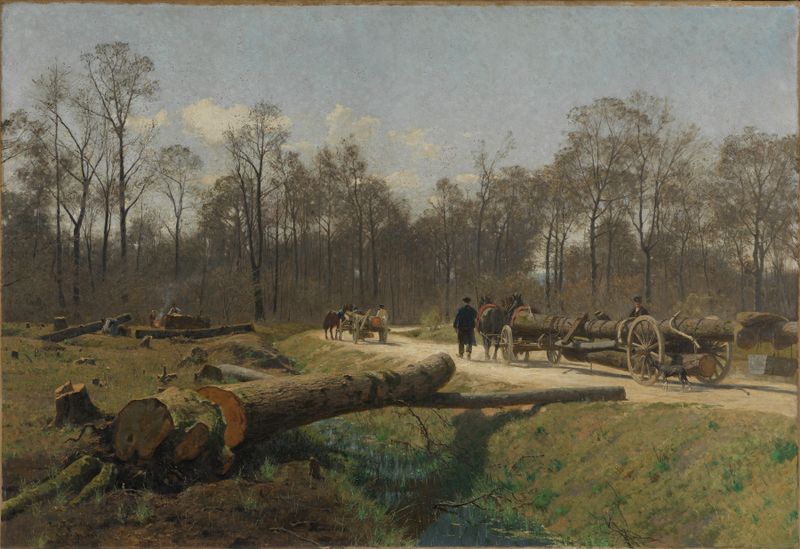
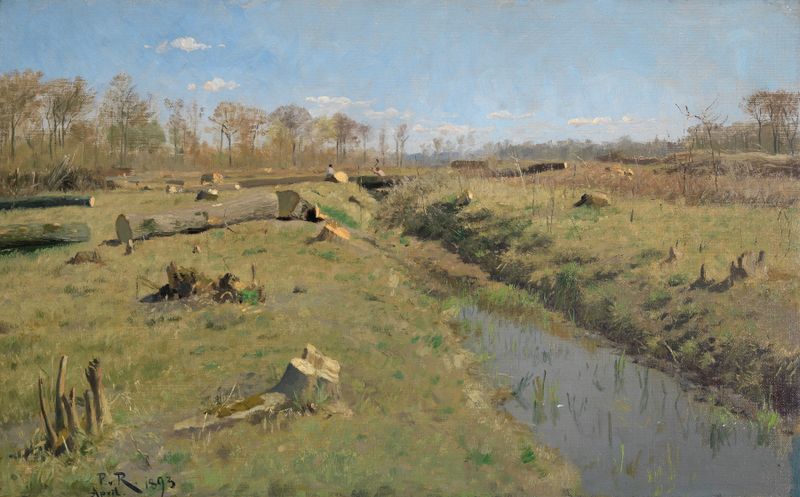
Did the painter know this moment would outlive them? In Early Spring, the vibrant rebirth of nature pulses with life, inviting the viewer into an intimate relationship with the fleeting beauty of creation. Look to the center, where soft greens emerge from the thawing earth, each brushstroke alive with motion. The delicate interplay of light and shadow captures the sun's gentle caress on budding leaves, illuminating the canvas with hope and warmth. Notice how the muted palette of browns and grays contrasts with the bright bursts of color, suggesting a world awakening from its slumber. As you explore the edges of the painting, subtle details reveal deeper meanings—tiny blossoms peek out amidst the remnants of winter, symbolizing resilience and renewal.
The wispy clouds overhead hint at the transient nature of spring, urging contemplation of the cyclical passage of time. This balance of light and dark, growth and decay, creates a poignant emotional tension, inviting introspection. In 1909, Paul von Ravenstein painted Early Spring during a period of personal and artistic exploration, residing in Europe at a time when artists were increasingly embracing the beauty of nature. The movement towards Impressionism and a focus on capturing fleeting moments influenced his work, reflecting a broader societal shift towards appreciation of the natural world.
This piece embodies not only a specific moment in time but also the universal longing for renewal and the enduring power of creation.