
Below Langley Oct. 19 1841 — History & Facts
Can beauty exist without sorrow? In Below Langley, emotion intertwines with landscape, inviting contemplation of destiny and the fragile balance between joy and melancholy. Look to the lower left where a solitary figure stands on a windswept bank, their silhouette stark against the soft hues of twilight. The gentle blend of greens and blues in the water mirrors the sky's fading light, creating an ethereal atmosphere that draws the eye. Notice how the brushstrokes convey movement in the rippling water, as if it is alive, echoing the underlying currents of thought and emotion.
The composition is elegantly asymmetrical, with the figure grounding the scene while the expansive landscape invites reflection. Delve deeper into the details and you’ll find contradictions woven into the fabric of this work. The setting conveys a serene beauty, yet the figure’s isolation hints at a narrative of solitude and introspection. Shadows stretch long, suggesting time slipping away, while the vibrant colors evoke both hope and the inevitability of change.
Here, destiny seems to hover at the edge of the horizon, a promise colored by uncertainty. Miles Edmund Cotman painted Below Langley during a period of personal exploration and artistic development in the early to mid-19th century. Emerging from the influence of the Romantic movement, he sought to capture the emotional resonance of landscapes, reflecting on nature's beauty amid the societal upheavals of the time. This piece epitomizes his quest to find harmony in tension, echoing the complexities of human experience.
More Artworks by Miles Edmund Cotman
Browse all →
From the Garden front of my Father’s House at Thorpe next Norwich
Miles Edmund Cotman

Study of Trees on the Banks of the Yare
Miles Edmund Cotman

Col. Harvey’s Meadow Thorpe and Norwich Oct. 2nd 1841
Miles Edmund Cotman
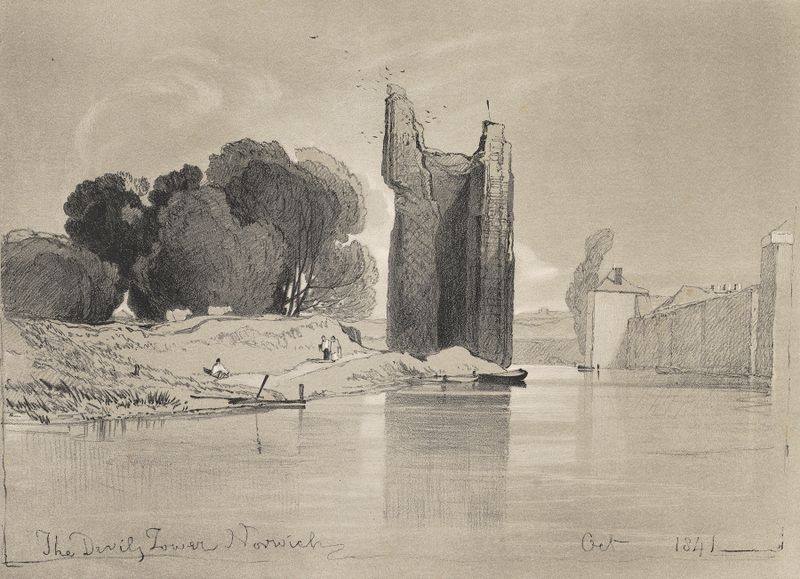
The Devil’s Tower, Norwich Oct. 1841
Miles Edmund Cotman

Mousehold Heath–The Lane to the Left above Col. Harveys House
Miles Edmund Cotman
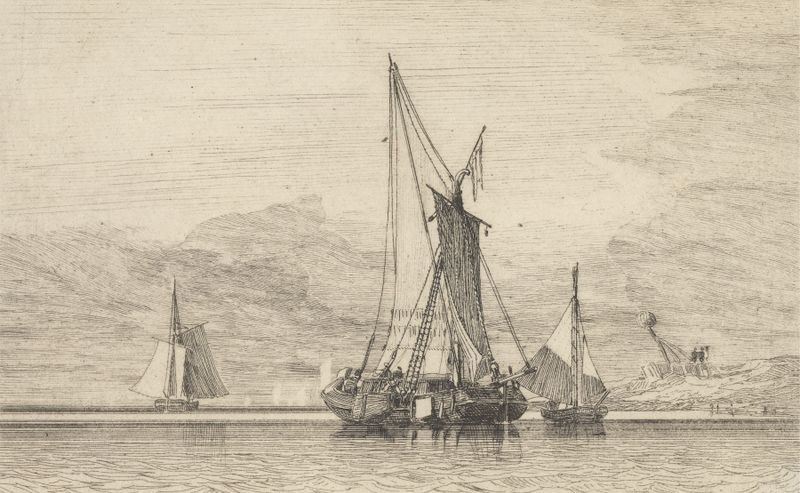
On the Medway
Miles Edmund Cotman

Itteringham Nov. 12th 1841
Miles Edmund Cotman
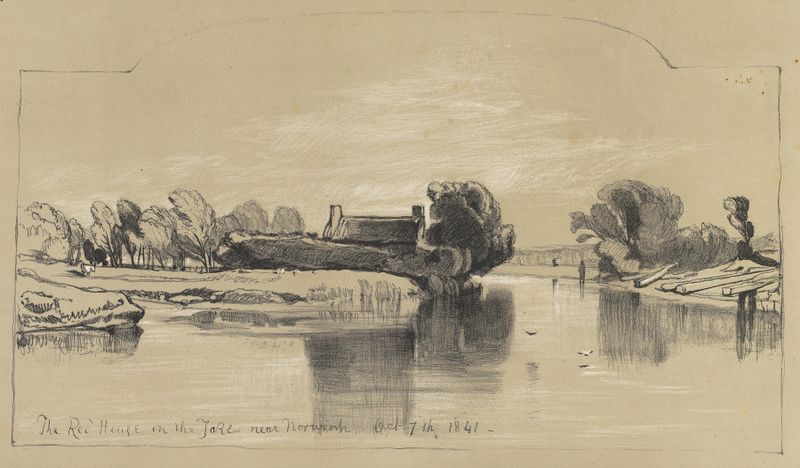
The Red House on the Lake near Norwich Oct. 7th, 1841
Miles Edmund Cotman
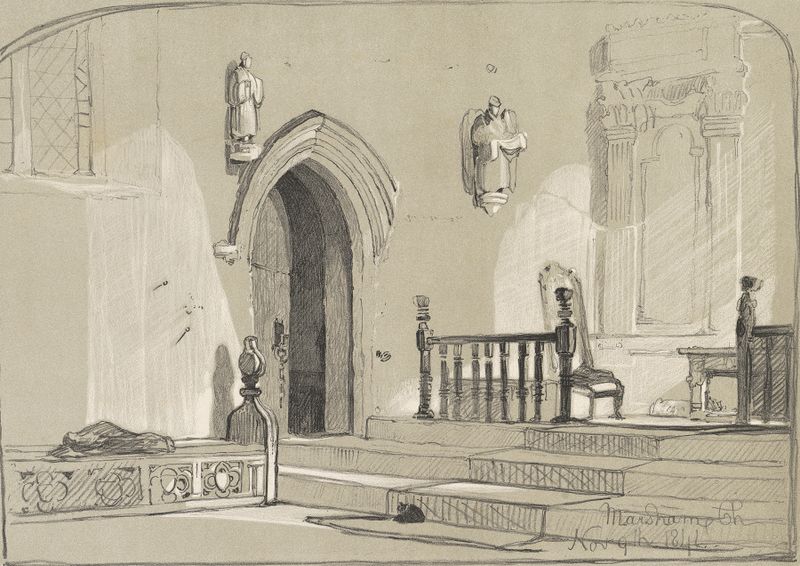
Marsham Ch. Nov. 9th 1841.
Miles Edmund Cotman

French Fishing Boat off the Shears
Miles Edmund Cotman





