Über allen Gipfeln ist Ruh — History & Facts
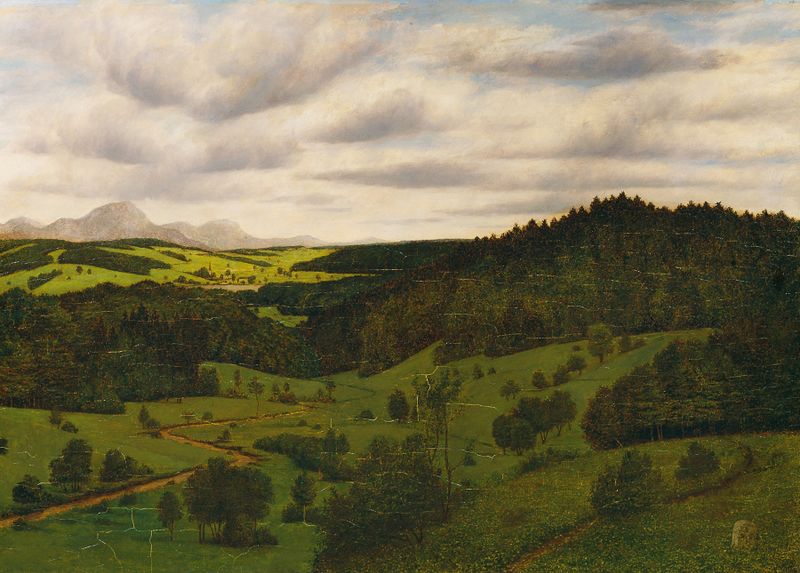
This sentiment resonates deeply within the layers of light and shadow in the artwork. It challenges us to consider the hidden struggles that lie beneath serene surfaces, awakening a sense of empathy towards both the artist and the subject. Look closely at the interplay of light in the upper half of the canvas, where ethereal golds and soft whites mingle, creating an almost diaphanous glow. As your gaze descends, the darker, more muted tones contrast with this luminosity, grounding the composition and evoking a sense of weight.
Notice how the brushwork varies from delicate strokes that suggest the ephemeral quality of light to the heavier application below that anchors the viewer’s experience. This careful balance draws you into a contemplation of both peace and unrest. The juxtaposition of brilliant light and somber shadows speaks volumes about the human experience. Here, the golden glow could represent hope or aspiration, while the darker elements serve as reminders of the inevitable struggles we face.
The tension between the two invites deeper reflection on the duality of existence—where beauty often masks underlying sorrow, and where serenity is a fleeting illusion in a complex world. In 1908, Karl Haider was immersed in an evolving art landscape, influenced by early modernism and symbolist movements. Living in Germany during a time of societal change and artistic exploration, he sought to capture the essence of inner experiences through this piece. Über allen Gipfeln ist Ruh exemplifies both his technical mastery and the emotional depth that characterized his work, revealing the profound complexities of life and light.