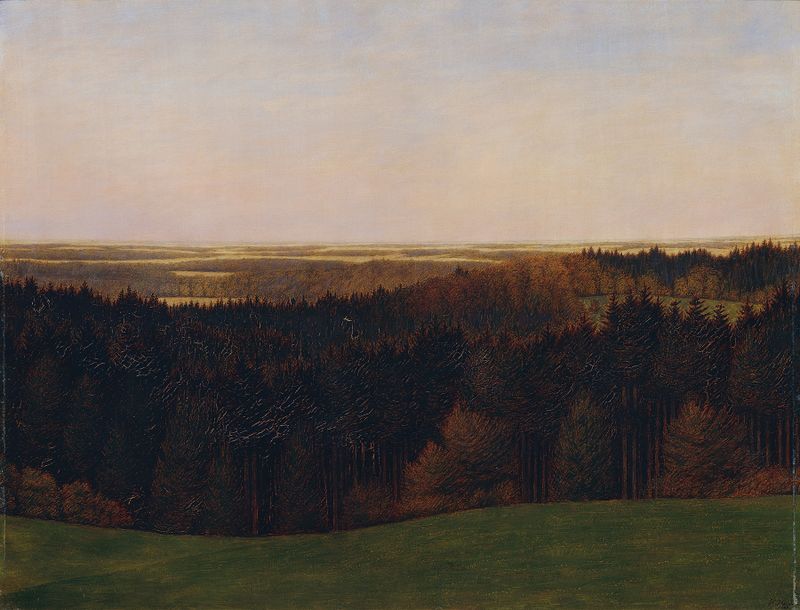
Oberbayrische Landschaft bei Schliersee mit dem Wendelstein — History & Facts
This notion resonates deeply with the ardent pursuit to capture the spirit of a landscape that breathes life. In the delicate balance of color and form, there lies an obsession with translating the ephemeral beauty of nature into something enduring. Focus on the vibrant greens and blues as they collide in the foreground. Notice how the delicate strokes form rolling hills that cradle the serene Schliersee, with the Wendelstein mountain standing majestically in the background.
The interplay of light dances across the water’s surface, revealing the artist's mastery in layering. Each brushstroke seems deliberate, inviting the viewer to step closer and lose themselves in the scenic tableau. Yet, beneath this idyllic surface, a tension simmers—a dichotomy between tranquility and the inevitable passage of time. The stillness of the lake contrasts sharply with the bold, swirling clouds above, hinting at nature's capriciousness.
The vibrant hues reflect not only the physical landscape but also the emotional landscape of obsession; a yearning to preserve a fleeting moment that is irrevocably tied to change and decay. In 1896, Karl Haider painted this breathtaking piece amidst a burgeoning movement in the art world that sought to capture the essence of nature through Impressionism. Living in Bavaria, a region renowned for its picturesque vistas, he was influenced by the beauty surrounding him, as well as by contemporaries who were experimenting with color and light. This period marked a pivotal moment for Haider, as he sought to elevate the ordinary landscape into a profound expression of his artistic vision.