Bergen; ruïne van boerderij met erachter een bunker, aan de Groeneweg, Bergermeer — History & Facts
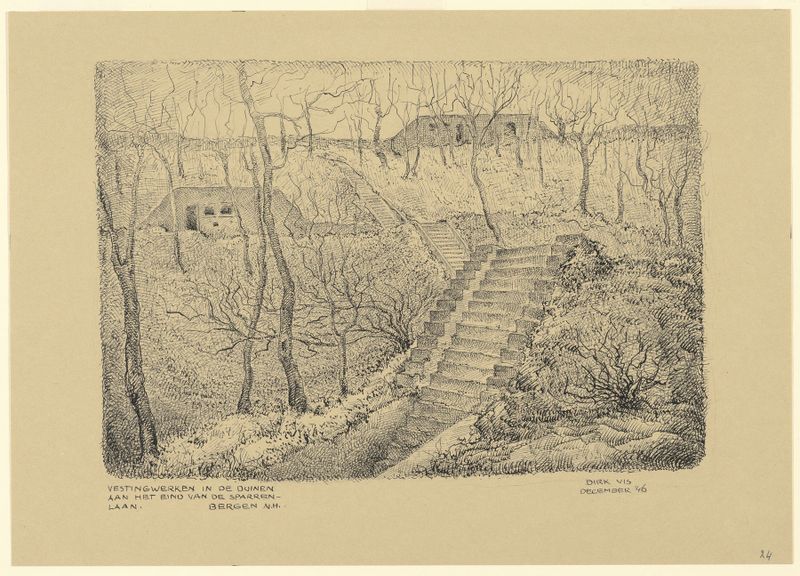
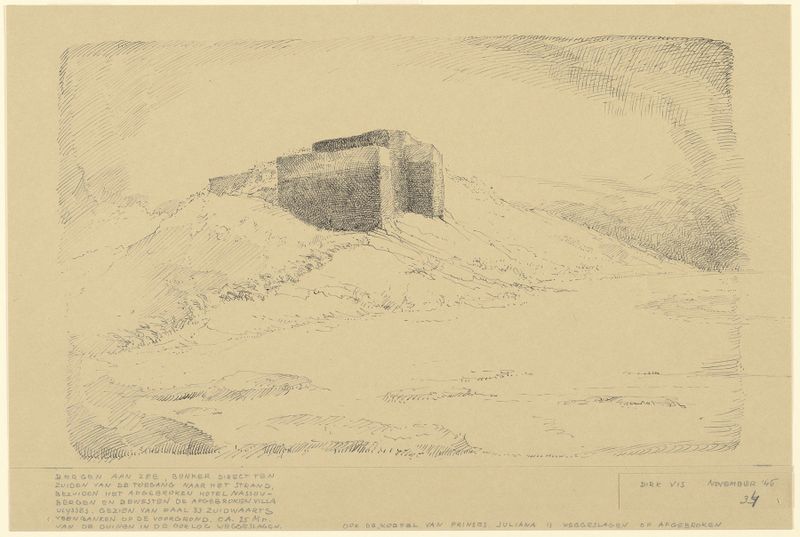
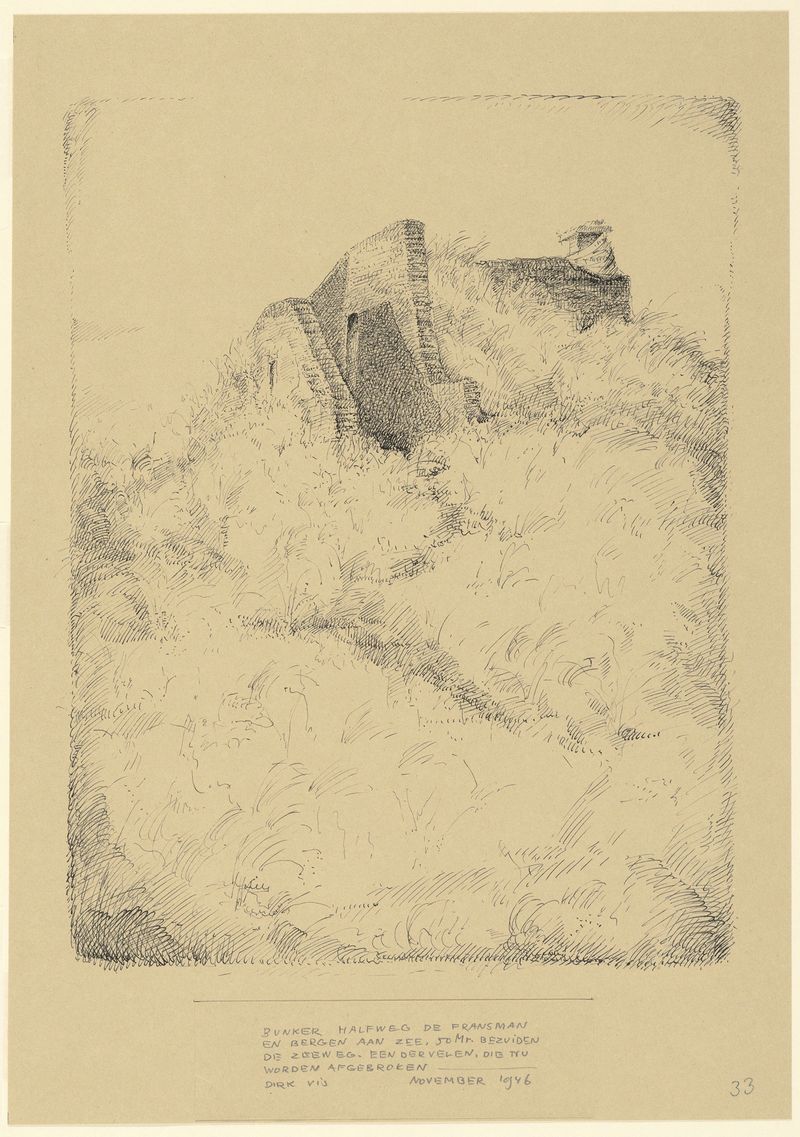
A haunting truth lingers within the remains of a once-vibrant landscape, where innocence meets the shadows of devastation. Focus your gaze on the dilapidated farmhouse, its walls crumbled yet whispering stories of the past. This forsaken structure stands resolute, surrounded by the bleakness of a bunker, a stark reminder of wartime echoes. The palette is muted—grays and browns dominate, subtly illuminated by the soft light filtering through an overcast sky, reflecting a somber yet poignant beauty.
Notice how the brushstrokes vary in texture, with the roughness of the walls contrasting against the smoothness of the surrounding grass, symbolizing resilience amidst decay. The juxtaposition between the farmhouse and the bunker conveys a powerful tension. One evokes nostalgia for innocence and warmth, while the other casts a shadow of conflict and survival. A hint of vibrant green grass at the base fights against the encroaching despair, suggesting that even in the aftermath of destruction, life insists on pushing through.
This interplay captures a fragile hope emerging from the ruins, reminding viewers that beauty can flourish in the least expected places. In 1946, as Europe emerged from the turmoil of World War II, the artist created this work in a landscape forever altered by conflict. Living in the Netherlands, he faced a country grappling with the scars of war and the slow process of rebuilding. In portraying a site marked by loss yet still hinting at renewal, the artist navigated his own reflections on innocence, loss, and the resilience of the human spirit.