Bunker 50 m ten Zuiden van de Zeeweg, halverwege Bergen a.z. en de Fransman, later afgebroken — History & Facts
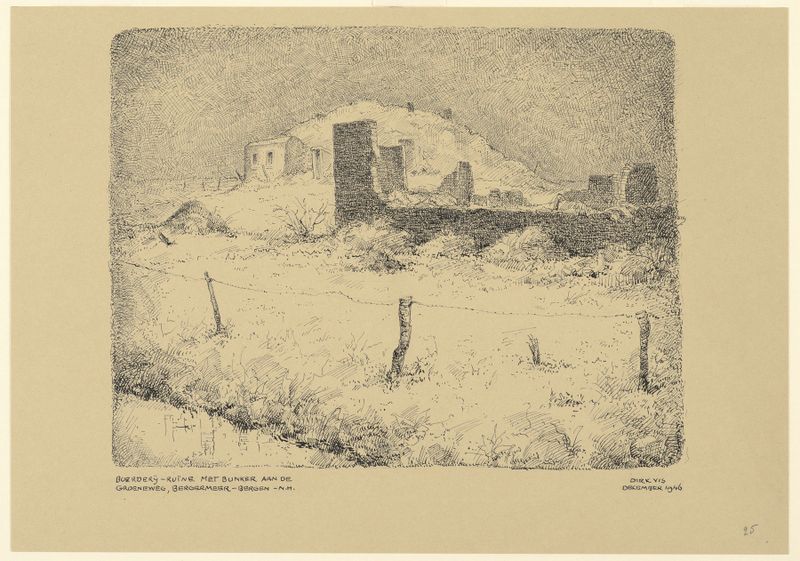
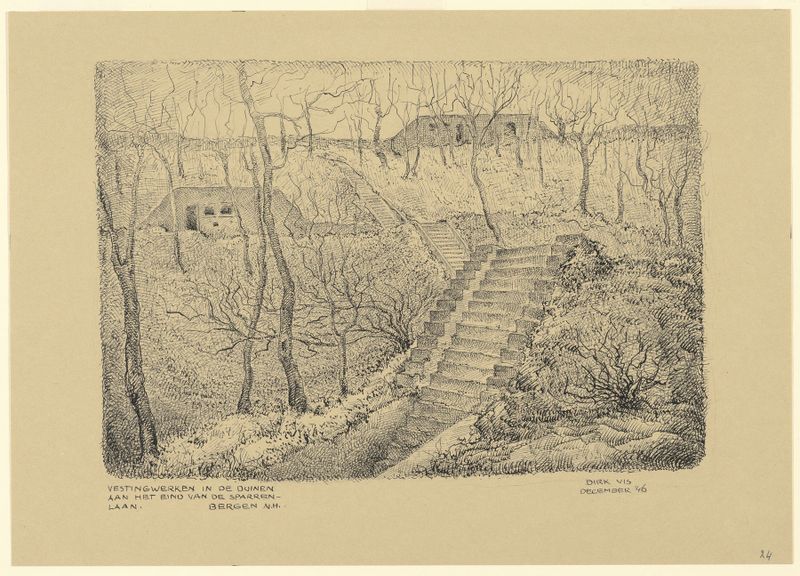
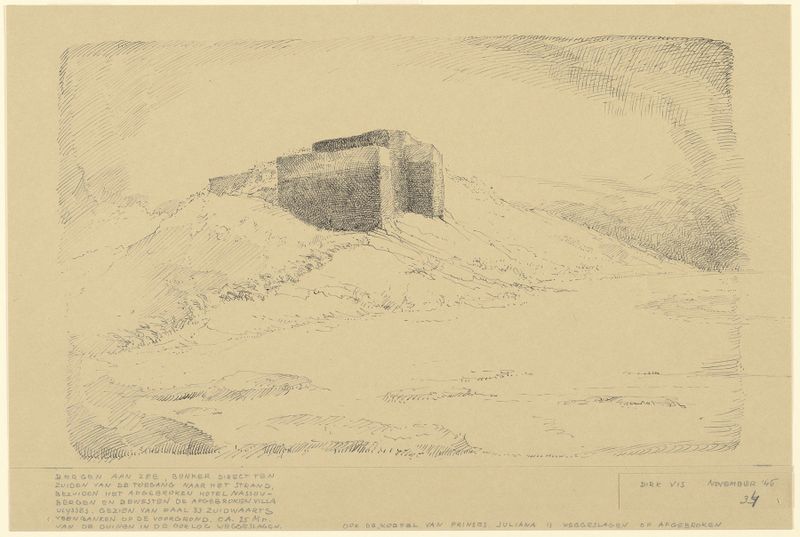
Is this a mirror — or a memory? The hues on the canvas whisper of the past, inviting viewers into a world where color and emotion intertwine with history. Focus first on the bold blues and greens that dominate the foreground, evoking a visceral sense of nature’s reclamation. Notice how the landscape is fragmented by angular shapes, suggesting the remnants of a concrete bunker. This juxtaposition of soft, organic forms against the harsh lines of manmade structures creates an immediate tension, inviting contemplation on the passage of time and the scars left by conflict. Delve deeper into the subtleties of the work — the way light dances across the surface, revealing hidden textures and layers beneath the paint.
The muted tones convey melancholia, while the vibrant splashes of color imply a stubborn resilience, a reminder that life persists even in the shadows of destruction. Each brushstroke tells a story, urging the viewer to reflect on the memories embedded within the landscape, and the echoes of human presence that linger like ghosts. In 1946, Dirk Vis created this piece against the backdrop of post-war reconstruction in the Netherlands, a nation grappling with its identity after the devastation of World War II. Living in Haarlem, he became one of the prominent figures in the Dutch art scene, exploring the complex interplay of memory and reality.
This work encapsulates a moment where personal and collective histories merge, reflecting both the physical and emotional landscapes of a country in healing.