Berglandschaft mit Schlössern — History & Facts
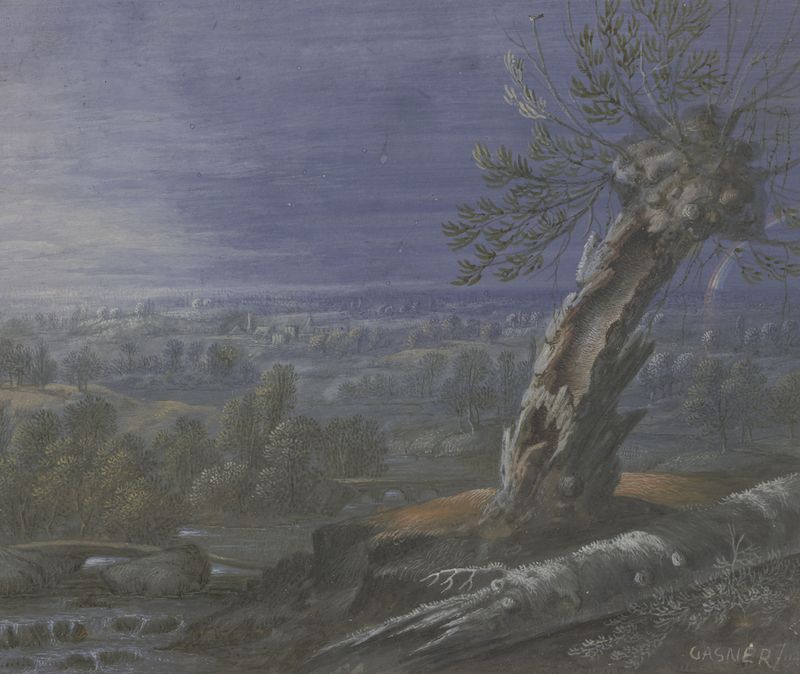
In the quiet embrace of nature, we can often find the divine hidden in landscapes that stir the soul yet leave us in longing. A glimpse into this complex duality can be found in Berglandschaft mit Schlössern. Look to the foreground; notice how the verdant hills roll gently toward the horizon, each stroke of green contrasting with the harsh peaks that dominate the background. The artist employs a delicate palette, where soft pastels of blue and gold meet the darker shadows of the mountains, creating a visual dialogue between serenity and looming grandeur.
Light dances across the canvas, illuminating the castles perched precariously on the cliffs — symbols of ambition, but also isolation, as if they are both guardians and prisoners of the landscape around them. Within the sweeping vistas, emotional tensions arise from the juxtaposition of nature’s beauty against the man-made structures. The castles, while majestic, suggest a bittersweet story of human aspiration marred by the indifference of nature. Their golden hues might entice, yet they serve as a reminder of the isolation felt in the pursuit of perfection.
Each element of the composition wrestles with the sublime and the mundane, revealing layers of meaning beneath the serene surface. Johann Nikolaus Gassner created this work during a time when Romanticism began to influence the art world, melding human emotion with nature’s grandeur. Although the exact date remains uncertain, Gassner painted in an era marked by a burgeoning appreciation for landscapes, reflecting both personal and philosophical quests for beauty. His work embodies this transition, capturing the majestic Alps while simultaneously contemplating the divine and the human experience within its vastness.