Discover insights about this artwork
Bernardo Bellotto, Il ponte di Rialto — History & Facts
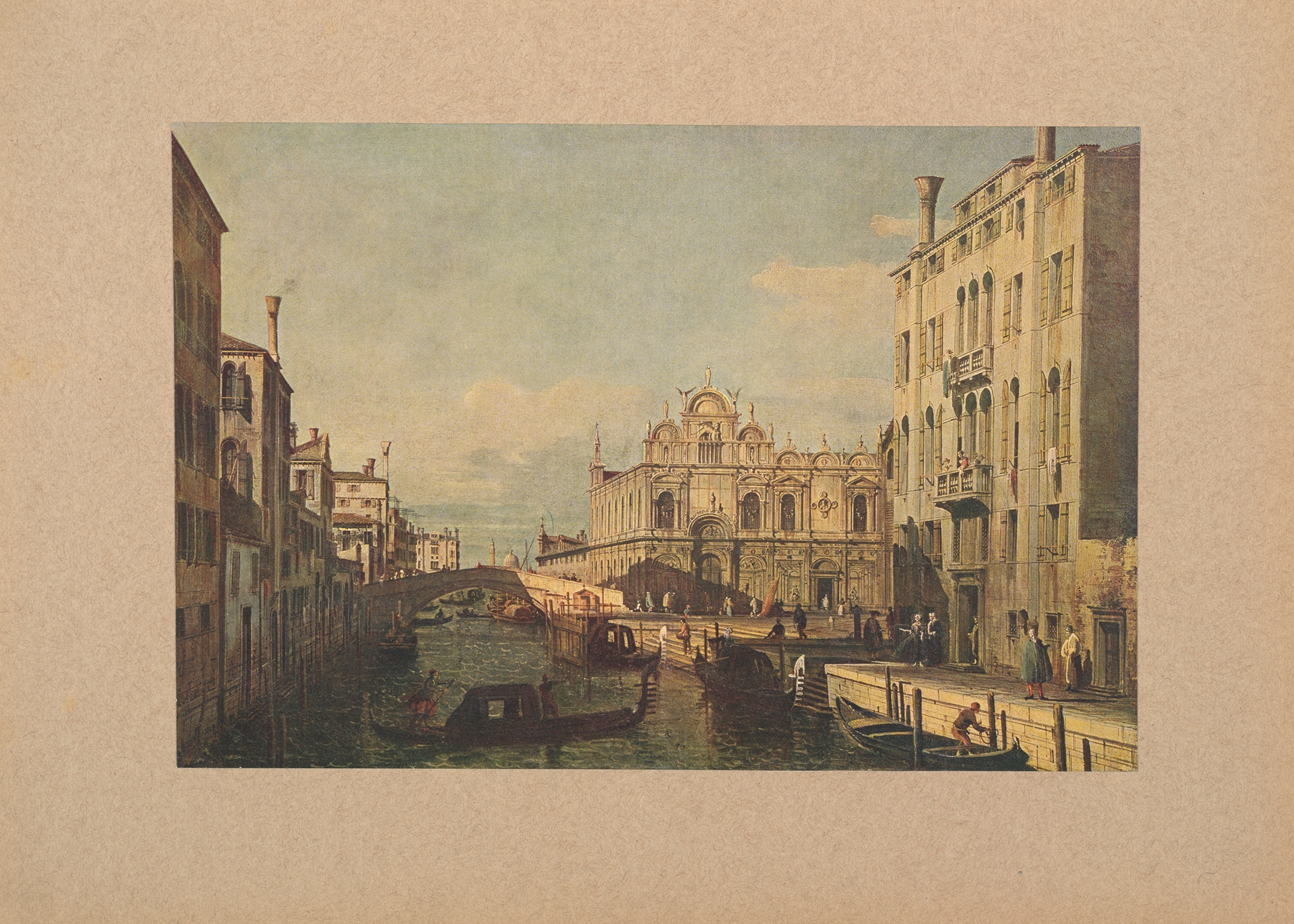
Could a single brushstroke hold eternity? In the fleeting moments of life, where everything is transient, this question resonates deeply, inviting us to contemplate the permanence captured in paint. Focus on the meticulous detail of the bridge that stretches across the canvas, its arches echoing the elegance of time itself. Notice how each brick is rendered with precision, bathed in the soft, golden light of a setting sun that clings to its surfaces. The water beneath reflects the scene like a mirror, inviting the viewer to ponder both the beauty of the moment and the inevitability of change. As your gaze wanders, you may find a contrast between the bustling figures on the bridge and the stillness of the surrounding water.
This juxtaposition of motion and tranquility underscores a deeper narrative regarding the human experience—how we navigate our lives against the backdrop of an ever-changing world. The vibrant colors intertwine with muted tones, suggesting a transitory beauty that speaks of both life and its fleeting nature. In 1910, Corrado Ricci painted Il ponte di Rialto during a period of artistic exploration in Italy, where artists were beginning to embrace modernity while grasping onto traditional themes. The allure of Venice, with its storied history and architectural splendor, was a poignant subject for Ricci, who sought to convey both the charm and temporality of life through his art.
This work represents a moment of reflection captured amid the evolving art movements of the early 20th century.