Binnenzijde van krater Etna — History & Facts
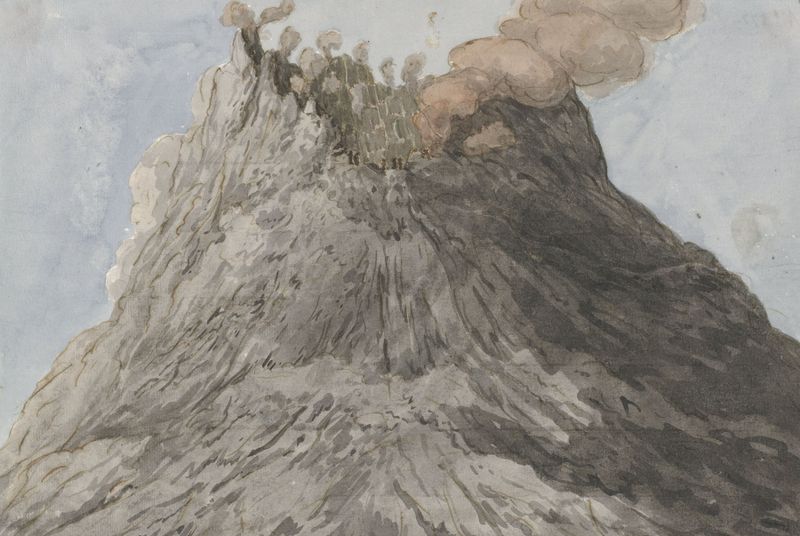
In the stillness of Binnenzijde van krater Etna, we are reminded of the solitary beauty that emerges from deep within the earth’s heart. The vastness of the crater invites us to confront our own isolation, a landscape that speaks volumes even in its silence. Focus on the warm, earthy tones that rise from the crater’s edges, inviting the eye to trace the contours of the rugged terrain. The interplay of light and shadow emphasizes the depth of the scene, drawing attention to the fissures that seem to reach out, echoing the inner turmoil of solitude.
Notice how the delicate brushwork captures the subtleties of the volcanic rock, each stroke revealing the artist's meticulous attention to nature's raw power and fragility. Within this still landscape lies a profound metaphor for loneliness. The towering walls of the crater appear to encase the viewer, creating a sense of being trapped within a world untouched by time. The contrast between the vibrant hues of the lava rocks and the cool blues in the shadowed recesses evokes emotional tension, suggesting both the beauty and the desolation of isolation.
The emptiness speaks to the human experience, making us reflect on our own existential journeys. Willem Carel Dierkens painted this work in 1778 while living in the Netherlands, a period marked by the rise of Romanticism, which emphasized emotion and individuality. At that time, he was exploring landscapes that elicited deep feelings, aligning with the broader artistic movement that sought to express the sublime in nature. This painting captures not just a geographical feature but a universal sentiment, a poignant exploration of what it means to be alone in the grandeur of the world.