Krater van de Etna — History & Facts
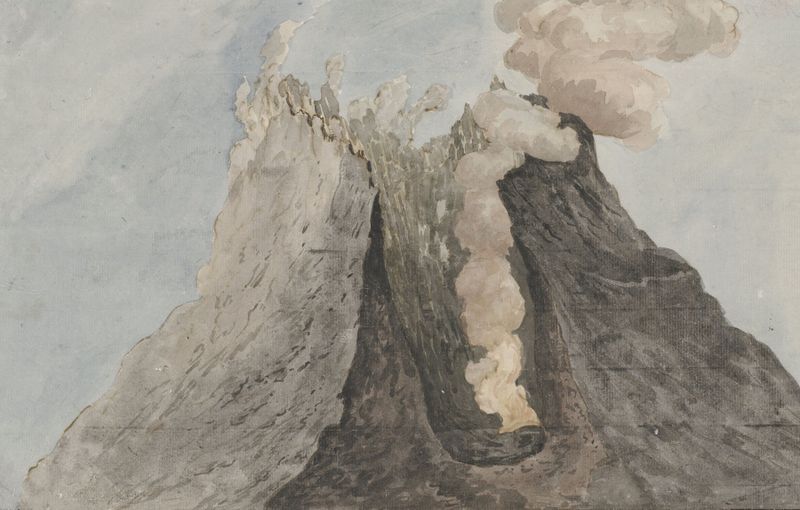
In the midst of chaos and uncertainty, light can whisper truths that words often fail to express, illuminating the hidden depths of our existence. Look closely at the vivid contrast of colors in Krater van de Etna. Focus on the fiery oranges and deep blacks that dance across the surface, drawing your eye into the tumultuous heart of the volcano. The dynamic composition invites you to explore the swirling smoke and molten lava, where vibrant brushstrokes evoke both destruction and creation.
Notice how the interplay of light and shadow captures the raw energy of nature, showcasing the artist's masterful technique in portraying movement and emotion. Within this work lies a powerful reflection on the dualities of life—beauty and peril, chaos and order. The craggy textures of the lava flow contrast sharply with the delicate, ethereal clouds encircling the volcano, suggesting the transient nature of existence. Each detail, from the shimmering highlights to the dark recesses, serves as a reminder of both nature's ferocity and its sublime grace, echoing the perpetual dance between creation and annihilation. In 1778, Willem Carel Dierkens painted this piece amid the shifting tides of the art world.
Living in the Netherlands, he was influenced by the burgeoning Romantic movement, which emphasized emotional depth and the power of nature. This period was marked by a growing fascination with the sublime, as artists sought to capture the inexplicable beauty and terror of the natural world, a theme that resonates profoundly within this striking work.