Birch-Clad Hills — History & Facts
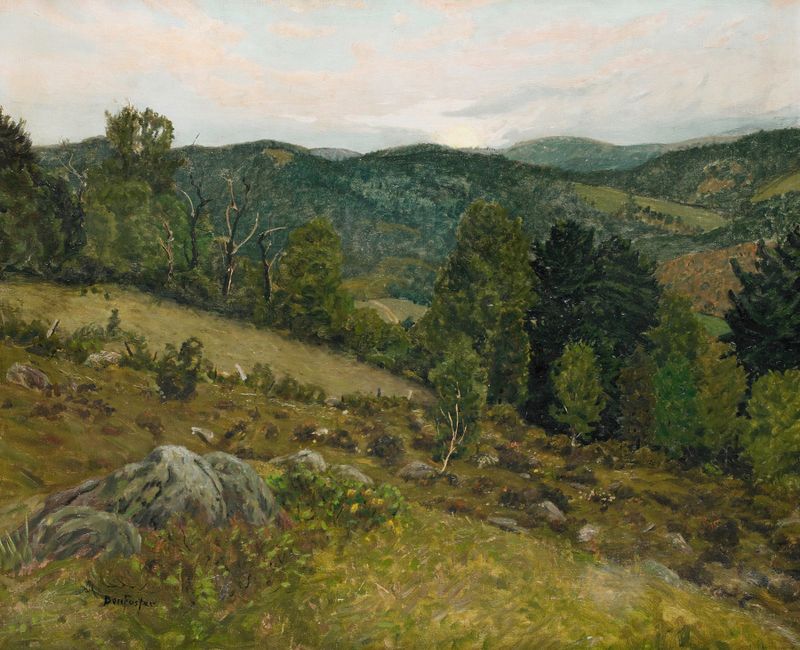
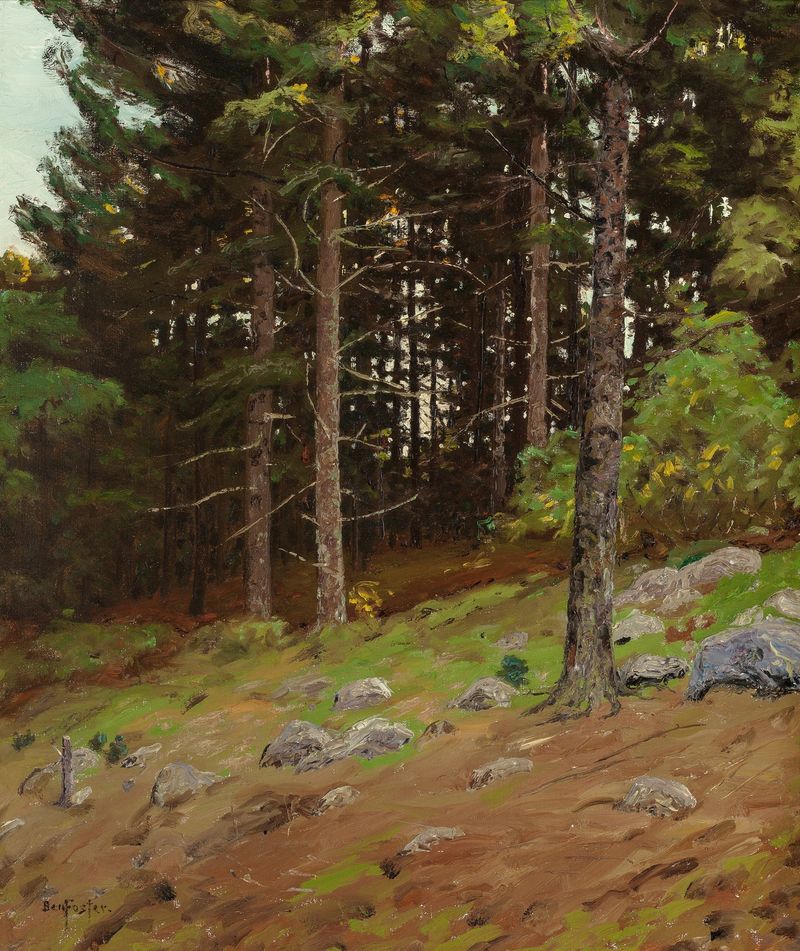
In the quiet embrace of time, the stillness of nature speaks volumes, offering a sanctuary for reflection and introspection. Focus on the gentle rise of the birch trees, their white bark standing in stark contrast to the lush green hills that cradle them. Notice how the light filters through the leaves, casting dappled shadows that dance on the ground below, inviting the viewer to step into a moment suspended in time. The palette, dominated by soft greens and earthy browns, evokes a sense of tranquility, while the brushstrokes seem to breathe life into the scenery, capturing the very essence of a serene afternoon. Yet, hidden within the tranquil landscape lies an emotional depth.
The juxtaposition of the vibrant birches against the muted background suggests resilience—life thriving amidst the passage of seasons. The winding path that weaves through the hills symbolizes the journey of time itself, hinting at the stories and secrets carried by the winds that rustle the leaves. Here, nature’s silence tells tales of both continuity and change, reminding the viewer that every moment is fleeting yet eternal. In 1908, Ben Foster painted this work during a period marked by a growing interest in American Impressionism.
Living in the Hudson Valley, he was deeply influenced by the natural beauty surrounding him. At a time when artists were embracing the American landscape as a subject, Foster’s depiction reflects his commitment to capturing the nuances of light and color, while also celebrating the profound connection between nature and the passage of time.