In the Pines — History & Facts
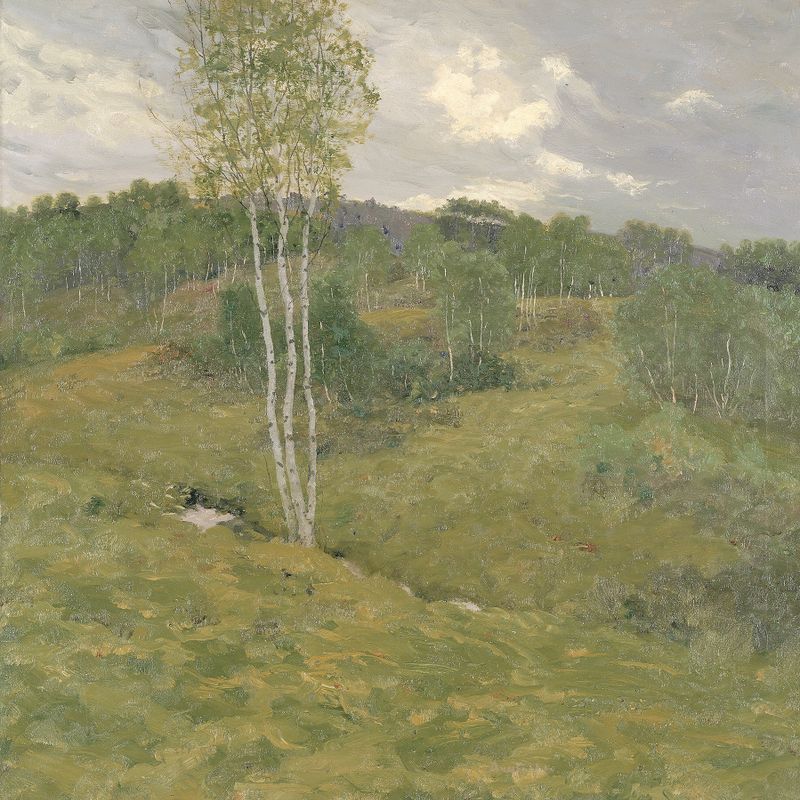
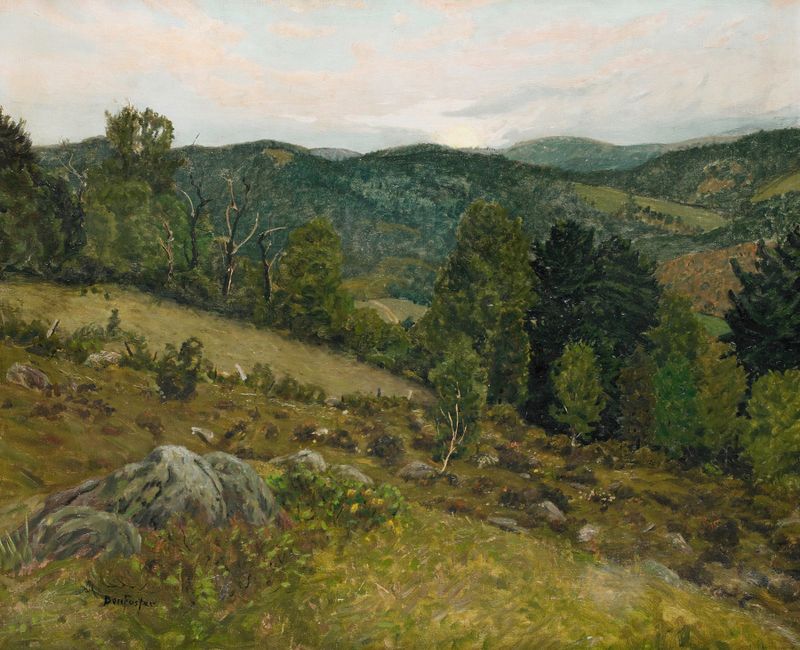
Can paint confess what words never could? In the depths of Ben Foster’s In the Pines, an unspoken conversation unfolds, woven through the brushstrokes that cradle hope, despair, and the quiet resilience of nature. Look closely at the sprawling pines that stretch towards the sky, their rich, emerald hues contrasting with the muted earth tones at their base. Notice how the sunlight filters through the branches, casting dappled shadows that dance across the ground — a gentle reminder of life's transient beauty. The composition pulls the eye upward, inviting us to escape the confines of the forest floor, while the careful layering of colors evokes an emotional depth, connecting us with the serene yet foreboding atmosphere of the scene. Yet the painting breathes more than just tranquility; it grapples with the tension between light and dark, as hope flickers amidst the looming shadows.
The tall trees stand sentinel over an unseen narrative, concealing whispers of past sorrows and future possibilities. The faint glimmers of light breaking through signal resilience, urging viewers to reflect on their own stories of struggle and perseverance, creating a profound dialogue between the artwork and the observer. Created in an undefined moment, when the world was rife with change and uncertainty, Foster’s work resonates with a timeless quality. While little is documented about his life during this period, it is evident that he was deeply attuned to the natural world and its emotional landscapes.
This painting exemplifies his exploration of inner landscapes alongside his unfolding journey as an artist, capturing the essence of human experience through the lens of nature.