
Birkenwald — History & Facts
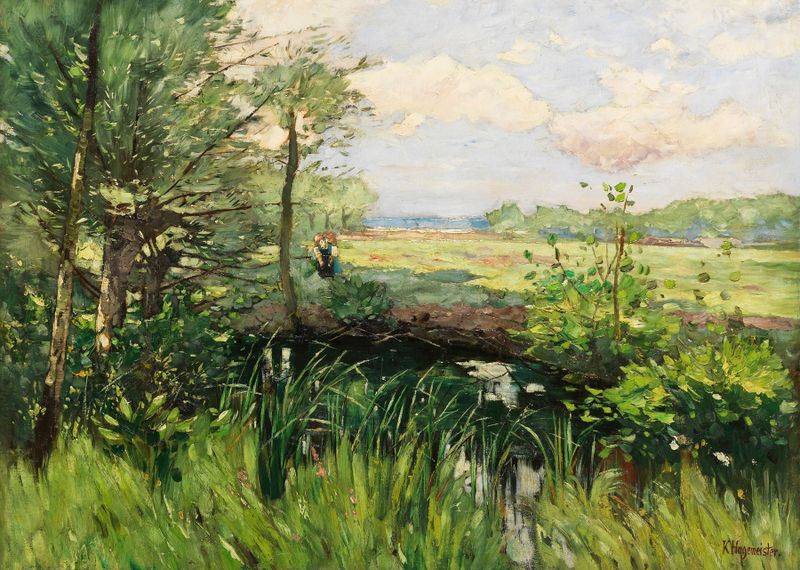
What if silence could speak through light? In the stillness of a woodland, whispers of trepidation linger, woven seamlessly into the fabric of nature. Look to the left at the towering trees, their trunks enveloping the canvas like sentinels of an age-old forest. The nuanced greens and soft browns breathe life into their gnarled forms, while dappled sunlight filters through the leaves, casting gentle pools of illumination on the forest floor. Notice how the distant horizon fades into a soft haze, drawing your gaze deeper into the scene—a beckoning invitation filled with both wonder and unease. Within this serene setting lies an undercurrent of fear, embodied by the shadowy recesses lurking between the thickets.
The interplay of light and dark suggests a tension, hinting at secrets hidden among the foliage. Each brushstroke evokes a sense of uncertainty; the vibrant hues of nature become both a refuge and a veil for the unknown. The forest stands as a metaphor for the complexity of emotions—beauty intertwined with the foreboding. Created in 1889, this work emerged during a pivotal moment for the artist, who was deeply influenced by the German Romantic movement.
At this time, Hagemeister was embracing plein air painting, seeking to capture the ephemeral qualities of light and atmosphere in nature. The art world was beginning to shift towards Impressionism, yet Hagemeister remained committed to the emotional resonance of landscapes, exploring the delicate balance between tranquility and fear in his surroundings.
More Artworks by Karl Hagemeister
Browse all →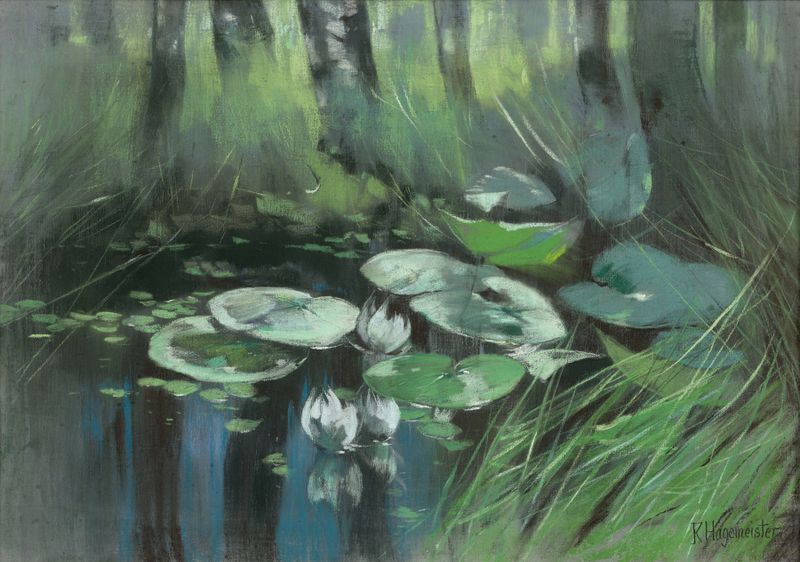
Teich in der Mark mit Seerosen
Karl Hagemeister
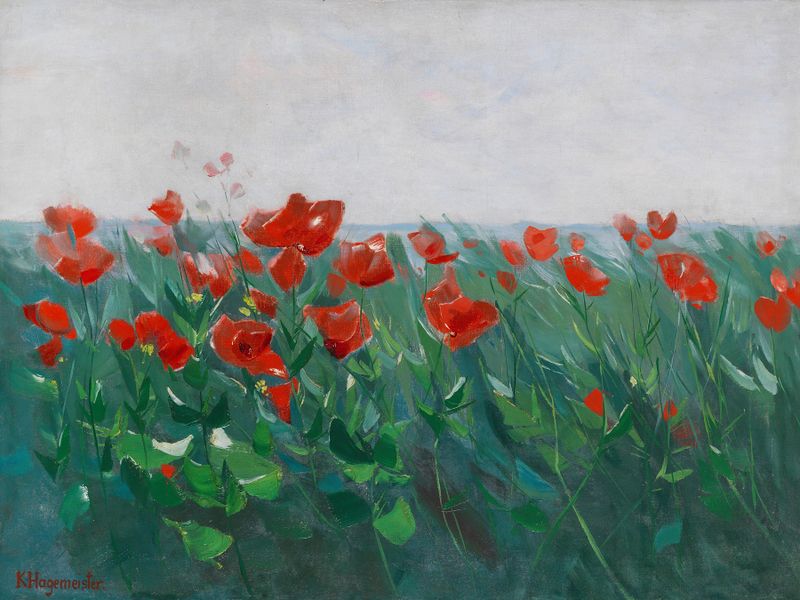
Roter Mohn am Seeufer
Karl Hagemeister

Bauernhaus bei Ferch
Karl Hagemeister
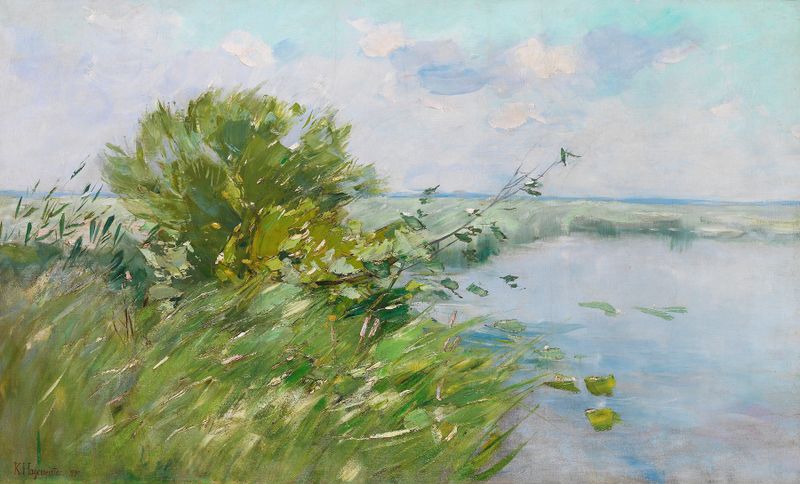
Märkische Seenlandschaft
Karl Hagemeister

Seeufer bei Ferch
Karl Hagemeister
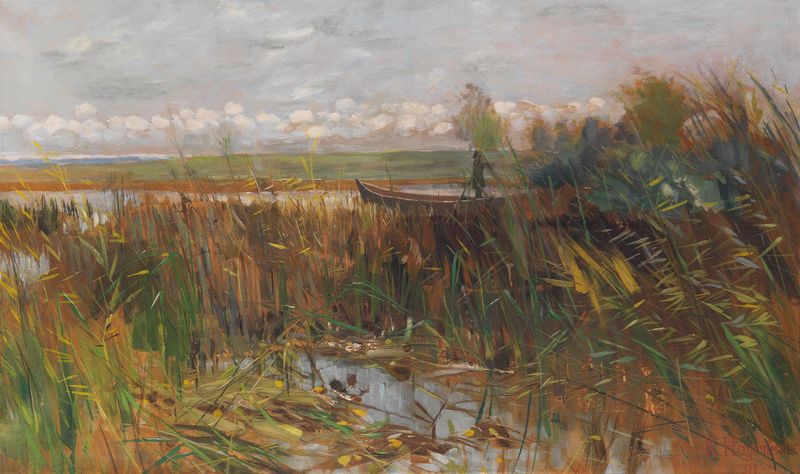
Märkische Seenlandschaft mit Entenjäger im Kahn stehend
Karl Hagemeister
Der Schwielowsee bei Kaputh – Frühling
Karl Hagemeister

Waldweiher
Karl Hagemeister

Waldlandschaft mit Bachlauf (Golmer Luch)
Karl Hagemeister

Sanddornstrauch an der Meeresküste
Karl Hagemeister





