Black Forest Mill — History & Facts
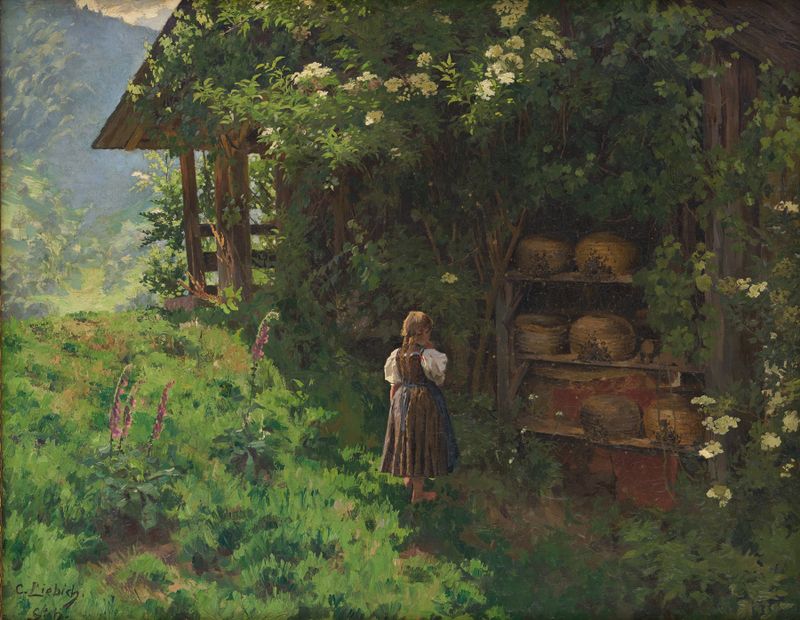
In Black Forest Mill, the viewer is invited to witness the delicate dance between nature and human craftsmanship, where illusion blurs the lines of reality. Look to the left at the towering trees, their rich green hues contrasting with the soft browns of the wooden mill. Notice how the sunlight filters through the leaves, casting warm, dappled patterns upon the rushing water below. The artist’s technique captures the fluidity of the scene; each brushstroke echoes the movement of the water, creating an almost dreamlike quality where the vibrant greens meld into the earthy tones of the structure.
This subtle interplay of light and shadow pulls the eye across the canvas, guiding the viewer deeper into the tranquil yet dynamic environment. Deeper meanings reveal themselves upon closer inspection. The mill stands as a testament to human ingenuity, yet its existence seems ephemeral against the vast, timeless forest surrounding it. The water, depicted with a shimmering quality, symbolizes the passage of time and the relentless flow of nature that will, in the end, reclaim all.
The tension between man-made creation and the raw beauty of the forest evokes questions about sustainability and harmony with the environment. Created around 1903, this work emerged during a period of artistic exploration for Curt Liebich, who was influenced by the Impressionist movement. Living in the Black Forest region of Germany, he sought to capture the essence of his surroundings, reflecting broader themes of industrialism and its impact on natural landscapes. As artists grappled with the rapid modernization of the world, Liebich’s depiction of the mill serves as both a homage to craftsmanship and a contemplative pause on the fragility of harmony between humanity and nature.