Blankenberge — History & Facts
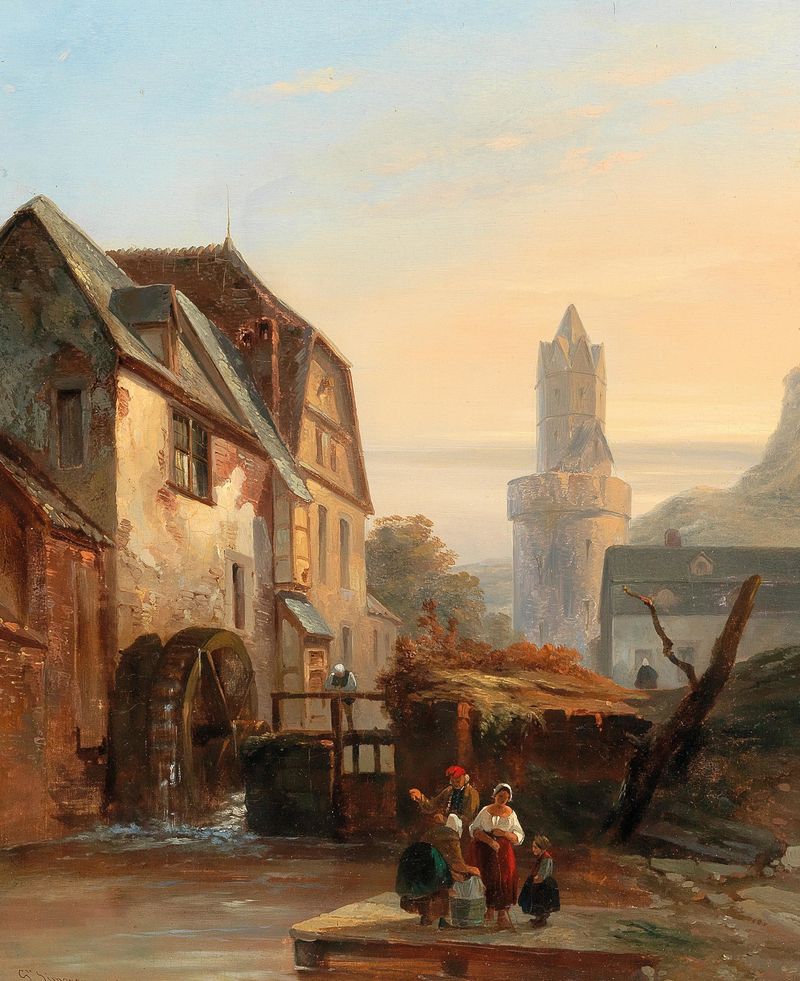
Could a single brushstroke hold eternity? In Blankenberge, the canvas speaks of mortality, capturing a fleeting moment that resonates with the weight of existence. Look to the lower right, where the sandy beach meets the rippling waves; the delicate brushwork mimics the gentle caress of the tide. Focus on how the muted blues and grays of the sea contrast against the soft, warm hues of the sand, inviting the viewer to feel the chill of the ocean air and the warmth of the sun. Each stroke seems to breathe life into the scene, with figures absorbed in the simplicity of their surroundings—some strolling leisurely, others lost in thought, all unified by the horizon that stretches infinitely before them. The painting subtly examines the tension between permanence and impermanence.
The transient nature of the beachgoers serves as a reminder of life’s fleeting moments, while the horizon symbolizes infinite possibilities. The juxtaposition of the solid, unyielding shoreline against the ephemeral waves evokes a deep sense of longing—a poignant acknowledgment of the fragility of time. Through this lens, Blankenberge becomes a meditation on existence itself, where joy and sorrow intermingle in the soft whispers of the sea. In 1867, Gustave Adolphe Simonau created this work during a period of significant artistic exploration in Belgium.
The nation was embracing a burgeoning sense of national identity, reflected in the development of diverse artistic styles. Simonau, influenced by the Romantic movement, sought to capture the essence of everyday life, intertwining natural beauty with emotional depth, marking a pivotal moment in his artistic journey.