Blauer Märztag — History & Facts
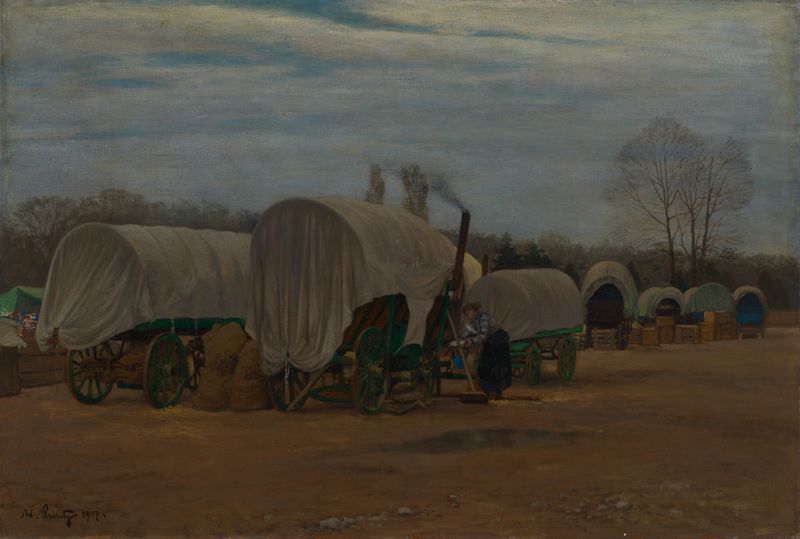
In Blauer Märztag, the allure of tranquility masks deeper currents of obsession and longing, inviting the viewer to look closer. Focus on the gentle blend of blues, where the horizon meets an ethereal sky. The brushwork is fluid, almost hypnotic, guiding your gaze from the serene foreground to the expansive backdrop. Notice how the soft, flowing strokes contrast with sharper, more defined elements—perhaps a fleeting shadow or a distant figure.
Each hue vibrates with an emotional resonance, drawing you into a world that teeters on the edge of stillness and unrest. Hidden within the beauty of this landscape lies an obsession with capturing the transient nature of spring. The delicate blossoms hint at renewal yet evoke a sense of fleetingness, suggesting that beauty is both ephemeral and all-consuming. The interplay between light and shadow encapsulates the tension between hope and despair, reminding us that even the most picturesque moments can be underlined by a deep yearning.
The depth of sky mirrors the vastness of human emotions, leaving us questioning what lies beneath the surface. Adolf Luntz painted Blauer Märztag in 1907 during a period marked by artistic experimentation and a shift towards modernism. Living in Germany, Luntz was influenced by the burgeoning movements around him, reflecting a fascination with color and emotional depth. This work captures his exploration of light and nature, as he sought to express the complexities of human experience through the lens of the natural world.