
Auf der Karlsruher Herbstmesse — History & Facts
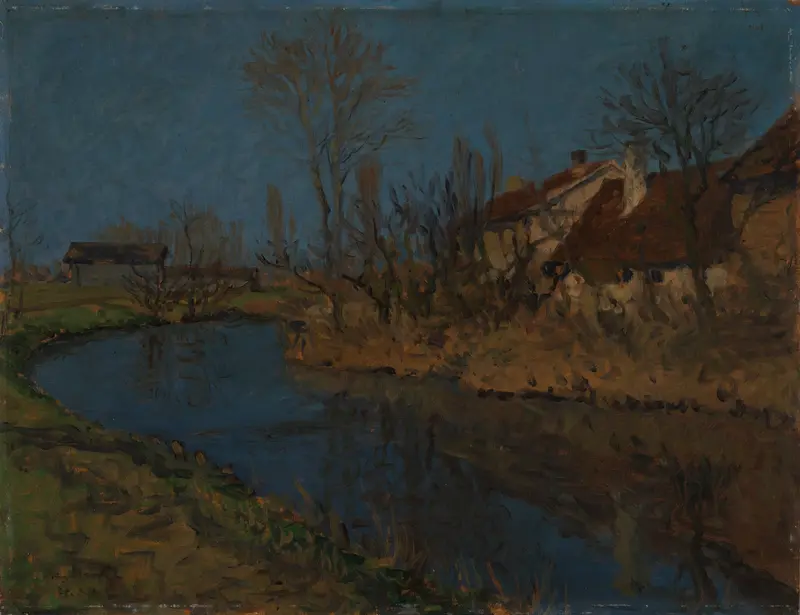
What secret hides in the quiet of the canvas? Beneath the surface of Auf der Karlsruher Herbstmesse, truths yearn to be uncovered, speaking volumes in hushed tones. Look to the center, where vibrant stalls burst with colors—rich reds and deep greens invite you to step closer, as if they could reach out through the canvas. Notice the delicate interplay of light, illuminating the faces of patrons lost in their moment of leisure, their expressions hinting at both delight and contemplation. The composition draws you inward, with diagonal lines that lead the eye from vendor to customer, creating a sense of movement that suggests a lively celebration. Yet, amid the jovial atmosphere, subtle contrasts emerge—between the joy on the surface and the unspoken stories held within the spectators' gazes.
The juxtaposition of the bright market against the shadowy edges of the scene evokes a bittersweet nostalgia, as if time has paused just long enough to reveal the fleeting essence of human connection. There’s a tension between abundance and transience, each participant caught in their ephemeral role within the fair. Adolf Luntz created this piece in 1907 during a period marked by both artistic experimentation and societal change. Living in Karlsruhe, Germany, he was influenced by the vibrant art scene of the time, which celebrated the beauty of everyday life.
As the world edged closer to tumultuous events, Luntz sought refuge in the simple yet profound moments of existence, encapsulating them with a brush that was both observant and compassionate.
More Artworks by Adolf Luntz
More Genre Scene Art

Banquet of the Officers of the St George Civic Guard
Frans Hals

Rembrandt and Saskia in the Scene of the Prodigal Son
Rembrandt van Rijn

Bal du moulin de la Galette
Pierre-Auguste Renoir

Quadrille at the Moulin Rouge
Henri de Toulouse-Lautrec

A Burial at Ornans
Gustave Courbet

When Will You Marry?
Paul Gauguin