Blühende Apfelbäume — History & Facts
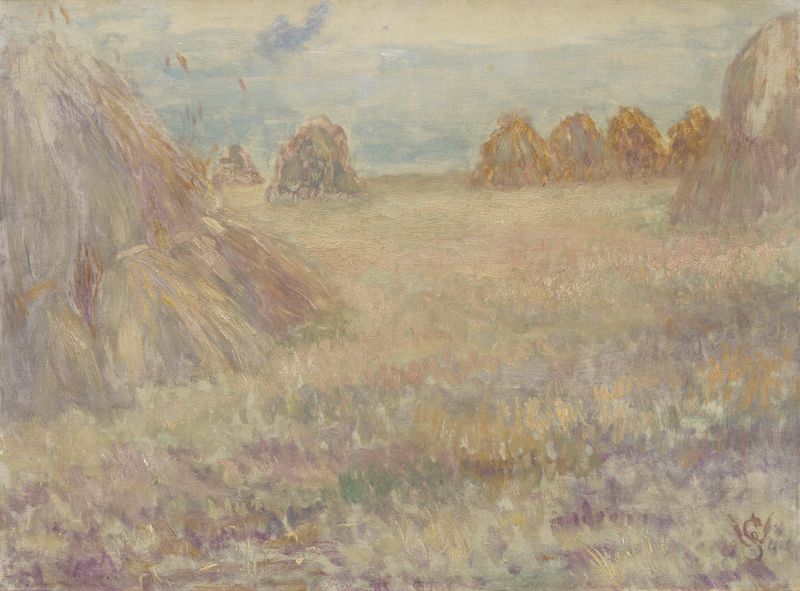
Can paint confess what words never could? In Blühende Apfelbäume, vivid blooms erupt against a backdrop of uncertainty, revealing the madness lurking beneath facade and form. Focus on the center of the canvas where the apple trees stand, their branches heavy with blossoms. The gentle strokes of white and soft pink contrast strikingly with the dark shadows that loom around them, hinting at an underlying tension. Notice how the warm sunlight bathes the petals, turning the ordinary into something beautifully surreal, while the twisted, gnarled trunks whisper of struggles hidden within the vibrant life.
This juxtaposition invites both admiration and contemplation, compelling you to linger and explore the narrative entwined in their roots. As you delve deeper, consider the symbolism of the apple blossoms, often tied to cycles of life and renewal. Yet in this depiction, they suggest fragility, dancing precariously on the edge of chaos. The chaotic brushwork around the trees resonates with emotional turmoil, mirroring a world that is both beautiful and terrifying.
Each bloom stands as a reminder of fleeting moments, capturing the essence of both hope and despair in an uncertain reality. In 1924, while creating this piece, Willy Schlobach was steeped in the changing art landscape of post-World War I Germany, where artists grappled with the disillusionment of war and the psychoses of a fractured society. The tumultuous atmosphere and burgeoning expressionist movement influenced his work, as he sought to convey complex emotional states through vibrant color and abstract forms, reflecting not only his inner world but also the collective psyche of his time.