
Blick auf das Forum Romanum mit dem Septimius-Severus-Bogen und dem Tempel der Faustina und des Antonius Pius — History & Facts
In the heart of ancient Rome, grandeur lies in ruins, where whispers of violence echo amidst the stone. Here, history is layered in muted hues, revealing the fragility of human achievement against the relentless passage of time. Look closely at the intricate arch of the Septimius Severus, positioned prominently in the center, drawing your gaze with its masterful detailing. To the left, the temple of Faustina emerges, its solemn presence framed by the remnants of a once-vibrant society.
Notice how the soft play of light casts shadows across the crumbling columns, enhancing the emotional weight of decay while highlighting the structural resilience that has withstood centuries. Contrasting the brilliant architecture and the quiet desolation, the absence of human figures suggests an unsettling stillness, inviting contemplation on the violence of history. Each crack and fissure in the stone speaks to a narrative of battles fought and lives altered, encapsulating the tension between glory and ruin. The palette, a subdued mix of earth tones, reinforces this contrast, evoking a sense of melancholy for a lost civilization, yet, it also prompts reflection on the cyclical nature of rise and fall. Albert Rieger painted this piece during a time when interest in classical antiquity was rekindled throughout Europe, likely in the late 19th century.
As he explored Rome's historical ruins, he found inspiration in both their beauty and their demise. The artist's work reflects not only personal aesthetic ambitions but also the broader cultural fascination with the remnants of the past, as contemporary society grappled with its own struggles and violence.
More Artworks by Albert Rieger
Browse all →
Segelschiffe Vor Venedig
Albert Rieger

The Naval Battle of Lissa
Albert Rieger

The Orient In The Evening Light
Albert Rieger
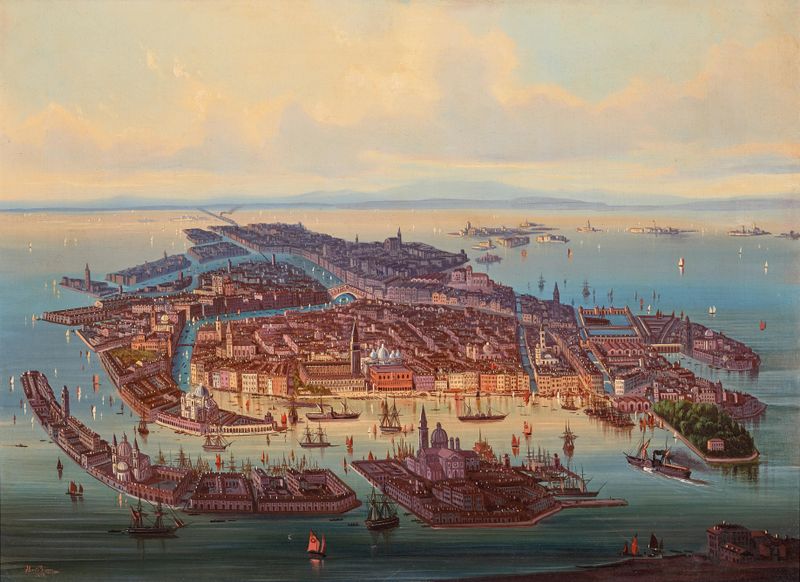
A Panoramic View Of Venice
Albert Rieger
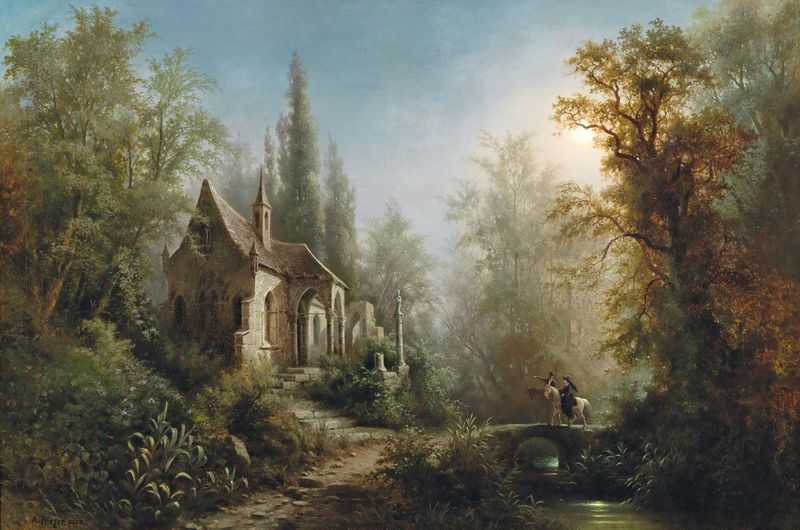
A Moonlit Night Over A Chapel And Riders
Albert Rieger
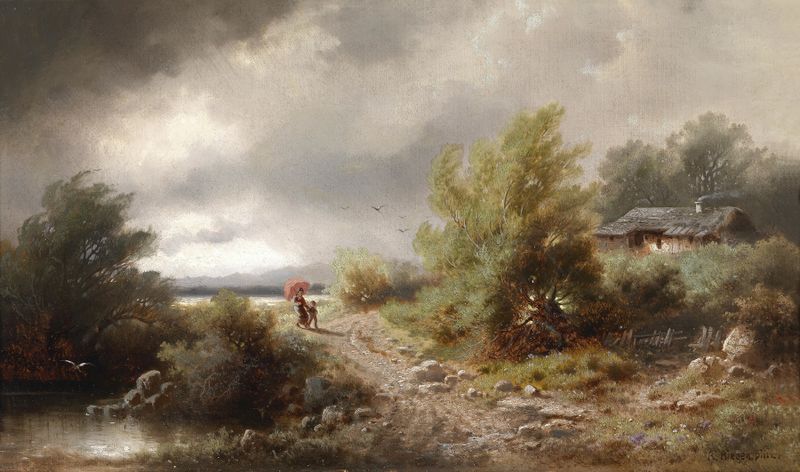
Aufziehendes Gewitter
Albert Rieger

Mountain stream
Albert Rieger
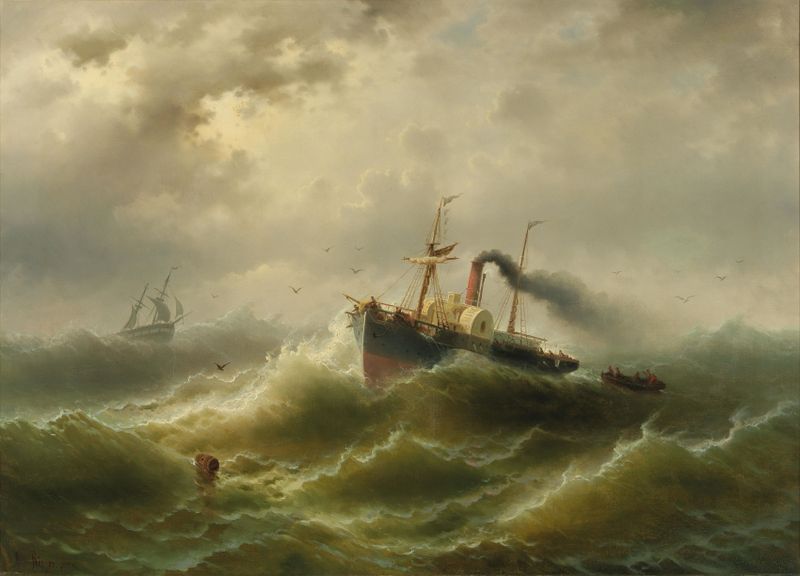
Steamboat In A Storm On The North Sea
Albert Rieger
Dampfschiff vor der Küste
Albert Rieger

Fishing Boats Against A Venetian Silhouette
Albert Rieger
More Architecture Art
Browse all →
The statue of Liberty
Frédéric Auguste Bartholdi

View of Houses in Delft, Known as ‘The Little Street’
Johannes Vermeer

View of Houses in Delft, Known as ‘The Little Street’
Johannes Vermeer

The Cathedral in Rouen. The portal, Grey Weather
Claude Monet

The yellow house
Vincent van Gogh

The Church in Auvers-sur-Oise, View from the Chevet
Vincent van Gogh