Blick auf das Mühlsteinhorn — History & Facts
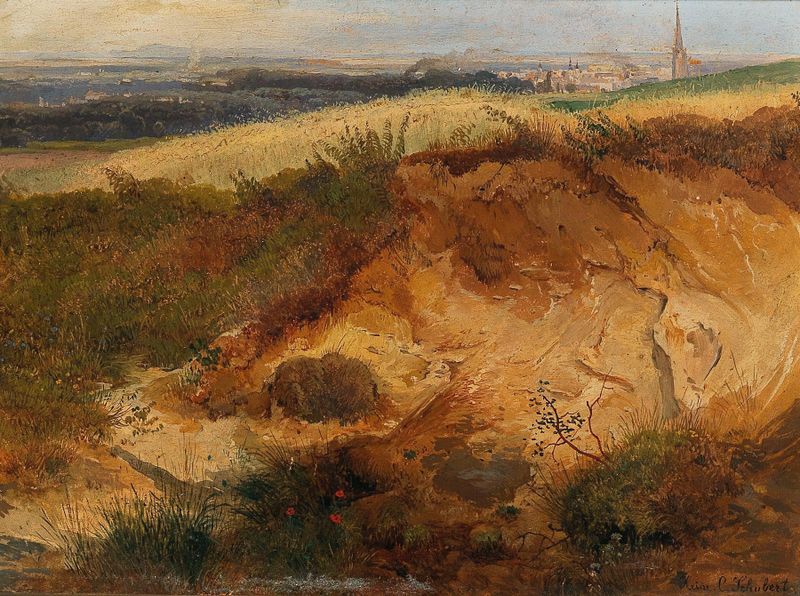
Can beauty exist without sorrow? In the delicate interplay of light and shadow, Blick auf das Mühlsteinhorn evokes a haunting reflection of nature’s duality. Focus on the horizon where the rugged peaks meet a luminous sky; the soft gradients of blue and gold beckon your gaze upward. Notice how the textured brushstrokes create a sense of movement in the clouds, almost as if they carry the weight of unspoken stories. The foreground, alive with lush greens, contrasts sharply with the rocky crags, embodying both tranquility and turmoil, guiding the viewer to ponder the balance of serenity and madness in nature. Beneath the surface lies a profound tension: the vibrant landscape juxtaposes the somber, jagged mountains, hinting at inner turmoil hidden beneath the serene façade.
The meticulous detail in the foliage whispers of life and vigor, while the looming crags suggest a relentless struggle. Here, the beauty of the scene may mask a darker undercurrent, inviting contemplation on the madness that often trails behind such splendor. Schubert painted this work during a time of personal and artistic exploration in the late 19th century, likely influenced by the burgeoning Romantic movement that sought to capture the sublime in nature. Living in a period rife with existential questions, he was drawn to juxtapose emotional depth with breathtaking landscapes, a testament to his pursuit of both beauty and truth in an ever-changing world.