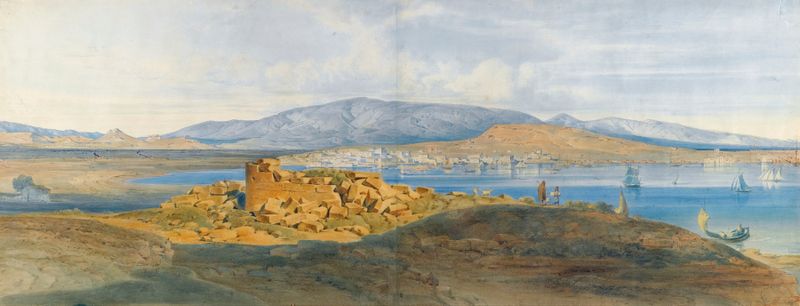
Blick auf den Parnass mit den Ruinen von Krissa — History & Facts
What if beauty was never meant to be finished? The contemplation of eternity weaves through the delicate brushstrokes and serene composition, inviting us to ponder the transient and the timeless. Look to the left at the majestic mountain range, its peaks brushing against a soft blue sky. Notice how the artist employs gentle gradations of green and earth tones to capture the lush landscape, with ruins nestling in the valley below. The light, dappled and warm, dances over the crumbling stone, evoking a sense of nostalgia for a past that lingers in the present.
Each element in this tableau harmonizes, guiding the viewer's gaze seamlessly through the layers of history and nature. Within the canvas lies a palpable tension between decay and beauty; the ruins symbolize both loss and the endurance of art against time. The careful arrangement of light and shadow reveals the emotional landscape, where a sense of yearning for what once was intertwines with appreciation for what remains. The lush greenery contrasts sharply with the weathered stone, suggesting a dialogue between life and history, vibrancy and stillness.
Each detail, from the wisps of clouds to the sprawling foliage, resonates with an unspoken grief and longing. Ludwig Lange created Blick auf den Parnass mit den Ruinen von Krissa in 1835 while living in Germany, amidst a burgeoning Romantic movement that grappled with nature's beauty and the passage of time. This period marked a transition in artistic priorities, as artists began to embrace emotional depth and landscapes as reflections of personal experience. Lange's work reveals both his mastery of landscape painting and his engagement with the philosophical questions of his era, aligning with a growing fascination for ruins as symbols of beauty's impermanence.