
Blick auf den Watzmann — History & Facts
In the stillness of a moment captured by brush and pigment, hope emerges from the grandeur of nature’s embrace, where mountains stand as sentinels of time. Look to the left, where the rugged lines of the Watzmann peak rise majestically against a wash of azure sky. The delicate gradation of colors captures the fleeting play of light upon the rocky surface, revealing the artist’s mastery of chiaroscuro. Notice how the soft greens of the valley below breathe life into the scene, contrasting with the formidable, stoic heights above.
This interplay between the vibrant foreground and the almost ethereal backdrop creates a harmonious dialogue, inviting the viewer to explore the depth and texture within this alpine vista. Every stroke conveys a deeper narrative, where the starkness of the mountain symbolizes both isolation and aspiration. The subtle hints of sunlight suggest the promise of new beginnings, while the shadowed crevices remind us of the challenges that lie ahead. Millner intricately weaves a tapestry of emotions, allowing the landscape to reflect the viewer’s own journey — a balance of struggle and serenity that resonates within the heart. In 1863, Millner painted this work during a time of significant artistic evolution in Germany.
Living in Munich, he was influenced by both Romanticism and the burgeoning Realism movement, a juxtaposition that allowed him to infuse his landscapes with emotion and authenticity. This period marked an increasing appreciation for nature’s raw beauty as a reflection of the human spirit, solidifying Millner’s place within this transformative era of art.
More Artworks by Carl Millner
Browse all →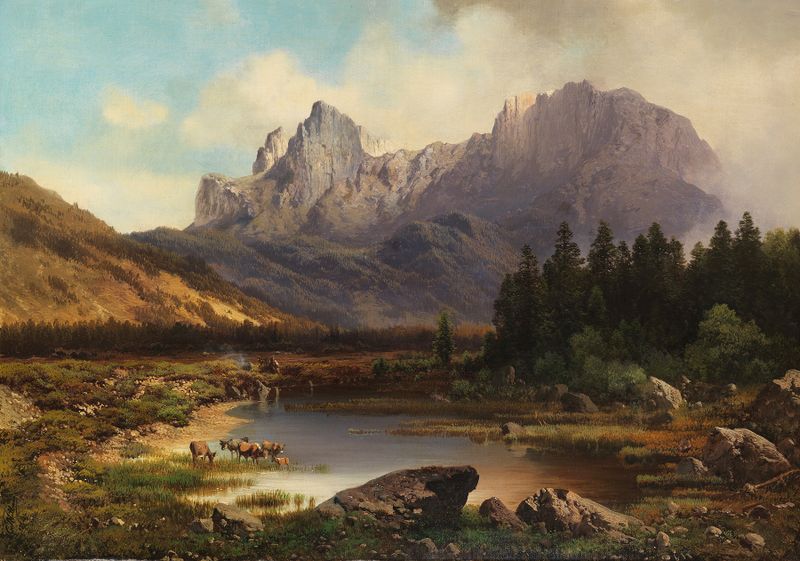
In den Dolomiten
Carl Millner
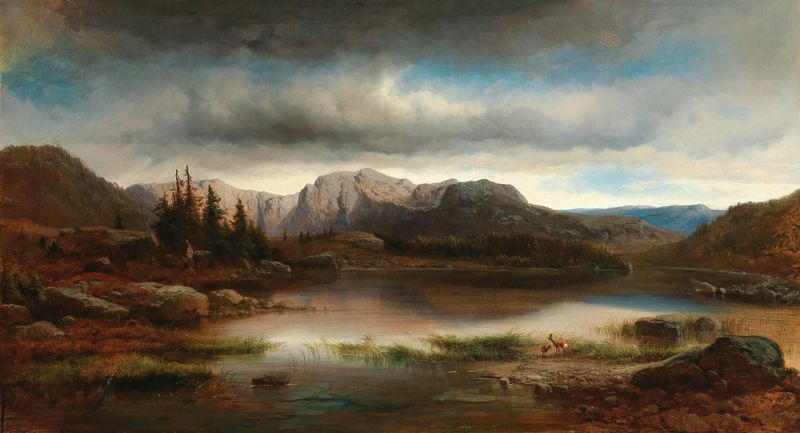
An Evening Landscape with a Mountain Lake
Carl Millner

Der Maler im Gebirge
Carl Millner

Sommerliche Gebirgslandschaft
Carl Millner
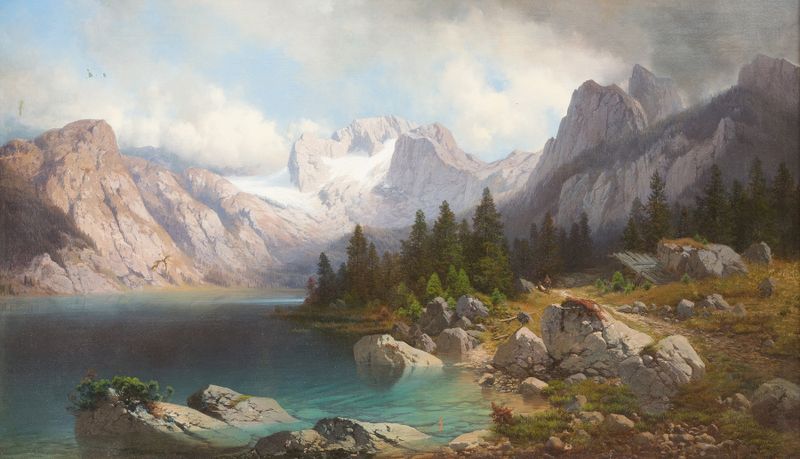
View on mount Zugspitze and lake Eibsee
Carl Millner
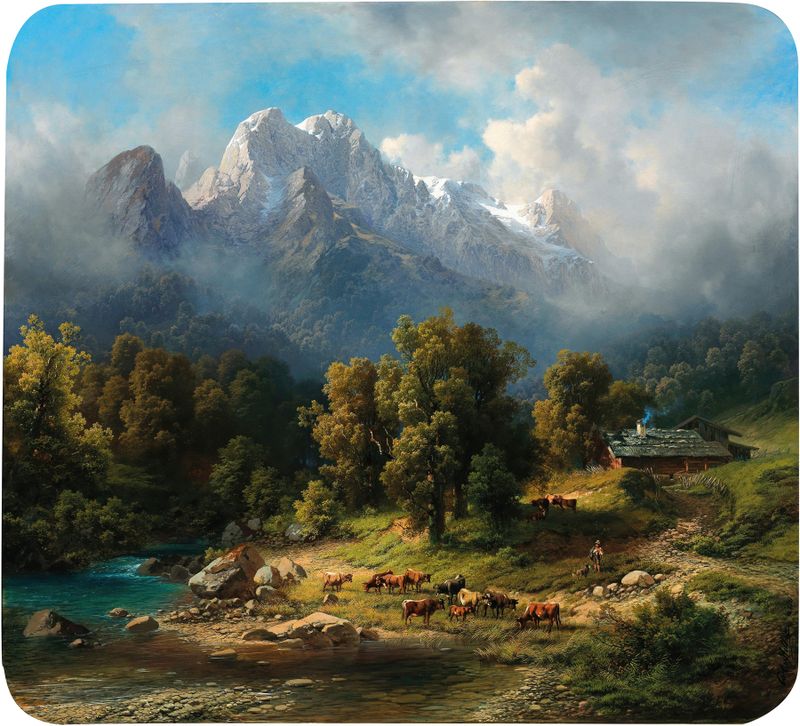
Grazing Cows near an Alpine Lake
Carl Millner
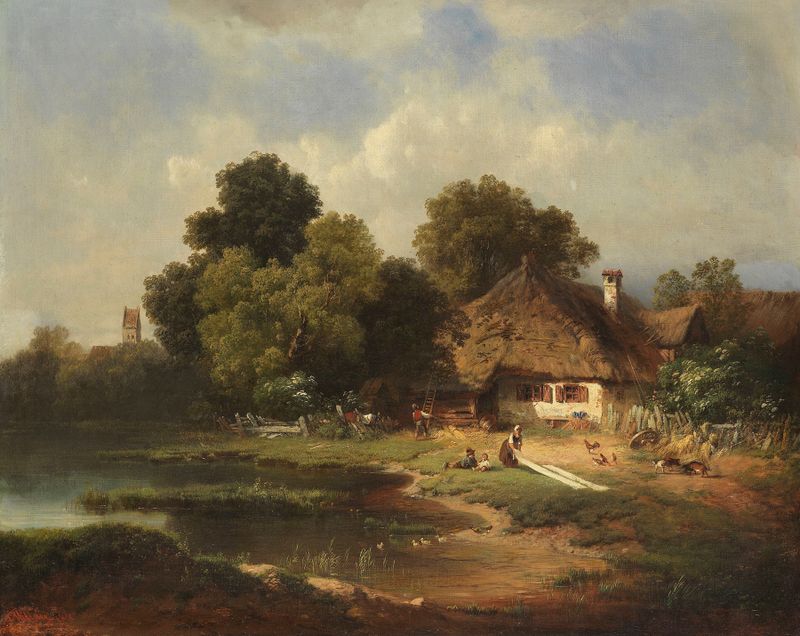
Landschaft mit Bauernhof
Carl Millner
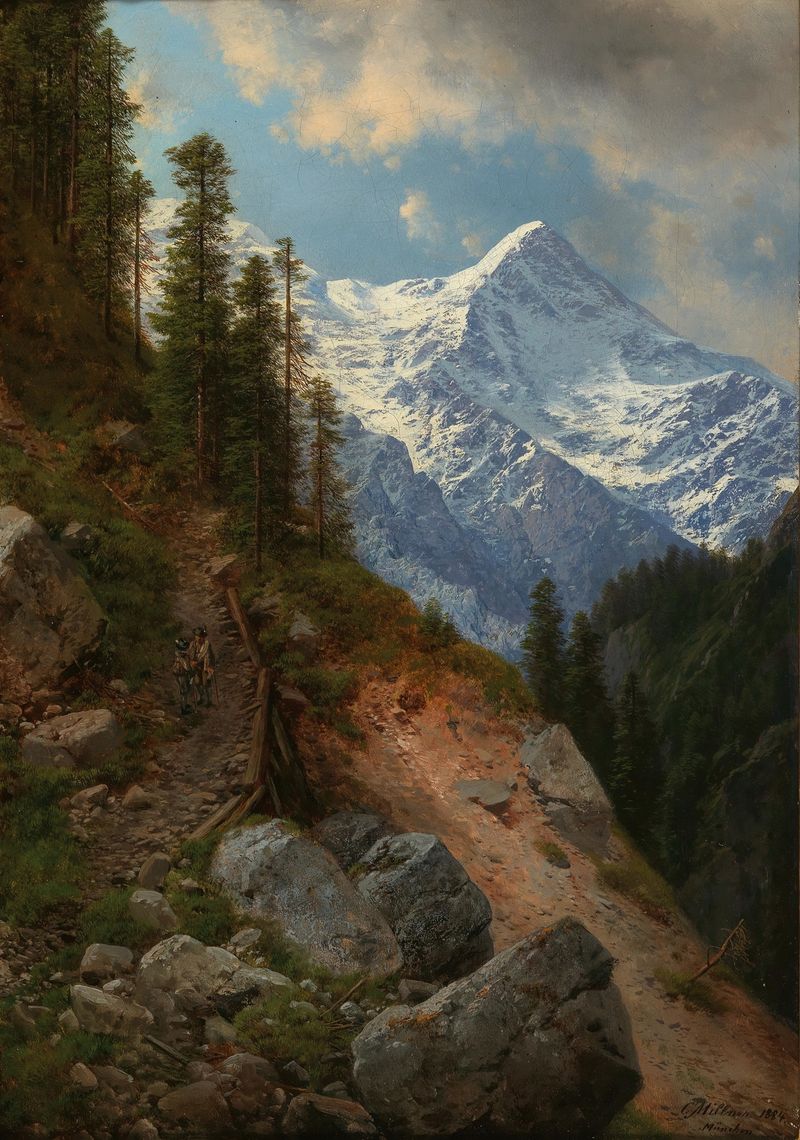
Alpinists Meeting in the French Alps with a View at Aiguille du Goûter in Chamonix-Mont-Blanc
Carl Millner

Der Alpsee bei Hohenschwangau
Carl Millner

Hunting party in the mountains
Carl Millner





