
Landschaft mit Bauernhof — History & Facts
Can beauty exist without sorrow? Even in the peaceful expanses of rural life, shadows linger—an unspoken reminder of the fragility of existence. Focus on the gentle curves of the landscape, where the rolling hills meet a horizon kissed by the soft light of dawn. Look to the left at the quaint farmhouse, its weathered facade harmonizing with the verdant surroundings. Notice the palette: verdant greens juxtaposed with earthy browns and soft blues, each color carefully chosen to evoke a sense of tranquility yet hint at the wear of time.
Millner's brushstrokes breathe life into the scene, capturing the delicate interplay of light and shadow that dances across the fields. Beneath the surface of this pastoral scene lies a complex emotional tapestry. The farmhouse, a symbol of stability and community, stands amidst the expanse, suggesting the hope and faith that sustains the rural life. Yet, the distant mountains loom with an air of inevitability, their rugged forms embodying the challenges and sorrows faced by those who inhabit this idyllic landscape.
This duality reflects the broader human experience—beauty intertwined with hardship, faith tested by the passage of time. Carl Millner painted Landschaft mit Bauernhof in 1855, during a period when the Romantic movement was reaching its zenith. Living in Germany, he was influenced by the natural beauty surrounding him but also aware of the socio-political upheaval that marked the era. Artists like Millner sought to capture not just the surface beauty of nature, but the deeper emotional realities of connection and resilience within everyday life.
More Artworks by Carl Millner
Browse all →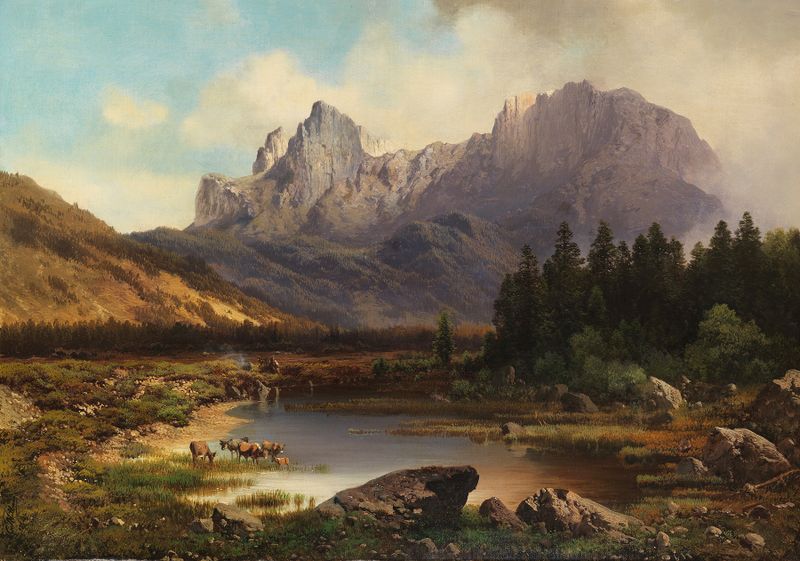
In den Dolomiten
Carl Millner
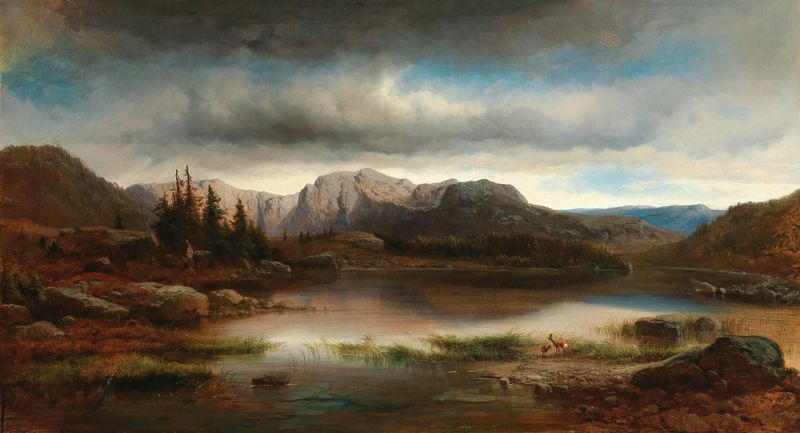
An Evening Landscape with a Mountain Lake
Carl Millner
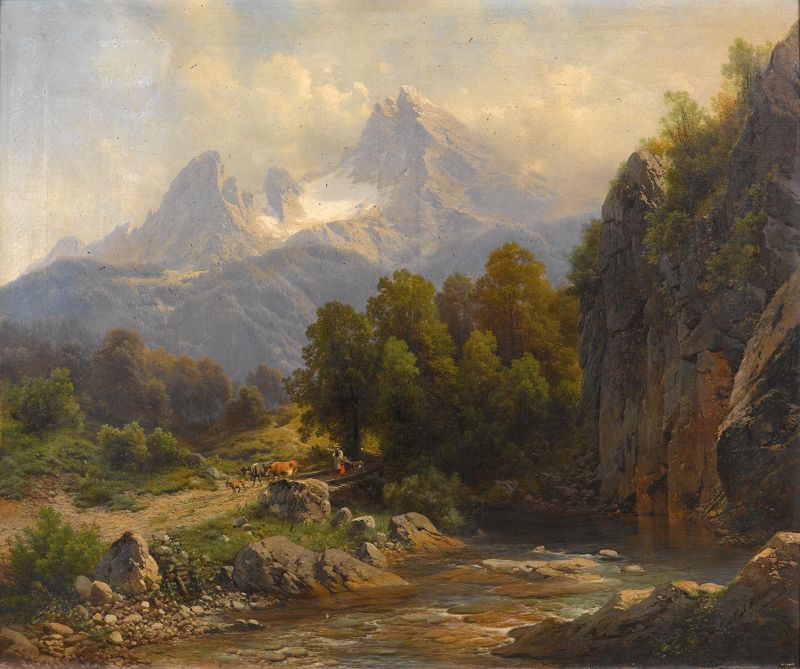
Blick auf den Watzmann
Carl Millner

Der Maler im Gebirge
Carl Millner

Sommerliche Gebirgslandschaft
Carl Millner
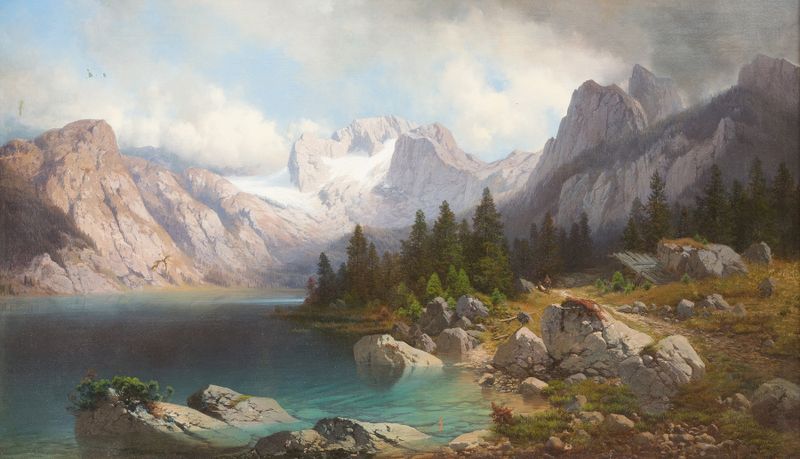
View on mount Zugspitze and lake Eibsee
Carl Millner
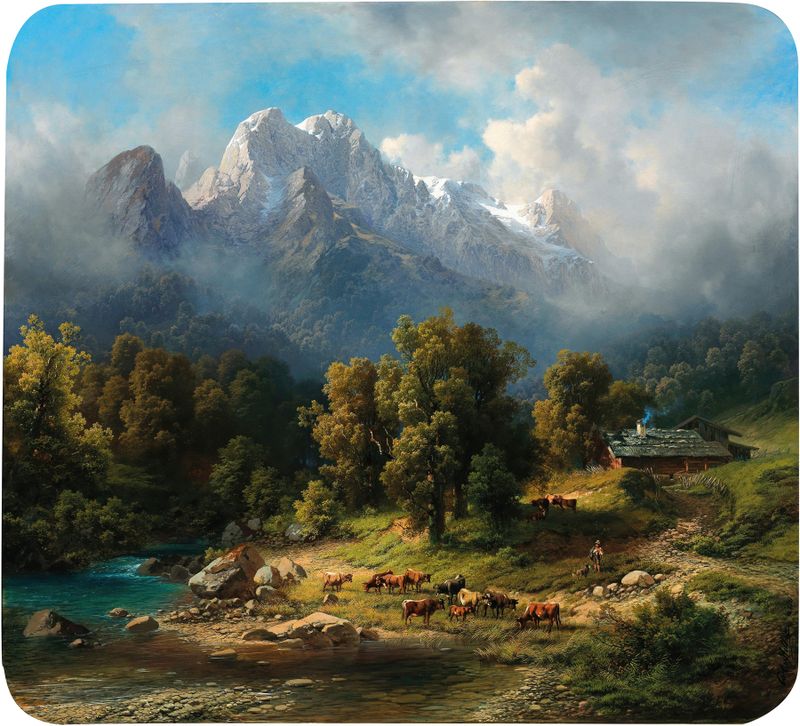
Grazing Cows near an Alpine Lake
Carl Millner
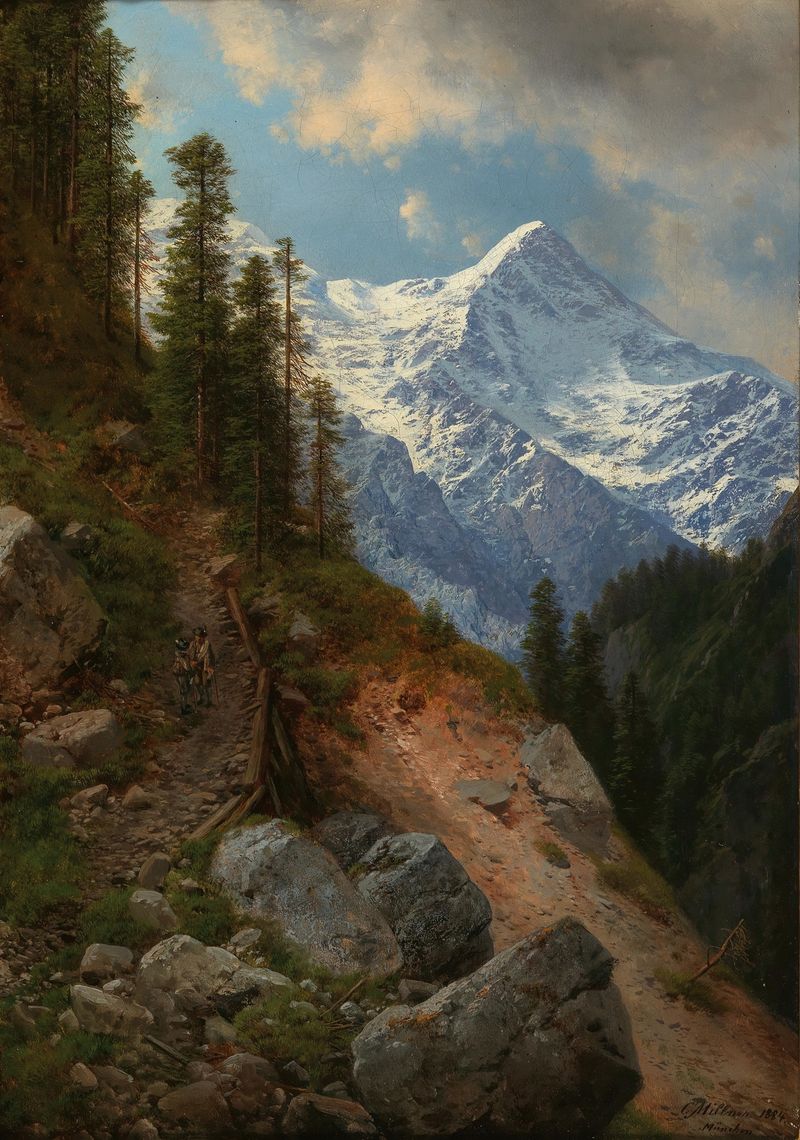
Alpinists Meeting in the French Alps with a View at Aiguille du Goûter in Chamonix-Mont-Blanc
Carl Millner

Der Alpsee bei Hohenschwangau
Carl Millner

Hunting party in the mountains
Carl Millner





