Blick auf die Gloriette — History & Facts
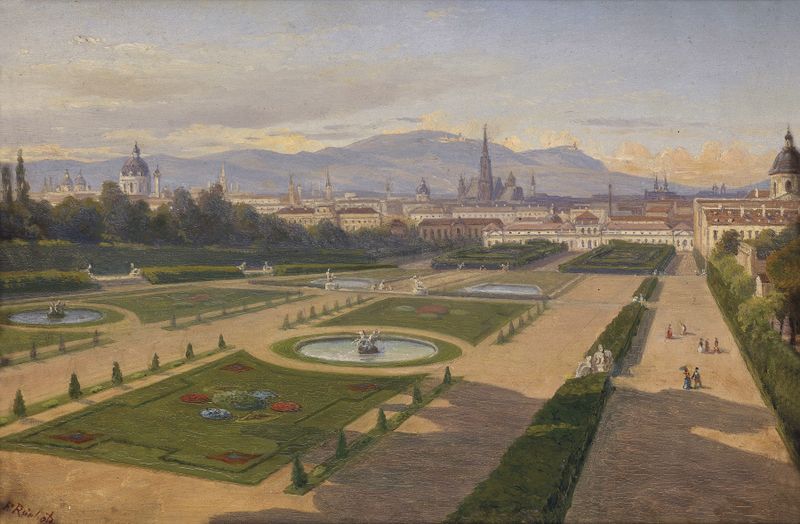
What if beauty was never meant to be finished? In the quiet embrace of a landscape, transformation unfolds, revealing the ephemeral nature of art and existence. Look to the left at the soft, undulating hills, bathed in a golden light that suggests the sun has just revealed its warmth. The Gloriette rises majestically in the center, framed by lush greenery, inviting the viewer’s gaze to linger. Notice how the delicate brushstrokes render the trees with an airy lightness, while the carefully chosen palette evokes a sense of serenity, seamlessly blending the architecture with its natural surroundings.
This harmonious composition invites contemplation, a moment suspended in time where nature meets human ingenuity. Digging deeper, the viewer perceives contrasts between the solidity of the Gloriette and the fluidity of the landscape. The structure stands as a testament to human ambition, yet its beauty is nearly swallowed by the untamed splendor of nature, hinting at the relentless passage of time and the inevitability of decay. The painting embodies a dialogue between permanence and transience, encapsulating not just the vision of the artist but also the broader existential themes of creation and dissolution that echo through art history. Franz Xaver Reinhold created this work during a period marked by shifts in artistic thought and appreciation for the sublime in nature.
While the exact date is unknown, his oeuvre reflects the Romantic ideals that were influential in the late 18th to early 19th centuries. As artists began to explore the relationship between humanity and the natural world, Reinhold’s depiction of architectural beauty amidst a verdant landscape articulates a vision of transformation that resonates well beyond his time.