Nach der Ernte, im Hintergrund Loser und Trisselwand — History & Facts
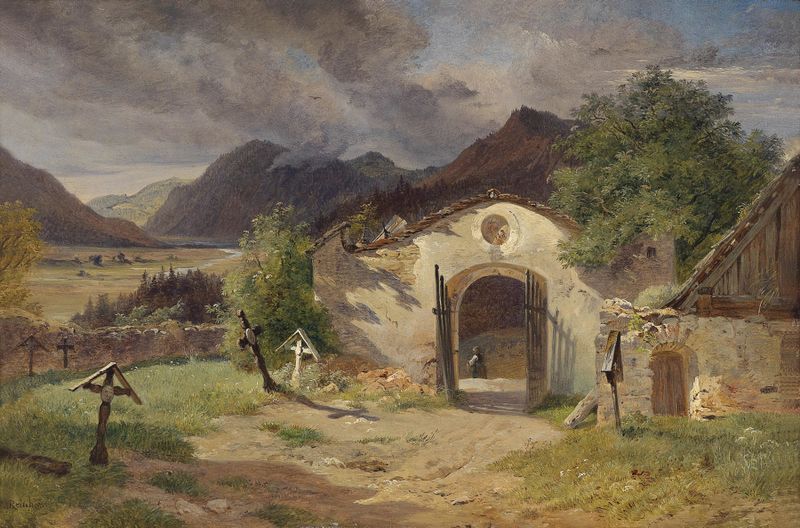
In Nach der Ernte, im Hintergrund Loser und Trisselwand, the essence of divinity is intricately woven into the tapestry of nature and labor, where the past and the present converge in brush strokes that breathe life into the canvas. Look to the foreground, where an expanse of golden fields spills into the soft embrace of rolling hills. The harvest, a rich tapestry of yellow and ochre, invites the viewer’s gaze to linger, while the delicate interplay of light casts shadows that dance along the earth. As your eyes wander toward the distant peaks of Loser and Trisselwand, their rugged silhouettes rise against a cobalt sky, grounding the scene with a sense of permanence that contrasts with the fleeting nature of harvest. The emotions held within this landscape reveal a bittersweet tension between toil and tranquility.
The vibrant colors reflect not just the bounty of a fruitful season, but also a deep reverence for the cyclical rhythm of life and death. The distant mountains, steadfast and immovable, serve as a reminder of nature’s divine authority, while the laborers rooted in the foreground express the human connection to this sacred cycle, their figures silhouetted against a backdrop of agricultural beauty. In the late 19th century, Reinhold captured this work during a period of profound change in Austrian art, which was increasingly embracing realism and the beauty of the natural world. While his contemporaries were exploring modernism, he sought to immortalize the pastoral life and the divine presence found within it, reflecting both the agrarian roots of his homeland and an appreciation for the spiritual aspects of nature.