
Blick auf Eisenerz — History & Facts
In a world suspended between memory and decay, the weight of the past lingers heavily in the atmospheric depths of this painting. Look to the center of the canvas, where the muted hues of rust and gray dominate. The barren landscape sprawls beneath a cloudy sky, dotted with the remnants of industry. Notice how the brushstrokes evoke a somber texture, capturing not just the physical decay of the site but the very essence of abandonment.
The interplay of shadow and light, particularly in the foreground, hints at a fragile beauty that is both haunting and poignant. As you take in the details, consider the stark contrasts presented: the once-thriving site now reduced to a mere echo of its former self. The looming structures stand like sentinels, bespeaking the ghosts of labor and ambition that once filled the air. The absence of human presence amplifies the desolation, allowing the viewer to reflect on the passage of time and the inevitable decline that accompanies progress.
Here, decay becomes a language of its own, weaving a narrative of loss that speaks to the broader themes of transience and nostalgia. In 1839, Friedrich Loos painted this piece during a time when industrialization was reshaping landscapes across Europe. Living in a rapidly evolving society, he captured not only the physicality of a site like Eisenerz but also the emotional undercurrents of change. This period marked a significant transition in art, as the Romantic movement began to give way to a more modern perspective, allowing artists to explore deeper themes of industrial impact and societal transformation.
More Artworks by Friedrich Loos
Browse all →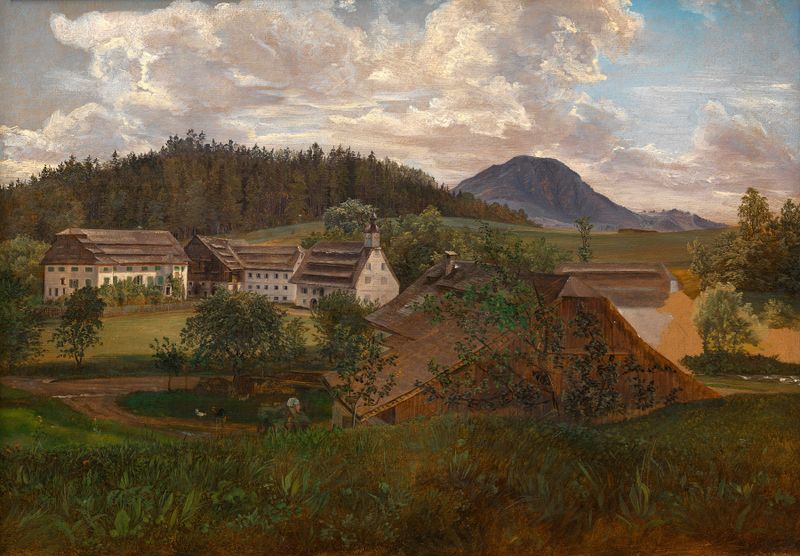
Salzburgische Landschaft mit Gutshof
Friedrich Loos
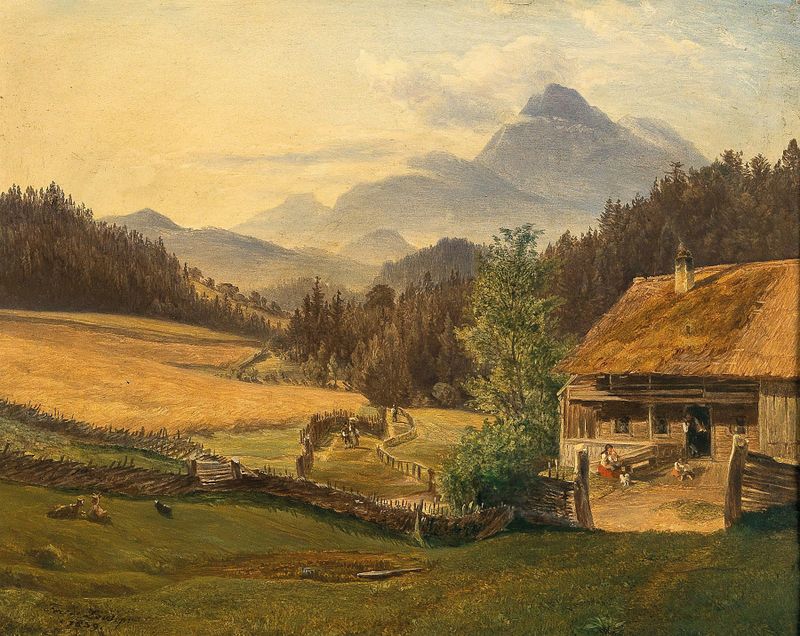
Summer landscape in the mountains
Friedrich Loos
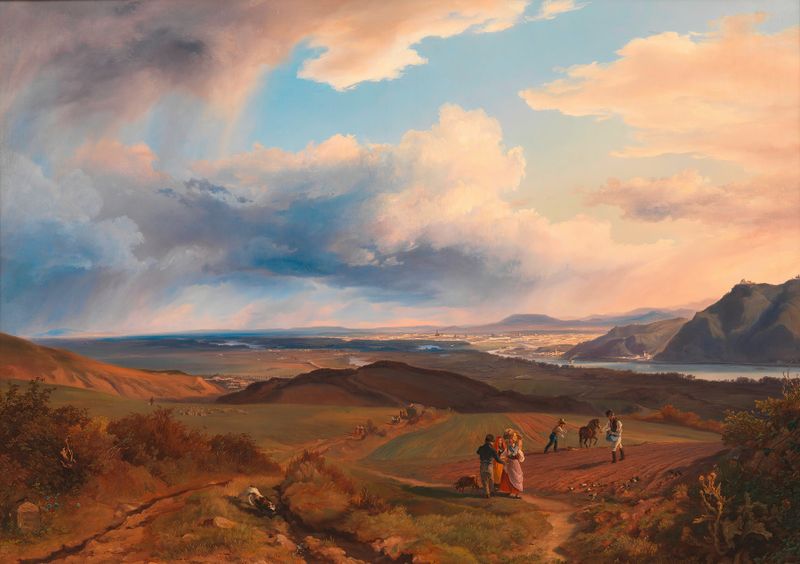
Blick auf Wien vom Bisamberg
Friedrich Loos
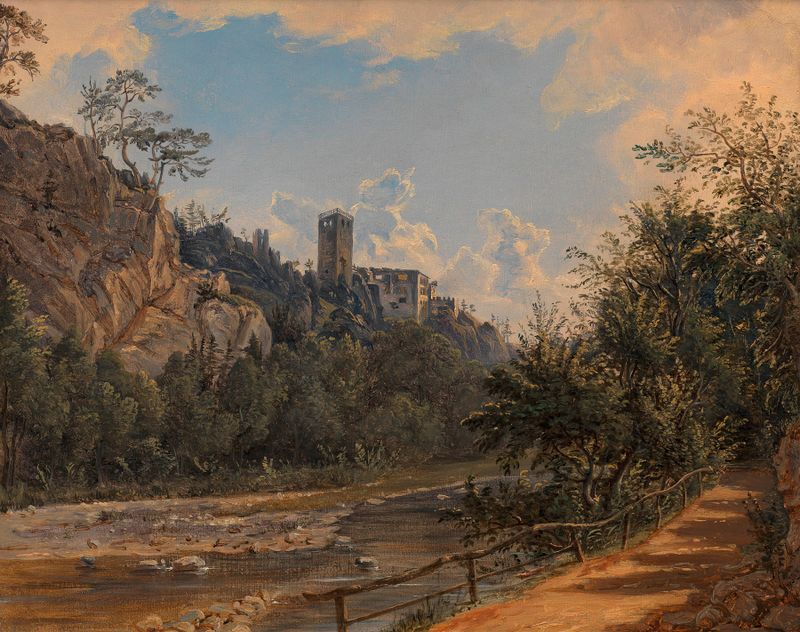
Ruine Rauhenstein bei Baden
Friedrich Loos

Die Ramsau bei Berchtesgaden
Friedrich Loos
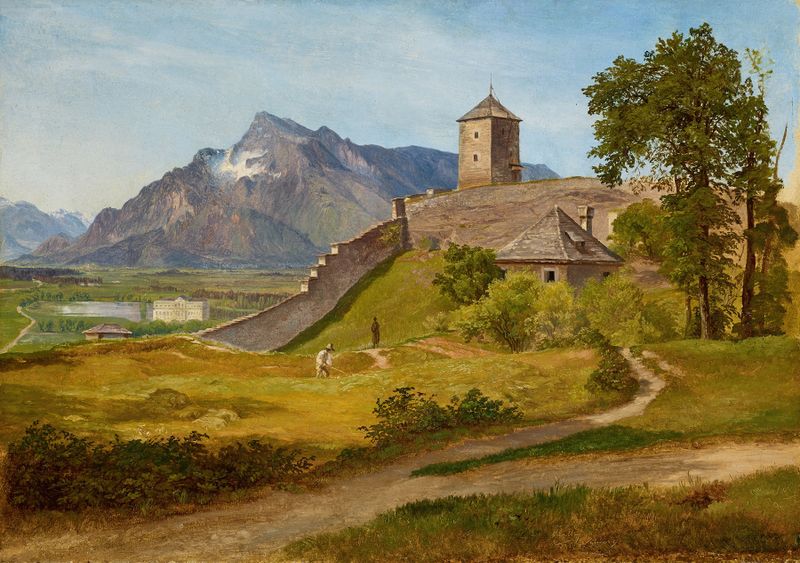
Das Militärwachthaus und der Josefsturm auf dem Salzburger Mönchsberg
Friedrich Loos
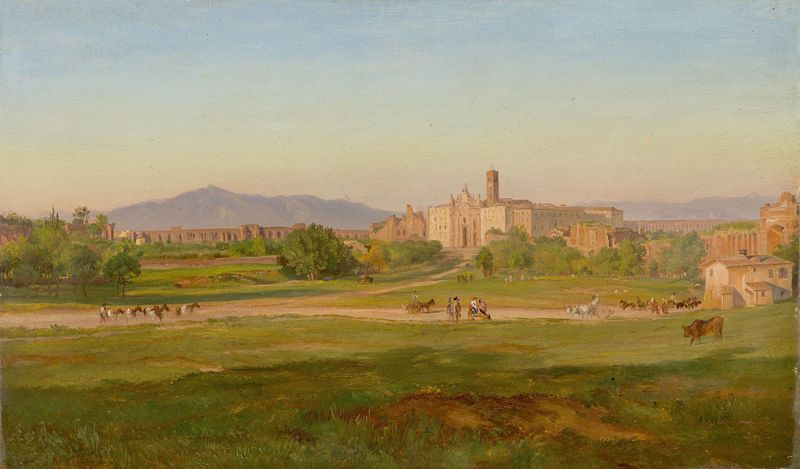
Blick auf die Basilica di Santa Croce in Gerusalemme (Rom)
Friedrich Loos

Monte Cavo bei Albano
Friedrich Loos

Der Mönchsberg in Salzburg mit dem Josefsturm
Friedrich Loos

Harvest near Rust on Lake Neusiedl
Friedrich Loos





