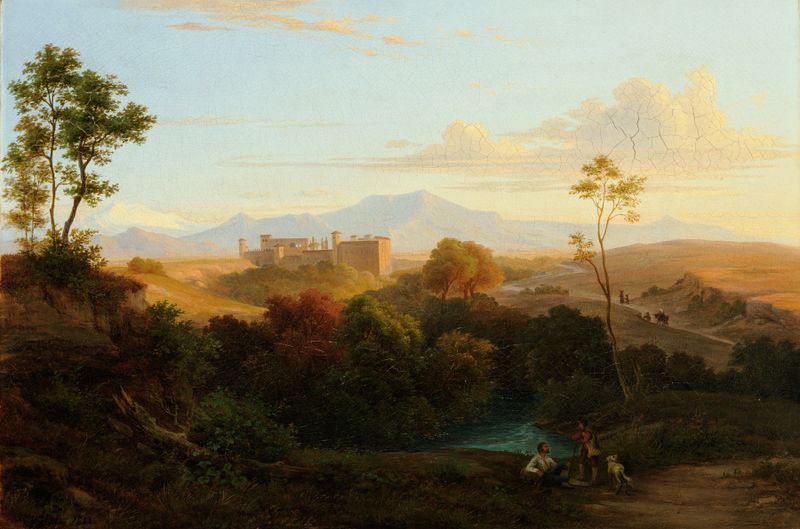
Blick auf Rom mit Sankt Peter von der Villa Doria-Pamphili — History & Facts
When did color learn to lie? The interplay of light and shadow in this exquisite portrayal invites contemplation about perception and truth. Begin your exploration by focusing on the luminous sky, where soft pastels blend seamlessly into deeper azure. Gradually, your gaze should shift downward to the sprawling panorama of Rome, where ancient architecture clashes with the verdant embrace of Villa Doria-Pamphili. Notice how Köbel masterfully captures the shimmering reflection on the Tiber River, creating a dialogue between the fluidity of water and the solidity of stone. As you delve deeper into the details, consider how the light filters through the trees, casting dappled shadows that evoke the passage of time.
The contrast between the serene foreground and the bustling cityscape suggests an emotional tension—life’s quiet moments juxtaposed against history's relentless march. Each brushstroke reveals not just the beauty of the scene but also the fleeting nature of both light and existence. In 1840, this work emerged from the heart of Italy, at a time when Köbel was deeply engaged with the evolving Romantic landscape tradition. Amidst the sweeping changes in art and society, he sought to capture the essence of Italian life and scenery.
This period marked a flourishing of landscape painting, as artists increasingly sought to express the emotional resonance of place, a pursuit that would resonate through generations.