
Blick auf Veldes — History & Facts
Can paint confess what words never could? In Blick auf Veldes, an ethereal landscape whispers secrets of solitude and reflection, inviting the viewer into its vast, contemplative void. Look to the foreground, where the delicate brushstrokes create a gentle ripple across the water's surface, a mirror-like plane capturing the weight of silence. Notice how the muted palette of blues and greens melds seamlessly, evoking a sense of peace that dances just beneath the surface, while darker tones in the distance hint at an encroaching shadow. The composition draws the eye past the tranquil foreground to distant, obscured hills, suggesting an unreachable horizon that stirs feelings of both yearning and acceptance. Within the stillness, there lies a tension between presence and absence.
The horizon draws a fine line between the visible and the unknown, prompting contemplation on the nature of longing. The interplay of light and shadow serves as a metaphor for the very human experience of grappling with the void—a reminder that beauty often resides in spaces where words cannot tread. Jakob Canciani created this piece during a time of personal exploration, likely in the late 19th to early 20th century, amidst a burgeoning wave of artistic movements that sought to capture emotion through landscape. While little biographical information is available about him, the painting reflects a shift toward introspective representation, aligning with the sentiments of his contemporaries who sought to depict the essence of emotional landscapes rather than mere geographic accuracy.
More Artworks by Jakob Canciani
Browse all →
Partie am Millstätter See
Jakob Canciani
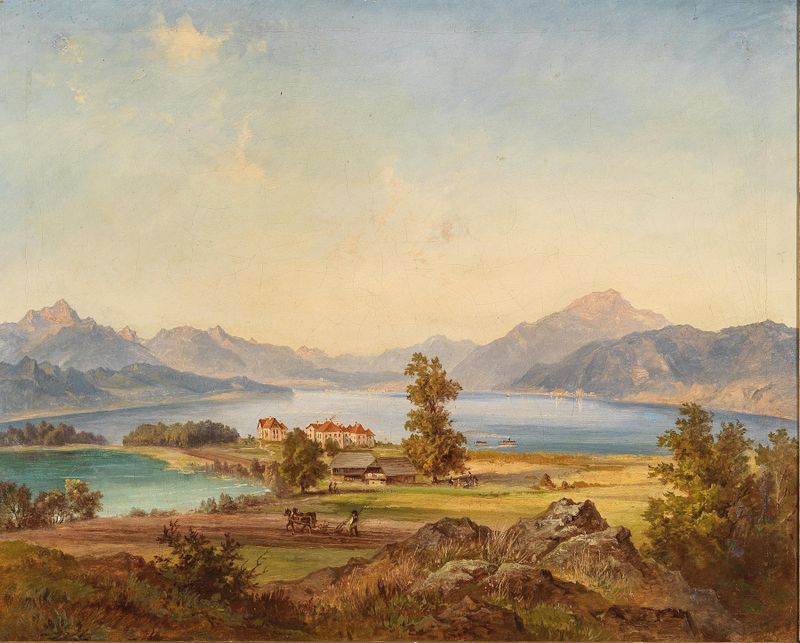
A Scene by Lake Millstättersee, Carinthia
Jakob Canciani
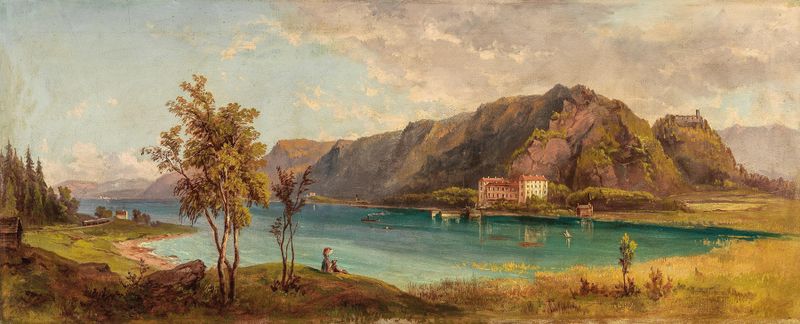
View of Villach
Jakob Canciani

A View of the Pasterze with Grossglockner and Johannisberg
Jakob Canciani
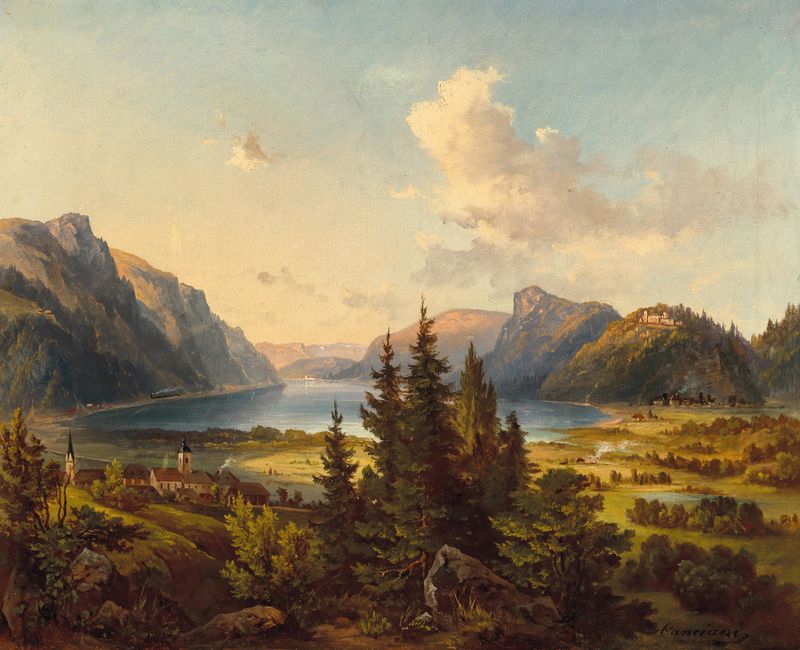
A View of Lake Ossiach with Landskron Castle
Jakob Canciani

A griffon vulture with a dead deer
Jakob Canciani
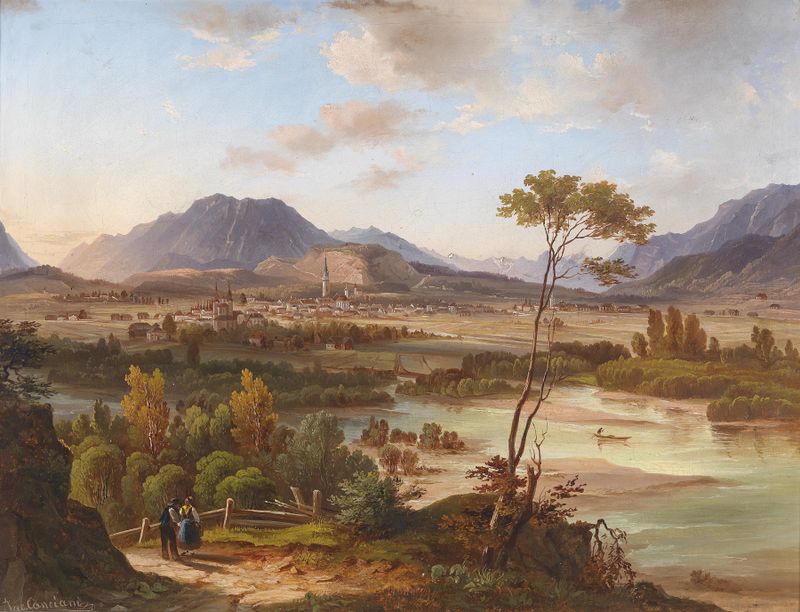
Blick auf Villach
Jakob Canciani

Scene of Lake Ossiach
Jakob Canciani

Blick auf Gmünd in Kärnten
Jakob Canciani

A View of Villach
Jakob Canciani





