Blick aus dem Wald in eine abendliche Landschaft — History & Facts
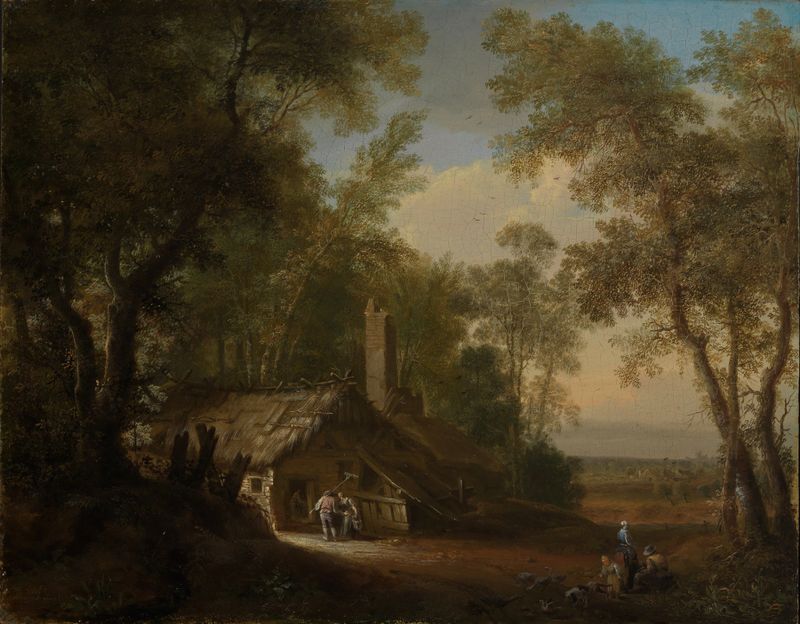
In the stillness of twilight, the landscape unveils a poignant solitude, inviting us to confront the quiet depths of our own being. Look to the left at the shadowy outlines of trees, their bark laden with the weight of dusk. The palette is muted, an interplay of deep greens and soft grays that blend seamlessly into the fading light. This atmospheric gradient creates a sense of space that feels both expansive and confining, as if the outside world is quietly closing in.
The open field stretches toward the horizon, beckoning yet holding an air of trepidation, where the last rays of sun dance hesitantly before surrendering to night. Delve deeper, and observe how the distant hills cradle a lingering melancholy, each contour echoing the essence of isolation. The delicate brushwork offers a contradiction—while the landscape feels inviting, it simultaneously reflects a profound loneliness, as if nature itself is in a state of introspection. The gentle fading light suggests an ending, both of the day and of something more personal, as if the land mourns its own solitude. Philipp Hieronymus Brinckmann painted this work between 1743 and 1745, a time when the Rococo movement was infusing art with elegance and emotional resonance.
Creating in the context of a shifting artistic landscape, he sought to capture nature’s beauty while reflecting his own sense of isolation. This piece stands as a testament not only to his skill but to the pervasive solitude felt during this period in his life.