Mountain Landscape in Switzerland — History & Facts
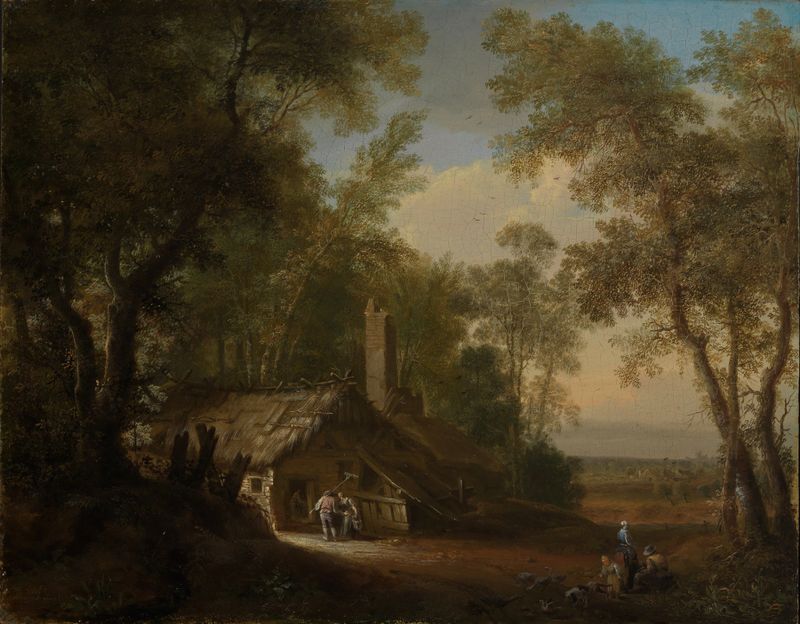
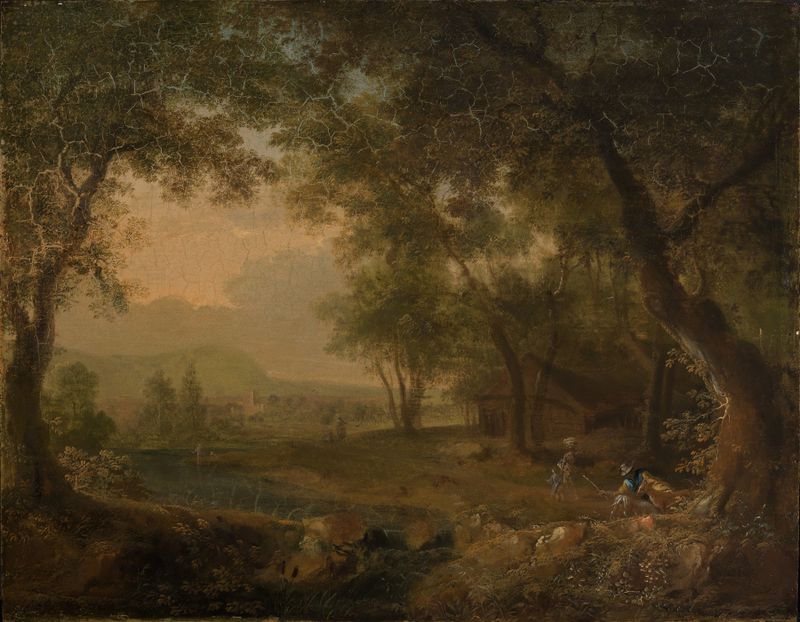
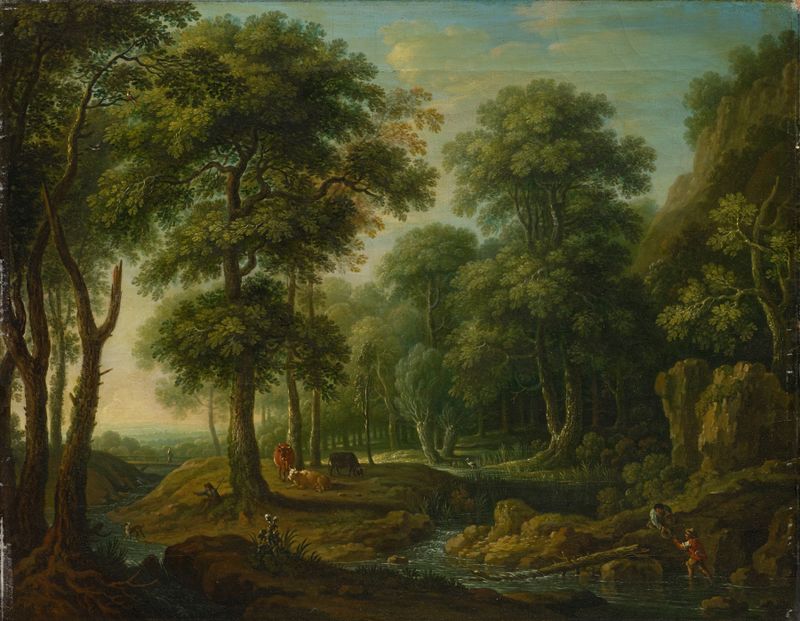
Could beauty survive in a century of chaos? In Mountain Landscape in Switzerland, the serene expanse of nature offers an answer, a stark reminder of the sublime amidst turbulence. Look to the foreground where the gracefully flowing river winds its way through the verdant valley. Notice how the artist’s brushwork captures the shimmering reflections on the water’s surface, inviting the eye to trace its path. The towering peaks in the background stand resolute, their jagged edges softened by the delicate play of light, creating a sense of depth that draws you further into the scene.
The palette, dominated by lush greens and soft blues, encapsulates the tranquil essence of the Swiss landscape, contrasting with the darker shadows that hint at an unseen complexity. Delve deeper into the painting and you’ll uncover layers of emotional tension. The harmonious coexistence of wild mountains and gentle waters suggests an obsession with nature’s beauty, yet also alludes to a fragile balance. The small, solitary figure in the midground gazes into the vastness, evoking feelings of solitude and contemplation amidst this expansive wilderness.
The juxtaposition of the serene landscape with the hint of isolation allows for reflections on human vulnerability against the grandeur of nature. In 1745, Brinckmann created this work in the wake of the Baroque period's decline, a time when Europe was grappling with both social upheaval and the Enlightenment’s rise. Based in the cultural hub of Switzerland, he sought to elevate landscape painting, capturing the sublime power of nature while hinting at the societal changes heralding his age. His dedication to the Swiss Alps marked a departure from earlier artistic trends, establishing a new appreciation for realism and emotional depth in the natural world.