Blick über den St. Galler Friedhof — History & Facts
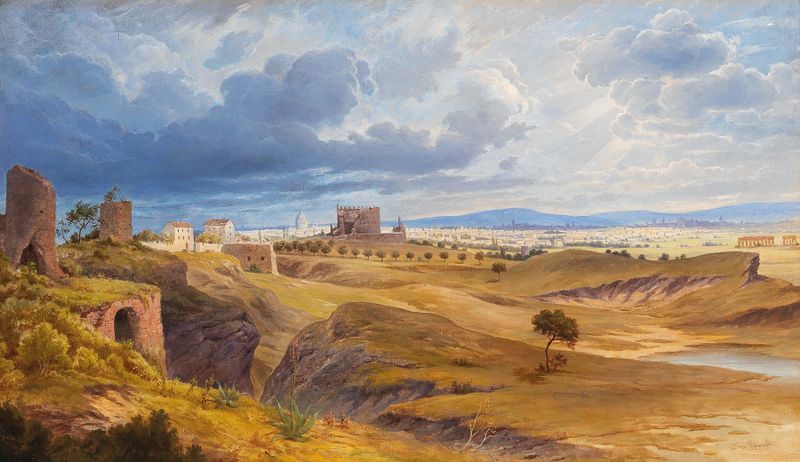
It holds the weight of time, capturing shadows that echo the stories of those who have passed. In the stillness of the graveyard, we find solace in the interplay between light and dark, reminding us of both mortality and memory. Look to the left at the delicate interplay of light filtering through the trees, casting dappled shadows across the gravestones. The artist’s deft brushwork creates a sense of texture in the foliage, contrasting the smooth, somber stones that stand as silent witnesses.
Notice how the muted palette evokes a melancholic yet serene atmosphere, drawing the eye deeper into the composition, allowing a moment of reflection amidst the restfulness of the scene. The subtle contrasts within the piece speak volumes — the juxtaposition of vibrancy in nature against the stillness of the grave markers suggests a cycle of life and death. Each shadow becomes a metaphor, representing the fleeting moments of existence that linger long after we are gone. The absence of human figures enhances the emotional weight, emphasizing solitude and the quiet reverence of remembrance. In 1902, while creating this work, Josef Langl was immersed in a period of artistic exploration, situated in St.
Gallen, Switzerland. This was a time when artists were increasingly drawn to themes of nature and existential contemplation, reflecting societal shifts and personal introspection in a rapidly changing world. Langl's work captures this essence, revealing his deep engagement with both the physical landscape and the metaphysical inquiries of life.