Rome as seen from the Via Appia — History & Facts
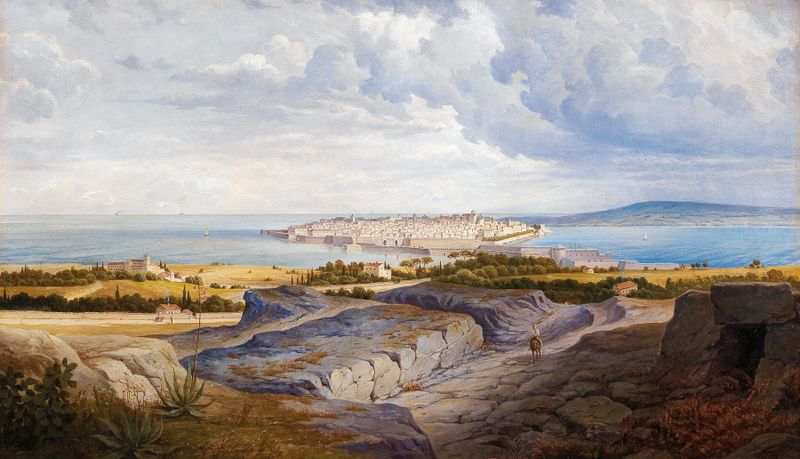
Did the painter know this moment would outlive them? In the quiet vastness of Rome as seen from the Via Appia, a solitary figure wanders along the ancient road, contemplating a city steeped in history yet marked by a profound loneliness. The scene beckons with echoes of time, a silent invitation to reflect on the fleeting nature of existence. Look to the left at the distant outline of crumbling ruins, their silhouettes softened by the warm hues of a setting sun. Notice how the ochres and muted greens intertwine, capturing the essence of a landscape that feels both alive and abandoned.
The gentle brushstrokes create a sense of movement within the stillness, guiding your gaze through the winding path that stretches into the horizon, a metaphor for the journey of life itself. As your eyes trace the contours of the scene, you may feel a tension between the grandeur of the city and the solitude of the figure at the forefront. The juxtaposition of the vibrant colors against the muted tones evokes a bittersweet melancholy, suggesting that while the city thrives with stories, its beauty can also envelop one in isolation. Each aspect of the composition speaks to the complex relationship between humanity and the remnants of history, revealing a profound sense of longing for connection amidst the solitude. Created during a time of personal reflection for the artist, Rome as seen from the Via Appia emerged in an era when Josef Langl was exploring themes of existence and memory.
He painted this work in his studio, drawing inspiration from the ancient roads of Rome, where he grappled with his own feelings of loneliness and displacement. This period in the world of art was defined by shifts toward modernism, yet Langl remained dedicated to capturing the poetic essence of the landscapes he loved.