Blick in die Kapelle Sant Isidro in Venedig — History & Facts
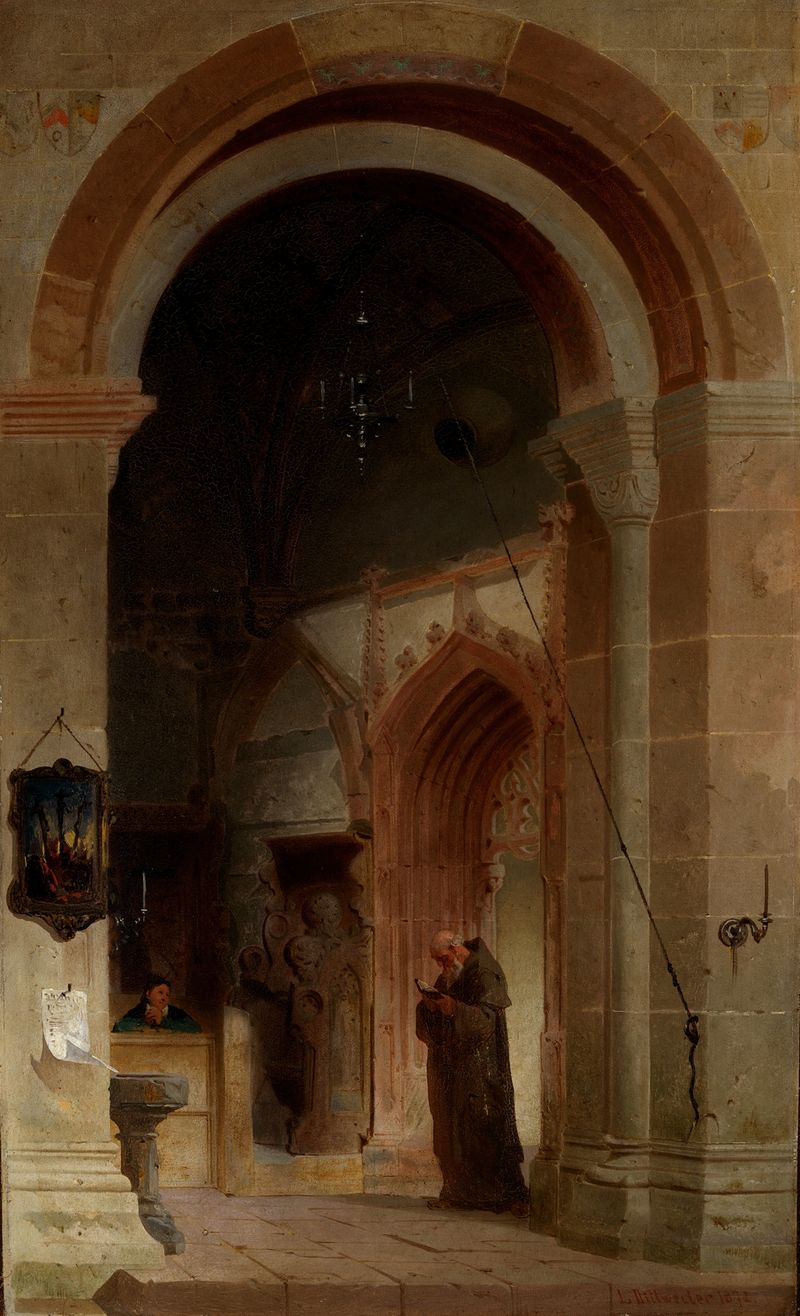
Is this a mirror — or a memory? In Blick in die Kapelle Sant Isidro in Venedig, a soft haze envelops the chapel, inviting us to step into a world that feels both present and hauntingly distant. The viewer is left to ponder the layers of time, as the delicate details whisper secrets about devotion, history, and the echoes of lives once lived. Look to the right at the intricate altar, where golden light spills across the richly adorned surfaces, illuminating the ornate carvings and the subtle textures of the paintings. Notice how the muted palette, dominated by earthy tones and hints of azure, fosters a sense of serene contemplation.
The composition draws the eye inward, creating a sacred pathway that guides us through the chapel's spiritual essence and the emotional resonance of its space. Deeper still, one can sense the juxtaposition between the sacred and the ephemeral. The flickering candlelight suggests a moment suspended in time, inviting contemplation on faith and remembrance. The emptiness of the pews resonates with solitude, evoking a sense of longing for connection that transcends the physical presence.
This contrast between stillness and the passing of time evokes profound nostalgia, inviting viewers to reflect on their own histories and experiences within sacred spaces. In 1879, Ludwig Dittweiler painted this work in Venice during a period marked by artistic exploration and revival of religious themes. Living in an era of great change, Dittweiler found inspiration in the intersection of tradition and modernity, seeking to capture the essence of spirituality amid a rapidly evolving world. This painting reflects not only his artistic pursuits but also the broader cultural currents of the time, merging personal introspection with a collective longing for connection to the divine.