Blick ins Aschauer Tal — History & Facts
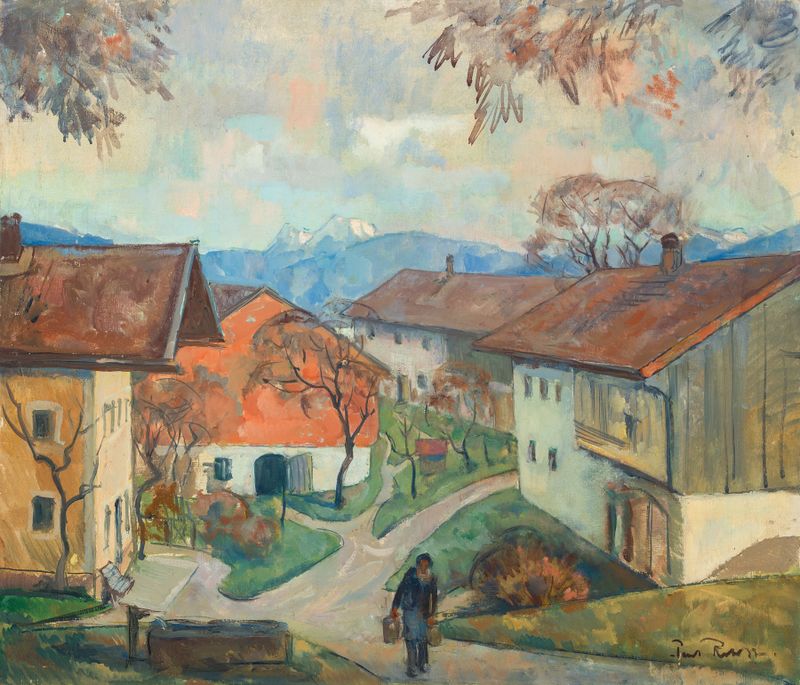
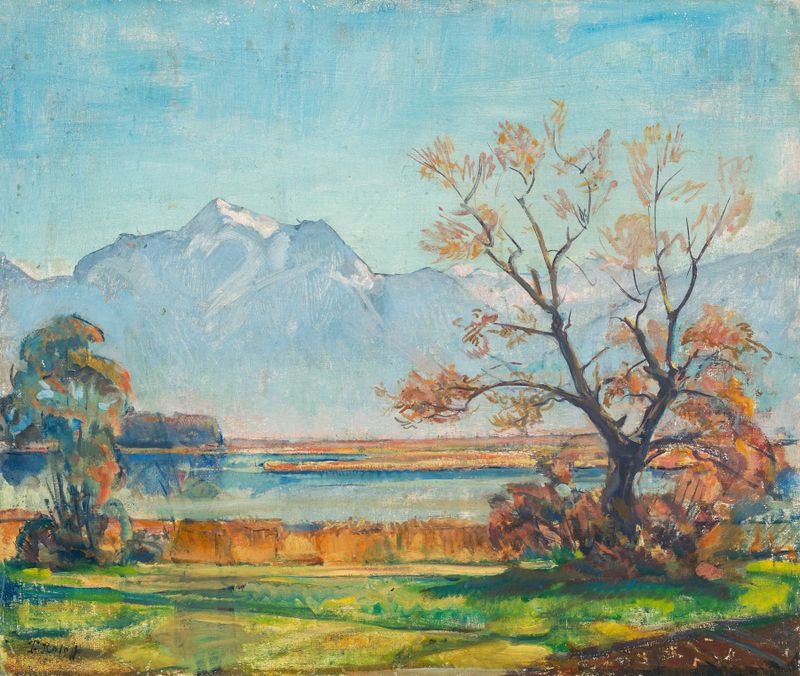
What if beauty was never meant to be finished? In the heart of nature, the soul finds its own longing echoing through the valleys and peaks. Look to the center, where the undulating hills cradle a sliver of sky, a quiet invitation into the sweeping landscape. The artist employs a palette of muted greens and soft blues, which invites a serene yet poignant atmosphere. The brushstrokes are gentle yet deliberate, revealing the textures of foliage and the undisturbed stillness of the water.
Notice how the light dances over the surface, creating a delicate interplay between shadow and illumination, emblematic of fleeting moments that linger in the heart. Yet there lies beneath the surface a yearning, a sense of incompleteness. The juxtaposition of the vibrant landscape with the looming mountains suggests the tension between the familiar comforts of home and the unknown territories of the world. Each detail reflects a longing for connection—between oneself and nature, between dreams and reality.
The open sky symbolizes hope, while the embracing land whispers secrets of life's transient beauty, captured yet never fully grasped. In 1934, Roloff painted this work during a time marked by political strife and economic uncertainty in Germany. This was a period when many artists sought solace and inspiration in the natural world as a refuge from the chaos surrounding them. The exploration of landscapes became a means to forge emotional connections, both personal and universal, highlighting the transformative power of nature in an increasingly tumultuous society.