Blick auf Frauenchiemsee — History & Facts
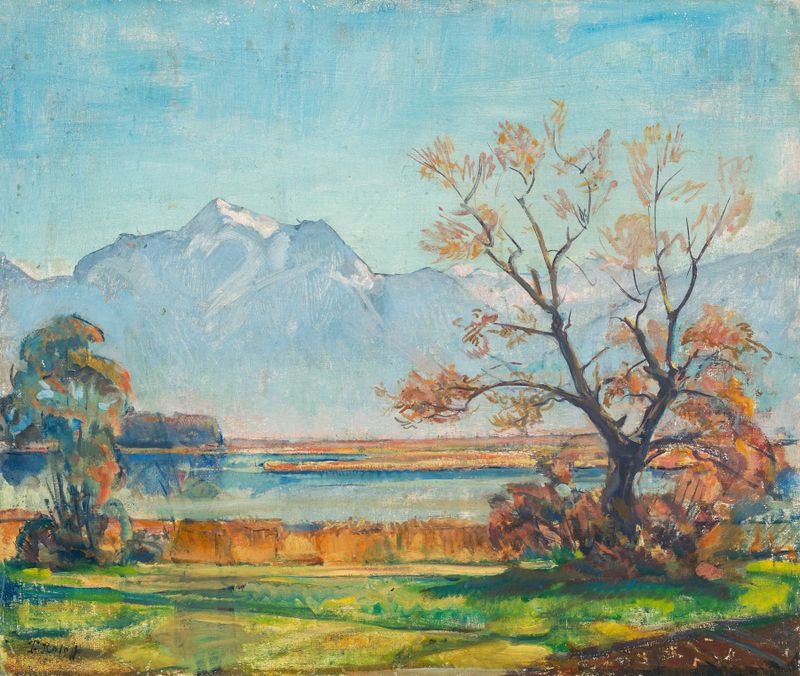
Where does light end, and longing begin? In a world where chaos intertwines with tranquility, the boundaries blur, inviting us to explore the depths of our own emotions. Look to the horizon where the serene lake mirrors a sky tinged with golden hues. The soft brushstrokes create an ethereal blend of blues and warm tones, drawing the eye towards the distant mountains. Notice how the sunlight dances upon the water’s surface, creating a shimmering effect that feels almost palpable, as if the very essence of peace is captured within each wave.
To the left, the lush greenery frames the scene, grounding it in nature while simultaneously suggesting the chaos of life just beyond the frame. As you delve deeper, observe the contrasting elements at play. The calm of the water stands in stark opposition to the untamed foliage, echoing the duality of human experience—serenity amidst turmoil. The interplay of light and shadow hints at a fleeting moment, where time seems suspended, and our yearning for simplicity clashes with the complexities of existence.
Each stroke carries whispers of past memories and future hopes, inviting contemplation on what lies beneath the surface of our daily lives. In 1925, the artist worked in a post-World War I Germany grappling with the aftermath of conflict and societal upheaval. Roloff found a refuge in landscapes, particularly in the tranquil beauty of Frauenchiemsee, where he sought to capture not just the physical beauty of the land, but the introspective chaos within. His choice of colors and composition reflects a desire to transcend the surrounding turmoil, marking a pivotal moment in both his artistic journey and the broader context of modern art.