Boating on a Moonlit Night — History & Facts
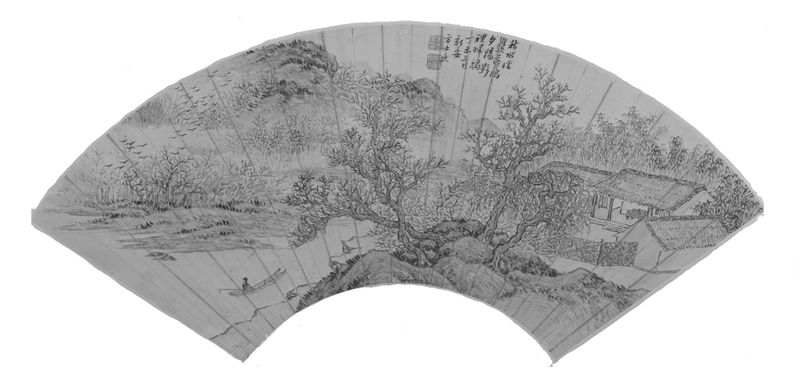
In the quiet embrace of night, the world transforms under the silvery gaze of the moon, shimmering reflections whisper secrets onto tranquil waters. Nature, cradle of serenity, invites contemplation, urging us to consider what lies beneath the surface. Look to the foreground of the painting, where gentle ripples dance in the water, creating a mesmerizing interplay of light and shadow. Notice how the artist delicately captures the glow of the moon, rendered in soft silvery hues that contrast beautifully with the deep blues of the evening sky.
The boat glides effortlessly, its subtle lines guiding the eye toward the horizon, luring us into a serene realm that feels both distant and achingly familiar. Beneath the peaceful exterior lies a deeper commentary on solitude and unity. The lone boatman, while seemingly isolated, is intricately connected to the fluidity of the water and the vastness of the sky. This juxtaposition emphasizes life's delicate balance between solitude and companionship, while the moon’s reflection suggests the fleeting nature of beauty, echoing the transient emotions that shape our existence. In 1744, Fang Shishu painted this piece during a period marked by the flourishing of literati painting in China.
The art community was shifting, emphasizing individual expression and personal reflection. As he created Boating on a Moonlit Night, Fang navigated a landscape rich with cultural transformation, intertwining traditional aesthetics with his unique vision, capturing a moment that resonates through time.