
Boats in Port — History & Facts
In this moment of stillness, light transforms the mundane into the extraordinary, revealing the hidden stories beneath the surface. Look to the center of the canvas where the boats lie anchored, their hulls gently kissed by the soft glow of daylight. Notice how the interplay of light and shadow dances across the water, creating shimmering reflections that invite your gaze deeper into the scene. The palette, rich with deep blues and warm oranges, captures the essence of a tranquil harbor, evoking a sense of peace and contemplation. Within this serene setting, subtle tensions emerge.
The stark contrast between the solidity of the boats and the fluidity of the water hints at the duality of existence—stability versus transience. Each vessel embodies a silent narrative, perhaps the longing of sailors waiting to embark on new adventures or the stillness of homes temporarily abandoned. The gentle brushstrokes convey a softness that contrasts with the hard edges of the boats, suggesting a delicate balance between the natural world and human creation. Peploe painted Boats in Port between 1910 and 1912 during a period marked by a burgeoning interest in color and light among artists.
Living in Scotland, he was influenced by the vibrant hues of the post-impressionist movement while reflecting upon his own experiences in the coastal landscapes. This work captures not just a moment in time, but a deep appreciation for the beauty found in the quiet rhythms of life, a testament to the era’s artistic exploration.
More Artworks by Samuel John Peploe
Browse all →
The Harbour, Cassis
Samuel John Peploe
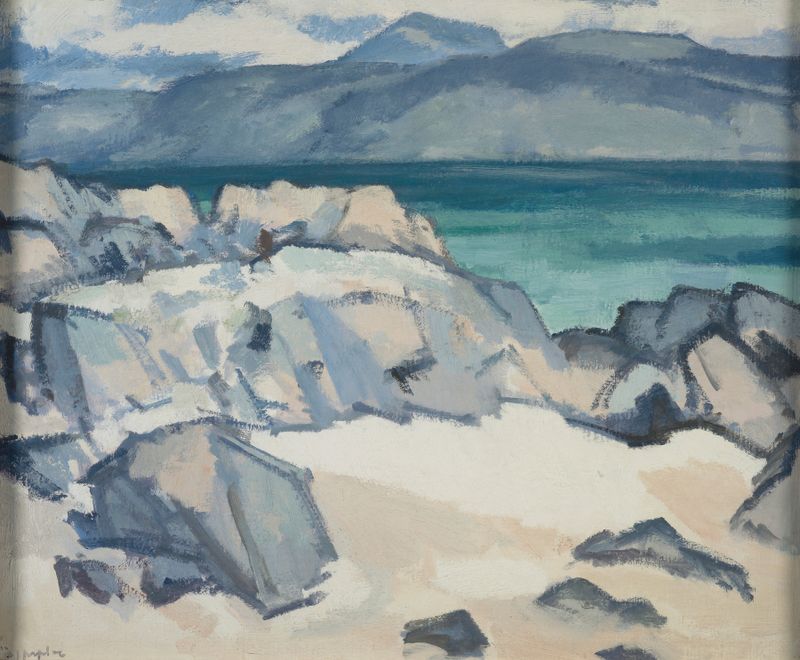
Iona
Samuel John Peploe

Kirkcudbright
Samuel John Peploe

Church at Cassis
Samuel John Peploe
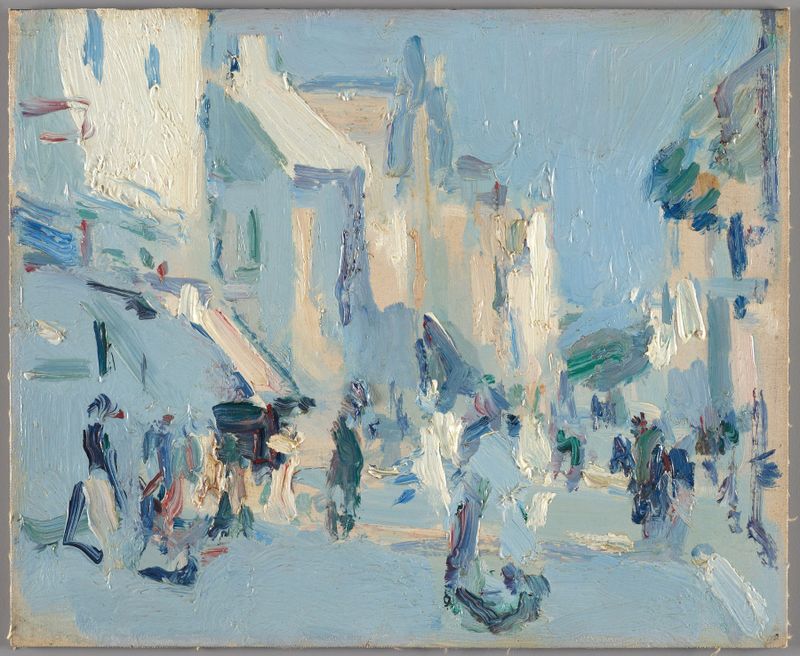
Paris-Plage
Samuel John Peploe

Luxembourg Gardens – Paris
Samuel John Peploe

Figures on the Shore
Samuel John Peploe

Cottage At Corstorphine
Samuel John Peploe

Trees, Douglas Hall
Samuel John Peploe

Veules-les-Roses
Samuel John Peploe





