Boerenerf (Boerderij met hooischuur) — History & Facts
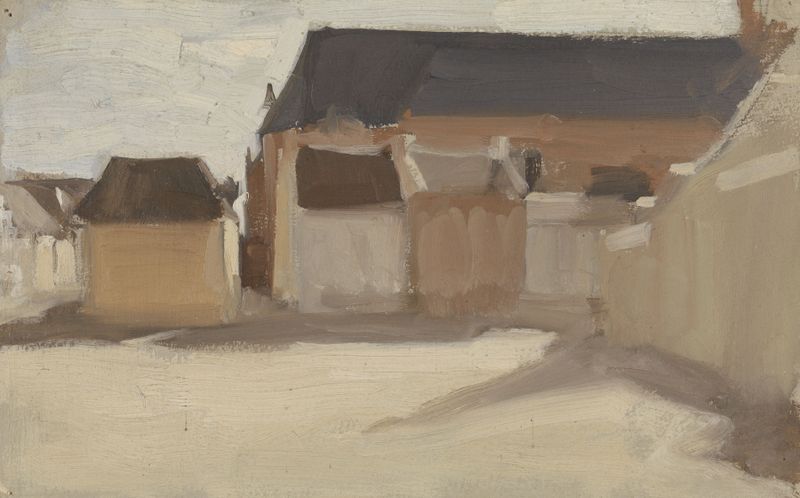
Is this a mirror — or a memory? The gentle sway of the fields, the nostalgic whisper of the wind, and the soft play of light on the thatched roof beckon us into a scene of tranquil rural life. Look to the center where a modest farmhouse stands, its vibrant hues of earthy browns and greens grounding the composition. Notice how Derkinderen captures the sunlight spilling over the thatched roof, casting delicate shadows on the surrounding grass. The brushwork is both precise and fluid, creating a sense of movement as if the viewer could step into this serene moment and feel the breeze brush against their skin.
The arrangement of elements draws the eye towards the distant horizon, inviting contemplation of the pastoral beauty that stretches beyond. Yet beneath this serene surface, there’s a subtle tension at play. The contrast between the sturdy architecture of the barn and the gentle curve of the land reflects the harmony and struggle of rural life. The scene pulses with unseen stories, perhaps of laborers, the passage of seasons, or the bittersweet transience of moments captured in time.
Each stroke resonates with the weight of memory, hinting at a continuity of life that both comforts and haunts. In the early 1880s, while living in The Hague, the artist was deeply influenced by the emerging trends of Impressionism. Boerenerf (Boerderij met hooischuur) was painted during a period rich with artistic exploration, as Derkinderen sought to capture the essence of the Dutch landscape and its connection to the human experience. This work reflects not only his personal encounters with rural settings but also the broader cultural shift towards celebrating the beauty of everyday life in art.